
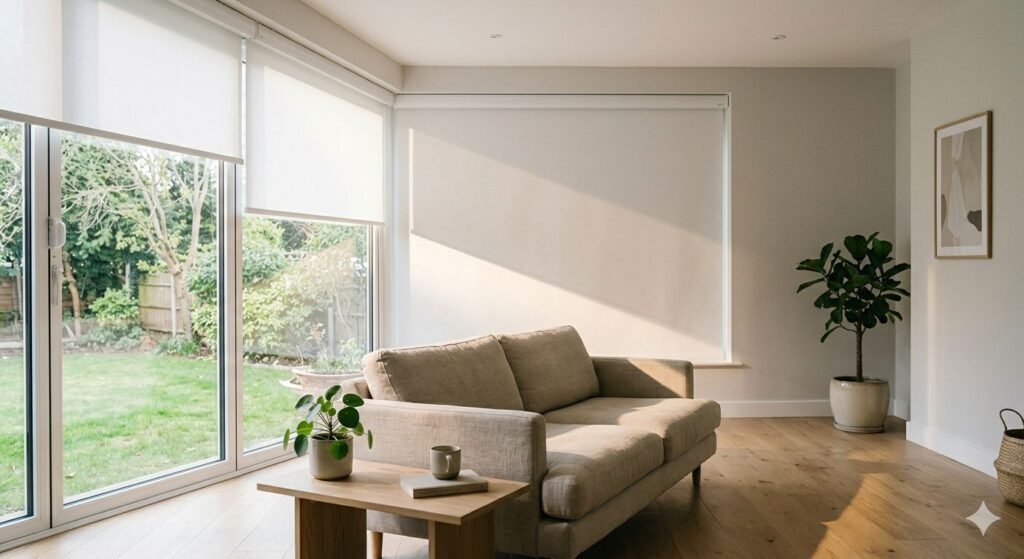
There is a particular kind of home upgrade that sits at the intersection of genuine convenience and conspicuous luxury — the kind where the technology works beautifully, the price is hard to justify on pure utility grounds, and yet once you have it, going back feels oddly difficult. Motorized blinds and curtains occupy exactly that territory.
The market has expanded considerably in the past few years. What was once the preserve of custom home automation installations costing thousands of dollars has fractured into a much wider range of options — retrofit motor kits that attach to existing blinds, affordable smart curtain rods, and mid-range motorized shades that work with Alexa, Google Home, and Apple HomeKit without requiring a professional installer or a dedicated smart home hub.
But the core question remains: is any of this actually worth it? Not in the abstract sense of whether smart home technology is impressive — it clearly is — but in the practical sense of whether the convenience, energy savings, and quality-of-life improvements justify the cost premium over a standard blind or curtain that you open and close yourself.
This article works through that question honestly. We cover the genuine benefits, the limitations that marketing materials tend to skip over, the compatibility and installation realities, and the best motorized blinds and curtains available in 2026 at different price points. Whether you’re outfitting a new home, retrofitting a rental, or considering a single room upgrade, this guide will help you make a clear-eyed decision.
What Are Smart Blinds and Motorized Curtains?
Motorized window coverings fall into several distinct categories, and the differences matter for both installation and cost.
Motorized roller shades and blinds are window coverings with a built-in or retrofit electric motor that raises, lowers, or tilts the slats via a remote control, app, or voice command. They replace the manual cord or wand mechanism with an electric alternative. Most modern versions connect to Wi-Fi or a proprietary radio frequency and integrate with major smart home platforms.
Motorized curtain tracks and rods replace a standard curtain rod with a motorized track system. The motor drives a carrier that pulls the curtain open or closed along the track. These work with most standard curtain fabrics and are particularly appealing for people who already own curtains they like and don’t want to replace the fabric itself.
Retrofit motor kits are the most budget-friendly category — small motors that attach to existing manual blinds, converting them to motorized operation without replacing the blind itself. The quality and reliability of retrofit kits varies significantly, and compatibility with existing window coverings is not universal.
Across all three categories, the core technology is similar: an electric motor, a wireless receiver, a power source (either mains-wired or battery), and some form of connectivity — Wi-Fi, Zigbee, Z-Wave, Bluetooth, or a proprietary radio frequency — that allows the covering to be controlled remotely and integrated into automation routines.
The Genuine Benefits: Where Motorized Window Coverings Earn Their Cost
Convenience for hard-to-reach windows
This is the most straightforward and universally applicable benefit. Windows above staircases, skylights, high clerestory windows, large floor-to-ceiling glazing behind furniture — anywhere that manually operating a blind or curtain requires physical effort, inconvenience, or minor athletic commitment is a strong candidate for motorization. For tall windows where a standard corded blind hangs five feet down the wall, motorization isn’t a luxury — it’s a meaningful quality-of-life improvement.
The same logic applies to windows in rooms where you frequently have your hands full: a kitchen window above the sink, a bathroom window you want to open first thing in the morning, a bedroom window that you’d adjust three times a night if it didn’t require getting out of bed.
Scheduled automation for sleep, comfort, and energy management
Scheduled automation is where smart blinds move from convenient to genuinely useful. The ability to program window coverings to open at a specific time — gradually brightening a bedroom in the morning rather than snapping from dark to fully lit — is one of the most commonly cited benefits by people who use these systems daily. Combined with sunrise simulation, it replaces the jarring alarm clock experience with a more gradual awakening process, and there is reasonable evidence that light-based waking is better for circadian rhythm alignment than sound-based alarms.
On the energy side, programmed closing of south and west-facing blinds during peak afternoon sun hours can meaningfully reduce solar heat gain in summer — one of the primary drivers of air conditioning load in well-insulated homes. The US Department of Energy estimates that cellular shades can reduce heat gain through windows by up to 60% when properly deployed. The catch is that manual blinds can achieve the same result if you remember to close them consistently — the motorized advantage is reliable automation rather than the shade technology itself.
In winter, the reverse logic applies: automatically opening blinds during daylight hours to maximize passive solar gain, then closing them at dusk to retain heat, is a small but genuine contribution to thermal efficiency that most people don’t achieve consistently with manual blinds.
Child and pet safety
Traditional corded blinds are a documented safety hazard for young children and pets. The Consumer Product Safety Commission in the United States has tracked dozens of fatalities involving blind cords entangling young children, and corded blinds are now banned for sale in the US for windows below a certain height. Motorized blinds eliminate cords entirely, removing the hazard at source rather than managing it. For households with young children or pets, this is a safety benefit with genuine weight — not a marketing talking point.
Accessibility
For people with limited mobility, arthritis, chronic pain conditions, or other physical limitations that make reaching, gripping, or pulling difficult, motorized window coverings are not a luxury — they’re an accessibility tool. Voice control via Alexa or Google Home removes the need for any physical interaction with the window covering at all. This use case is underrepresented in smart home marketing, which tends to focus on convenience for able-bodied users, but it represents some of the strongest practical justification for the technology.
Privacy and security automation
Automated closing of ground-floor blinds at dusk — without requiring someone to walk from room to room — is a meaningful convenience in larger homes. Integration with security systems or presence detection can also trigger blinds to close when the house is unoccupied and open when you return, contributing to both privacy and the lived-in appearance that deters opportunistic burglary. These automations require thoughtful setup but work reliably once configured.
The Honest Limitations: What the Marketing Doesn’t Tell You
The upfront cost is substantial
A single motorized roller shade from a reputable mid-range brand costs between $150 and $400 depending on size. A motorized curtain track system for a standard window runs $100 to $300. Outfit a three-bedroom house with motorized window coverings throughout and you’re looking at several thousand dollars — before installation costs, which for professionally fitted systems can add another $500 to $2,000.
The energy savings from optimized solar management are real but modest — most independent analyses suggest payback periods of many years, assuming consistent use of the automation features. For the majority of buyers, the cost is justified by convenience and lifestyle value rather than financial return. Being honest about this matters: anyone buying smart blinds primarily to save on energy bills will likely be disappointed by the math.
Battery-powered options require ongoing maintenance
Most consumer smart blinds are battery-powered rather than mains-wired, because retrofitting electrical connections to window frames is expensive and disruptive. Battery life varies significantly by product — from a few months to over a year depending on motor efficiency, usage frequency, and battery type. In a whole-home installation with ten or fifteen motorized coverings, staggered battery replacement becomes a regular household maintenance task. Rechargeable battery options mitigate the cost but add a charging routine. Solar-powered options exist and work well in south-facing windows with good light exposure but are unreliable in north-facing or low-light rooms.
Wi-Fi and connectivity reliability matters more than you might expect
A motorized blind that fails to open because the Wi-Fi network is down or the hub has lost connection is more frustrating than a manual blind because you’ve traded a simple mechanical action for a dependency on technology infrastructure. Most smart blinds have manual override options — a button on the motor unit itself — but these are typically less convenient than operating a manual blind in the first place. Network reliability, hub uptime, and the quality of the manufacturer’s cloud infrastructure become factors in the daily usability of your window coverings.
This is not a theoretical concern. Several smart home companies have discontinued cloud services for older products, rendering connected features non-functional. When choosing a smart blind system, the longevity and local processing capability of the platform matters — products that can operate via local control (Zigbee, Z-Wave, or local API) without depending on a manufacturer’s cloud are more resilient long-term than Wi-Fi-only cloud-dependent options.
Compatibility with existing decor and window types is not universal
Motorized systems work best with standard rectangular windows and roller shades or panel curtains. Arched windows, unusual shapes, very wide spans (over 3 metres), and certain traditional curtain fabrics don’t integrate as cleanly with off-the-shelf motorized systems. Retrofit motor kits are particularly variable in compatibility — they work with some existing blinds and not others, and discovering incompatibility after purchase is a common frustration.
Installation is rarely as simple as advertised
Most manufacturers describe installation as straightforward DIY. This is accurate for some products and optimistic for others. Battery-powered roller shades that replace existing manual shades are genuinely simple to install. Motorized curtain tracks in large rooms with crown moulding or complex architrave require carpentry skills or professional installation. Any system requiring hardwired power connections requires an electrician. Factor in realistic installation complexity before purchase, particularly for multi-room projects.
Smart Home Compatibility: What Works With What
The compatibility landscape for smart blinds is more fragmented than most other smart home categories, and getting it wrong means buying a system that doesn’t integrate with your existing setup.
Amazon Alexa is compatible with most major smart blind brands — Lutron Serena, IKEA Fyrtur, Soma, and others. Voice control works reliably for basic open, close, and percentage commands. Alexa routines allow scheduling and trigger-based automation.
Google Home has similar broad compatibility and supports percentage-position commands on most integrated devices. The Google Home app’s automation tools have improved significantly and allow time-based and sunrise/sunset-triggered schedules.
Apple HomeKit has the most rigorous certification requirements, which means fewer compatible products but more reliable integration for iPhone and iPad users. HomeKit’s Automation tab allows sophisticated routines including sunrise/sunset triggers, occupancy-based automation via HomePod or Apple TV as a home hub, and integration with other HomeKit devices. Thread-enabled smart blinds offer particularly stable local connectivity within a HomeKit ecosystem.
Matter — the cross-platform smart home standard now supported by Apple, Google, Amazon, and Samsung — is beginning to appear in smart blind products and represents the most future-proof connectivity option. Matter devices work across all major ecosystems without ecosystem lock-in, and the standard supports local control without cloud dependency. Availability of Matter-certified smart blinds is still limited in 2026 but growing.
Zigbee and Z-Wave are radio protocols used by many smart blind products, particularly those designed for integration with dedicated smart home hubs like Samsung SmartThings, Hubitat, or Home Assistant. These protocols offer reliable local control — the blind operates via the hub without requiring internet connectivity — and are the preferred option for users who prioritise local processing over cloud convenience.
Proprietary systems — like Lutron’s RadioRA and Clear Connect — offer excellent reliability within their own ecosystems but limited cross-platform integration. Lutron in particular is a professional installer favourite for its signal reliability and coverage range, but it comes with a corresponding premium and partial ecosystem lock-in.
Installation: What to Realistically Expect
Battery-powered roller shade replacement (easiest)
If you’re replacing an existing roller shade with a motorized version of the same size, installation is genuinely straightforward. The motorized shade mounts in the same brackets as a standard shade. You pair it with the app, set the upper and lower limits, and you’re done. Most people with basic DIY confidence can complete this in under thirty minutes per window.
Motorized curtain track (moderate)
Replacing a standard curtain rod with a motorized track requires measuring carefully, mounting the track brackets securely into wall studs or appropriate anchors, threading the curtain onto the track carrier, and setting travel limits in the app. In standard rooms with accessible walls, this is achievable for a capable DIYer in one to two hours per window. In rooms with cornices, crown moulding, or high ceilings, professional installation is advisable.
Retrofit motor kit (variable)
Compatibility checking before purchase is essential. Most retrofit kits are designed for specific blind types — typically spring-loaded roller blinds or certain Venetian blind mechanisms. Installation requires removing the existing operating mechanism and installing the motor unit in its place. Follow the manufacturer’s compatibility guide precisely — attempting to retrofit an incompatible blind is the most common source of negative reviews in this category.
Hardwired systems (professional installation required)
Any system requiring mains electrical connection to the motor — typically higher-end motorized shades and professional-grade curtain track systems — requires an electrician to run power to the window frame location. This adds cost and disruption but eliminates battery replacement and typically offers better motor performance and longevity.
The Best Smart Blinds and Motorized Curtains in 2026
Lutron Serena Smart Shades
Best Overall: Premium Performance, Rock-Solid Reliability
| Specification | Detail |
|---|---|
| Type | Motorized roller shades and cellular shades |
| Power | Battery (AA) or hardwired |
| Connectivity | Lutron Clear Connect RF (proprietary) |
| Smart home compatibility | Alexa, Google Home, Apple HomeKit, SmartThings |
| Hub required | Lutron Smart Bridge (included in some packages) |
| App | Lutron app (iOS and Android) |
| Fabric options | Light filtering, blackout, sheer |
| Custom sizing | Yes |
| Warranty | 5 years |
Lutron has been making lighting and shade control systems for professional installations for decades, and the Serena line brings that expertise to the consumer market at a price point that remains premium but is accessible without a professional installer. The Clear Connect RF protocol — Lutron’s proprietary radio frequency technology — operates on a dedicated frequency band that avoids the congestion of the 2.4GHz Wi-Fi spectrum, producing noticeably more reliable connectivity than Wi-Fi or Bluetooth-based competitors. Commands execute quickly and consistently, even in homes with crowded wireless environments.
The Serena shades are made to order in a wide range of fabrics and opacities — light filtering, blackout, and sheer options across a substantial colour library. Custom sizing means they fit any standard rectangular window precisely. The motor is quiet enough that you have to listen specifically for it, and the travel limits set reliably without the recalibration issues that affect cheaper motors.
The honest trade-offs are cost — Serena shades are among the more expensive options in this roundup — and the requirement for a Lutron Smart Bridge hub for full smart home integration. The hub is a small, inexpensive device, but it is an additional component. Battery life is good at approximately one year with typical use, and the shades use standard AA batteries that are easy to source.
Compatibility is broad: Alexa, Google Home, Apple HomeKit, and Samsung SmartThings are all supported, making Serena shades one of the most universally compatible options available.
Pros:
- Lutron Clear Connect RF offers the most reliable connectivity of any consumer smart shade
- Wide fabric, opacity, and colour selection with custom sizing
- Broad smart home compatibility — Alexa, Google Home, HomeKit, SmartThings
- Quiet motor with reliable travel limit calibration
- Five-year warranty reflects genuine build quality confidence
Cons:
- Among the more expensive options in this roundup
- Requires Lutron Smart Bridge hub for smart home integration
- Proprietary RF protocol means limited third-party integration outside supported platforms
- Custom sizing means longer lead times than off-the-shelf alternatives
Who Should Buy This: Anyone who wants the most reliable smart shade available and is willing to pay for it. HomeKit users who want seamless Apple ecosystem integration. Multi-room installations where connectivity consistency across many devices matters.
Who Should Skip This: Budget-conscious buyers. Anyone who wants a quick off-the-shelf purchase without lead time for custom sizing. Users deeply invested in Zigbee or Z-Wave home automation ecosystems.
IKEA Fyrtur
Best Budget Smart Blind: Practical, Affordable, Surprisingly Capable
| Specification | Detail |
|---|---|
| Type | Motorized roller blind (blackout) |
| Power | Rechargeable battery (USB-C) |
| Connectivity | Zigbee |
| Smart home compatibility | Alexa, Google Home, Apple HomeKit (via IKEA hub) |
| Hub required | IKEA Dirigera hub (sold separately) |
| App | IKEA Home Smart app (iOS and Android) |
| Fabric options | Blackout only (limited colour range) |
| Custom sizing | No (fixed sizes) |
| Warranty | 2 years |
The IKEA Fyrtur is the entry point for anyone curious about smart blinds without a significant financial commitment. At a fraction of the cost of premium alternatives, it delivers genuine motorized blind functionality — app control, scheduling, voice assistant integration, and a rechargeable battery that lasts several months between charges — in a package that installs in minutes and looks presentable.
The Zigbee connectivity is a meaningful advantage for longevity. Zigbee operates locally via the IKEA Dirigera hub without cloud dependency, meaning the blind continues to function even if IKEA’s servers are unavailable. It also integrates with Home Assistant and other open-source home automation platforms, giving technically capable users access to sophisticated automation without ongoing subscription fees.
The honest limitations are the restricted fabric options — Fyrtur is currently available in blackout fabric only across a limited colour range — and the fixed sizing, which means it fits standard window widths well but doesn’t accommodate unusual dimensions. The motor is audible, particularly in quiet rooms at night. The IKEA Home Smart app is functional but less polished than competitors. And the hub is a separate purchase, adding to the effective cost.
For bedroom blackout applications — the single most common use case for smart blinds — the Fyrtur is genuinely excellent value. For living rooms or windows where light filtering or sheer fabric is preferred, look elsewhere.
Pros:
- Lowest cost of entry in this roundup for genuine smart blind functionality
- Zigbee connectivity offers reliable local control without cloud dependency
- USB-C rechargeable battery — no disposable battery replacements
- Compatible with Home Assistant for advanced automation users
- Alexa, Google Home, and HomeKit support via IKEA hub
Cons:
- Blackout fabric only — no light filtering or sheer options
- Fixed sizes — no custom dimensions
- Requires IKEA Dirigera hub (additional cost)
- Motor is audible compared to premium alternatives
- App and setup experience less polished than Lutron or SOMA
Who Should Buy This: Budget-conscious buyers wanting to try smart blinds for the first time. Bedroom blackout applications where fabric variety doesn’t matter. Home Assistant users who want affordable Zigbee-connected window coverings. Renters who want a simple, removable solution.
Who Should Skip This: Anyone needing light filtering or sheer fabrics. Windows requiring non-standard sizing. Users who want a premium, silent motor experience.
SOMA Smart Shades 2
Best Retrofit Kit: Converts Existing Blinds Without Replacement
| Specification | Detail |
|---|---|
| Type | Retrofit motor kit for existing roller blinds |
| Power | Rechargeable battery (built-in) or optional solar panel |
| Connectivity | Wi-Fi (2.4GHz) + Bluetooth |
| Smart home compatibility | Alexa, Google Home, Apple HomeKit |
| Hub required | No (direct Wi-Fi) |
| App | SOMA app (iOS and Android) |
| Compatibility | Most spring-loaded roller blinds |
| Solar panel option | Yes (sold separately) |
| Warranty | 1 year |
The SOMA Smart Shades 2 occupies a unique and genuinely useful niche: it attaches to your existing roller blinds and motorizes them without replacement. If you have blinds you like — or blinds that came with a rental property — and simply want to add motorization and smart control, SOMA is the most capable retrofit solution currently available.
Installation requires attaching the SOMA unit to the existing blind’s chain or cord mechanism — the motor drives the existing chain, which raises and lowers the blind as normal. The process takes fifteen to thirty minutes per blind with moderate DIY confidence. The direct Wi-Fi connectivity means no hub is required, which simplifies setup and reduces upfront cost compared to Zigbee or proprietary RF alternatives.
The optional solar panel — a small panel that clips to the window frame and trickle-charges the built-in battery — works well in south or west-facing windows with reasonable light exposure and effectively eliminates the need for manual charging in suitable conditions. For north-facing or poorly lit windows, the panel is insufficient and manual USB-C charging every two to four months is required.
The honest limitations are compatibility — SOMA works with most but not all roller blind mechanisms, and chain-operated blinds are easier to retrofit than cord-operated alternatives — and the Wi-Fi dependency. Cloud-based control means that if SOMA’s servers experience downtime or the company discontinues the service, remote features are affected.
Pros:
- Converts existing blinds without replacement — significant cost saving if you have suitable blinds
- No hub required — direct Wi-Fi reduces setup complexity
- Optional solar panel effectively eliminates battery maintenance on suitable windows
- Supports Alexa, Google Home, and Apple HomeKit natively
- Rechargeable built-in battery — no disposable batteries
Cons:
- Compatibility not universal — must verify with your existing blind type before purchase
- Wi-Fi cloud dependency — remote features affected by server availability
- One-year warranty is the shortest in this roundup
- Motor noise is moderate — comparable to IKEA Fyrtur, below Lutron Serena
- Solar panel sold separately — effective total cost higher than base unit price
Who Should Buy This: Anyone with existing roller blinds they want to motorize without full replacement. Renters who can’t permanently modify window coverings. Users wanting to experiment with motorization at lower cost than a full shade replacement.
Who Should Skip This: Users with incompatible blind types — check SOMA’s compatibility list before purchasing. Anyone prioritising long-term platform reliability and local control over convenience. Windows where solar charging is not feasible and regular charging would be inconvenient.
SwitchBot Curtain 3
Best Motorized Curtain Solution: Rod-Mount, No Track Replacement Required
| Specification | Detail |
|---|---|
| Type | Motorized curtain puller — attaches to existing rod |
| Power | Rechargeable battery (USB-C) or solar panel |
| Connectivity | Bluetooth + Wi-Fi (via SwitchBot Hub) |
| Smart home compatibility | Alexa, Google Home, Apple HomeKit (via hub) |
| Hub required | SwitchBot Hub (for remote and voice control) |
| App | SwitchBot app (iOS and Android) |
| Rod compatibility | Round rods, U-rail, I-rail |
| Solar panel option | Yes (sold separately) |
| Warranty | 1 year |
The SwitchBot Curtain 3 takes a similarly retrofit-focused approach to motorized curtains as SOMA takes to blinds. Rather than replacing an entire curtain track system, it clips onto your existing curtain rod and drives the curtain open and closed using a motor that grips the rod and rolls along it. Installation is genuinely tool-free in most cases — the unit clips onto the rod in minutes — and it works with the curtains you already own.
The mechanism is clever and works reliably on standard round rods and common rail profiles. The motor is quiet enough for bedroom use, and the battery life is reasonable at two to three months with typical daily use. The optional solar panel charges the unit adequately on windows receiving direct daylight, reducing or eliminating manual charging.
The SwitchBot ecosystem is one of the more comprehensive smart home product families available — the same hub that enables the Curtain 3’s Wi-Fi and voice control also works with SwitchBot’s other products, which is worth considering if you’re building out a wider smart home setup. HomeKit support requires the hub, which adds to effective cost, but the hub unlocks Alexa and Google Home integration simultaneously.
The limitation to be aware of is that the SwitchBot Curtain 3 pulls the curtain rather than driving it along a dedicated motor track. On lighter curtains over shorter spans, this works seamlessly. On very heavy curtains or very wide windows, the motor can struggle and the travel can be inconsistent. Check your curtain weight against SwitchBot’s specifications before purchasing for large or heavy applications.
Pros:
- Attaches to existing curtain rods — no track replacement required
- Tool-free installation on most standard rod types — genuinely beginner-friendly
- Works with curtains you already own — no fabric replacement cost
- Solar panel option reduces charging maintenance
- SwitchBot ecosystem offers broad product compatibility
Cons:
- Hub required for Wi-Fi, voice control, and remote access — additional cost
- Can struggle with heavy or very wide curtain applications
- One-year warranty
- Bluetooth-only without hub limits functionality significantly
- Solar panel sold separately
Who Should Buy This: Anyone wanting to motorize existing curtains without replacing the track or the fabric. Renters or users in temporary living situations. Anyone already in the SwitchBot ecosystem.
Who Should Skip This: Users with very heavy curtains or wide spans over three metres. Anyone wanting a fully integrated track system rather than a retrofit solution. Users who want local control without cloud dependency.
Zemismart Matter Roller Shade
Best for Future-Proofing: Matter-Certified Cross-Platform Compatibility
| Specification | Detail |
|---|---|
| Type | Motorized roller shade |
| Power | Hardwired (AC motor) or battery version available |
| Connectivity | Matter over Wi-Fi / Thread |
| Smart home compatibility | Alexa, Google Home, Apple HomeKit, SmartThings — natively via Matter |
| Hub required | No (Matter devices work natively across ecosystems) |
| App | Native smart home apps (no proprietary app required) |
| Fabric options | Light filtering and blackout |
| Custom sizing | Yes |
| Warranty | 2 years |
The Zemismart Matter roller shade represents where the smart blind market is heading — a device that works natively across every major smart home ecosystem without a proprietary hub, without ecosystem lock-in, and with local control capability that doesn’t depend on a manufacturer’s cloud server staying online.
Matter certification means the shade pairs directly with Apple Home, Google Home, Amazon Alexa, and Samsung SmartThings without any intermediate hub or proprietary bridge. If you switch from an iPhone to an Android and move from HomeKit to Google Home, your blinds move with you without reconfiguration. This is a meaningful practical advantage as smart home ecosystems continue to consolidate.
The Thread connectivity option — available in homes with a Thread border router, typically a HomePod mini, Apple TV 4K, or Google Nest Hub — provides the most reliable local networking available in a consumer smart home device. Thread is a mesh protocol designed specifically for smart home devices, offering lower latency and better reliability than Wi-Fi in device-dense environments.
The honest trade-off is that Matter in window coverings is still maturing. The setup experience is smoother than it was in 2024 but occasionally requires troubleshooting, particularly in mixed-ecosystem homes. The Zemismart brand is less established than Lutron or IKEA, and long-term after-sales support is less certain. The product earns its place in this roundup primarily for buyers who want a future-proof platform rather than the most polished current experience.
Pros:
- Matter certification — works natively across all major smart home ecosystems
- No proprietary hub or bridge required
- Local control via Thread eliminates cloud dependency for Thread-enabled homes
- Custom sizing available
- Light filtering and blackout fabric options
Cons:
- Less established brand — after-sales support less reliable than Lutron or IKEA
- Matter setup can require troubleshooting in complex home network environments
- Thread requires a compatible border router already in the home
- Narrower fabric selection than Lutron Serena
Who Should Buy This: Tech-forward buyers who want the most future-proof platform available. Multi-ecosystem households that don’t want to commit to one smart home platform. Home Assistant and advanced smart home users who want local control without cloud dependency.
Who Should Skip This: Users who want a mature, polished out-of-the-box experience from a well-established brand. Anyone without a Thread border router who wants the full local control benefit. Those who need the widest possible fabric selection.
Side-by-Side Comparison Table
| Product | Type | Power | Connectivity | Hub Required | HomeKit | Alexa | Custom Size | Warranty | Best For | |
|---|---|---|---|---|---|---|---|---|---|---|
| Lutron Serena | Roller / cellular shade | Battery or hardwired | Lutron Clear Connect RF | Yes (Smart Bridge) | Yes | Yes | Yes | Yes | 5 years | Best overall reliability |
| IKEA Fyrtur | Roller blind (blackout) | USB-C rechargeable | Zigbee | Yes (Dirigera) | Yes | Yes | Yes | No | 2 years | Best budget |
| SOMA Smart Shades 2 | Retrofit motor kit | Rechargeable / solar | Wi-Fi + Bluetooth | No | Yes | Yes | Yes | N/A | 1 year | Best retrofit |
| SwitchBot Curtain 3 | Curtain rod motor | USB-C / solar | Bluetooth + Wi-Fi | Yes (SwitchBot Hub) | Yes | Yes | Yes | N/A | 1 year | Best for curtains |
| Zemismart Matter | Roller shade | Hardwired / battery | Matter (Wi-Fi / Thread) | No | Yes | Yes | Yes | Yes | 2 years | Best future-proofing |
What to Look For When Buying
Power source
Battery-powered options are far easier to install but require ongoing maintenance. Rechargeable batteries are preferable to disposable for both cost and convenience. Solar-charging options work well in south and west-facing rooms with good light exposure and poorly in north-facing or shaded windows. Hardwired motors offer the best long-term reliability and performance but require professional electrical work.
Connectivity protocol
Wi-Fi is the most convenient for initial setup but the most vulnerable to network disruption and cloud service changes. Zigbee and Z-Wave offer reliable local control via a hub without cloud dependency. Thread offers the best local reliability for homes with compatible border routers. Matter is the most future-proof choice as it eliminates ecosystem lock-in. Proprietary RF (Lutron Clear Connect) offers the most reliable wireless performance but less third-party flexibility.
Smart home ecosystem fit
Check compatibility before purchasing. A blind that requires a separate hub to integrate with your existing smart home platform adds cost and complexity. If you’re in a HomeKit household, prioritise Thread or HomeKit-certified devices. If you’re building a multi-platform home, prioritise Matter. If you use Home Assistant or Hubitat, prioritise Zigbee or Z-Wave.
Motor noise
Motor noise matters most in bedrooms and quiet living rooms where automated operation at night is part of the appeal. Lutron Serena is the quietest in this roundup. IKEA Fyrtur and SOMA Smart Shades 2 are audible but not disruptive. Test reviews specifically mentioning noise before purchasing for bedroom applications.
Fabric and light control
Light filtering fabrics allow daylight while providing privacy — ideal for living rooms and offices. Blackout fabrics block light completely — essential for bedrooms and home theatres. Sheer fabrics provide minimal privacy but maximum light diffusion. Not all motorized systems offer all fabric types, and retrofit motor kits and curtain motors work with whatever fabric you already have.
Custom vs standard sizing
Off-the-shelf standard sizes are simpler, faster, and cheaper. Custom sizing fits any window precisely and typically produces a better finished result. If your windows are non-standard — and many older homes have non-standard window dimensions — custom sizing may be necessary rather than optional.
Frequently Asked Questions
Do smart blinds work during a power cut? Battery-powered smart blinds continue to operate during a power cut — the motor runs on its onboard battery regardless of mains power. However, Wi-Fi and hub connectivity will typically be lost if your router loses power, limiting control to local Bluetooth or manual operation. Hardwired smart blinds will not operate during a power cut unless connected to a UPS (uninterruptible power supply). Most motorized blinds have a manual override button on the motor unit itself for exactly this scenario.
Can I install smart blinds in a rental property? Generally yes, with the right products. Battery-powered retrofit motor kits like SOMA Smart Shades 2 and rod-mounted curtain motors like SwitchBot Curtain 3 attach to existing window coverings without permanent modification and can be removed when you move out. Standard roller blind replacements that mount in existing brackets are similarly reversible. Hardwired systems or permanent track replacements are not appropriate for rental properties without landlord permission.
How long do smart blind batteries last? Battery life varies significantly by product, usage frequency, and whether always-on features like position sensing are enabled. Lutron Serena: approximately 12 months on AA batteries with daily use. IKEA Fyrtur: approximately 6 to 12 months on the built-in rechargeable battery. SOMA Smart Shades 2: 2 to 6 months on built-in rechargeable (solar panel can extend this significantly). SwitchBot Curtain 3: 2 to 3 months on built-in rechargeable. These are real-world estimates and vary with window size, motor load, and usage patterns.
Will smart blinds work with my existing smart home setup? It depends on the protocol and ecosystem. Most major smart blind brands support Alexa and Google Home. HomeKit support is more selective — check the specific product’s certification. Zigbee devices work with Zigbee-compatible hubs including SmartThings, Hubitat, and Home Assistant. Matter devices work across all major ecosystems. If you have a specific smart home platform, verify compatibility explicitly before purchasing rather than assuming broad smart home marketing language means your specific setup is supported.
Are motorized blinds difficult to set up? Setup complexity ranges from genuinely easy to moderately technical depending on the product. Battery-powered roller shade replacements in standard brackets are simple — most people complete installation in under thirty minutes without prior experience. Retrofit motor kits require checking compatibility and following product-specific instructions carefully. Motorized curtain tracks in larger rooms benefit from some DIY experience. The app pairing and smart home integration steps are generally straightforward but can require troubleshooting in homes with complex network setups or mixed-ecosystem environments.
What happens if the manufacturer discontinues the app or cloud service? This is a legitimate concern for smart home devices and one reason to consider local-control options seriously. Devices that operate via Zigbee, Z-Wave, Thread, or Matter can continue to function through third-party hubs and platforms even if the original manufacturer’s app is discontinued. Wi-Fi cloud-dependent devices are more vulnerable — if the manufacturer’s servers go offline permanently, remote features stop working. When buying smart blinds for a long-term installation, prioritise products with local control capability or established platforms with credible longevity (Lutron, IKEA, established Matter devices).
Can smart blinds genuinely reduce energy bills? They can contribute to energy management but are not a primary energy-saving tool on their own. The Department of Energy data on cellular shades reducing heat gain by up to 60% applies to the shade technology itself — manual cellular shades achieve the same result. The motorized advantage is that automation makes consistent deployment more likely. A smart blind that automatically closes south-facing windows during peak afternoon heat every day will contribute more than a manual blind that gets closed inconsistently. Realistic annual energy savings for a typical home are modest — meaningful as part of a broader efficiency strategy, not as the primary justification for purchase.
Our Verdict
Motorized blinds and curtains are worth the cost for the right buyer in the right situation — and probably not worth it for everyone else. The honest answer, as with most smart home technology, is that the value is highly personal and context-dependent.
The case is clearest for hard-to-reach windows, households with young children or pets where cord safety matters, people with accessibility needs that make manual operation difficult, and anyone who genuinely wants automated morning routines or whole-home privacy management. In these situations, motorized window coverings solve real problems and the premium is justified.
The case is weaker for windows that are easy to reach and operate, buyers motivated primarily by energy savings (the math rarely works out), and anyone who values simplicity over automation — a well-chosen manual blind, consistently used, is cheaper, more reliable, and easier to maintain.
For best overall performance and reliability, Lutron Serena is the clear recommendation — the Clear Connect RF reliability and five-year warranty represent the best long-term value at the premium end. For budget-conscious buyers, the IKEA Fyrtur delivers genuine smart functionality at a price that makes experimentation low-risk. For converting existing blinds without replacement, SOMA Smart Shades 2 is the most capable retrofit solution. For existing curtains, SwitchBot Curtain 3 adds motorization to what you already own. And for buyers thinking about the next five to ten years of smart home evolution, Zemismart’s Matter shade is the most future-proof choice available today.
Buy for the convenience you’ll actually use, not the automation you imagine you’ll set up. The best smart blind is the one that solves a real problem in your home — not the one with the longest feature list.