
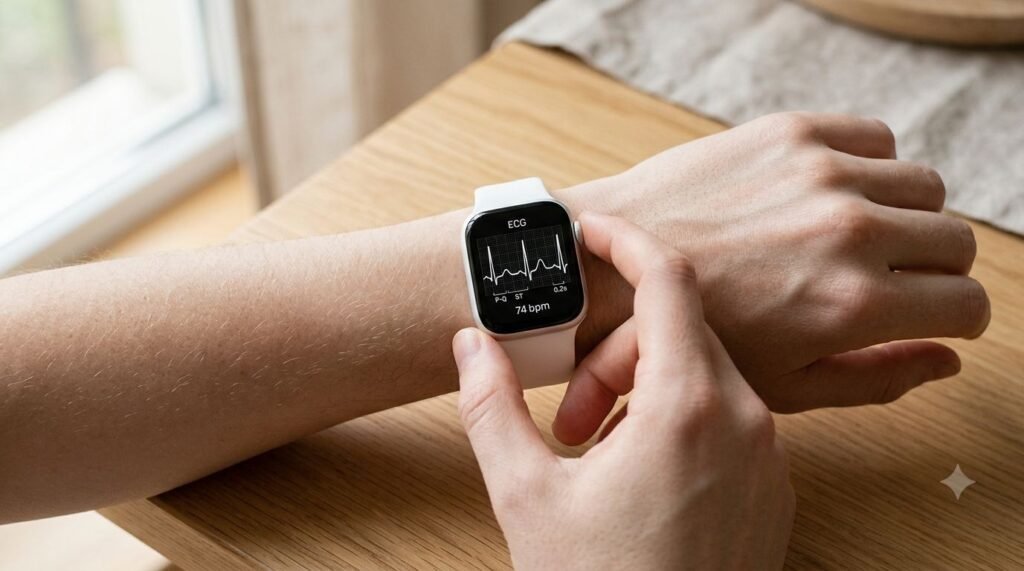
The electrocardiogram has been a cornerstone of cardiac diagnosis for over a century. For most of that time, getting one meant visiting a clinic, lying still while a technician attached electrodes to your chest and limbs, and waiting for a paper readout that a cardiologist would interpret days later. The ECG was clinical infrastructure — useful precisely because it was controlled, standardised, and interpreted by trained professionals.
That infrastructure assumption has quietly collapsed. Today, a $400 smartwatch can record a single-lead ECG in thirty seconds. A $100 chest patch worn continuously for two weeks can capture every heartbeat across that period. A handheld device the size of a television remote can take a medical-grade recording at home and transmit it to a physician. The technology has moved faster than the clinical frameworks for using it, and the result is a category of devices that are simultaneously more useful and more misunderstood than almost any other consumer health technology.
This article works through what wearable ECG monitors actually measure, what the clinical evidence supports, where consumer devices genuinely help patients and clinicians, and where they create noise rather than signal. It covers the best devices currently available, the conditions they’re most relevant for, and the questions worth asking before deciding whether one belongs in your health toolkit.
For broader context on how consumer health sensors measure biological signals and where their limitations lie, our guide on How BIA (Bioelectrical Impedance) Actually Measures Body Fat at SmartBuyLabs covers the principles of consumer health sensing that apply across this category.
What an ECG Actually Measures
The heart contracts in response to electrical signals that travel through specialised conduction tissue in a precise, repeating sequence. An electrocardiogram records the electrical activity generated by these contractions — specifically, the voltage differences detected between electrodes placed on the body. The resulting waveform, with its characteristic peaks and troughs labelled P, Q, R, S, and T, encodes information about the rate, rhythm, and conduction of the heart’s electrical system.
A clinical 12-lead ECG records from twelve different perspectives simultaneously — six chest leads and six limb leads — giving cardiologists a three-dimensional picture of cardiac electrical activity. From this, trained clinicians can identify arrhythmias, conduction abnormalities, signs of ischaemia, evidence of prior heart attacks, structural abnormalities, electrolyte disturbances, and a range of other conditions.
Wearable consumer ECG devices record from one or two leads — typically a single lead equivalent to Lead I (the voltage difference between left and right arm) or Lead II (left leg to right arm). This is not a limitation of the technology so much as a physical constraint: achieving more lead positions requires more electrode contact points, which conflicts with the wearability that makes these devices useful in the first place.
The practical consequence is that single-lead wearable ECGs are excellent at detecting rhythm abnormalities — whether the heart is beating regularly or irregularly — but have significant limitations for detecting ischaemia, structural heart disease, or conditions that require the full spatial picture of a 12-lead recording. Understanding this distinction is essential for using these devices appropriately and interpreting what they show — and what they don’t.
Single-Lead vs Multi-Lead: Why the Distinction Matters
The difference between a single-lead and a 12-lead ECG is not merely quantitative. It is qualitative — the two recordings answer fundamentally different clinical questions.
A single-lead recording answers the question: is this heart beating in a normal, organised rhythm? It can detect atrial fibrillation with high accuracy. It can identify rapid heart rates, pauses, and broad complex rhythms suggesting ventricular arrhythmias. It can show bundle branch blocks and certain conduction abnormalities. It is, in essence, a rhythm strip — the same type of recording used in hospital cardiac monitoring, where a single lead runs continuously to catch dangerous rhythm events.
A 12-lead recording answers a much wider range of questions: is there evidence of ongoing ischaemia suggesting a heart attack? Is there a prior myocardial infarction visible as Q waves? Does the ST segment change suggest Prinzmetal angina? Is there right ventricular strain from a pulmonary embolism? Is the QTc interval prolonged, suggesting drug toxicity or a channelopathy? These questions require spatial information — the ability to view cardiac electrical activity from multiple angles simultaneously — that a single lead simply cannot provide.
Most consumer wearable ECG devices, including the Apple Watch ECG, Fitbit ECG app, Samsung Galaxy Watch ECG, and the Withings ScanWatch, record single-lead equivalent to Lead I. A small number of devices, including the KardiaMobile 6L and certain clinical patch monitors, record six leads, providing meaningfully more diagnostic information while remaining accessible outside a clinical setting.
The practical implication: if your symptom is palpitations or the sensation of an irregular heartbeat, a single-lead wearable ECG is potentially very useful. If your symptom is chest pain, shortness of breath, or something a physician suspects might involve ischaemia or structural disease, a single-lead recording is insufficient and a 12-lead ECG in a clinical setting is needed.
The Conditions Wearable ECGs Are Most Relevant For
Atrial fibrillation detection and monitoring
AFib is the clearest and most evidence-supported use case for consumer wearable ECGs. It is the most common sustained cardiac arrhythmia, affecting an estimated 33 million people globally, and its prevalence increases substantially with age — roughly 1 in 10 adults over 80 has AFib. It significantly increases the risk of stroke, heart failure, and cardiovascular mortality. And critically, it is frequently asymptomatic or paroxysmal — coming and going in episodes that may not coincide with a clinic visit.
The value proposition of a wearable ECG for AFib is compelling precisely because of this episodic nature. A twelve-second recording taken during a clinic appointment has a low probability of capturing an arrhythmia that occurs intermittently. A device worn continuously — or one that can be activated immediately when symptoms occur — captures what a scheduled appointment cannot. Multiple studies have demonstrated that wearable ECG devices can detect previously undiagnosed AFib at rates significantly higher than opportunistic clinic recording.
The Apple Heart Study, involving over 400,000 participants, found that irregular pulse notifications from the Apple Watch were confirmed as AFib in 84% of cases where follow-up ECG patch monitoring was completed. The Fitbit Heart Study showed similar results with irregular rhythm detection. These are genuine clinical contributions — real cases of undiagnosed AFib caught earlier than they otherwise would have been.
For patients with known AFib, wearable ECGs serve a monitoring function — assessing whether rate control is adequate, whether episodes are occurring during treated periods, and providing data to share with electrophysiologists managing ongoing treatment.
Palpitations and symptom-rhythm correlation
Palpitations — the sensation of an abnormal heartbeat, whether fast, slow, irregular, or simply prominent — are one of the most common reasons people seek cardiology consultation. The diagnostic challenge is that palpitations are frequently intermittent, and the sensation rarely correlates perfectly with an objective rhythm abnormality. Patients often report palpitations that turn out to be sinus tachycardia (normal fast heart rate), ectopic beats (early beats that feel like a missed beat followed by a thump), or anxiety — none of which are dangerous but all of which are alarming to the person experiencing them.
The gold standard for symptom-rhythm correlation has traditionally been the Holter monitor — a device worn continuously for 24 to 48 hours that records every heartbeat. Extended event monitors and implantable loop recorders extend this recording window for patients whose symptoms are less frequent. Wearable consumer ECGs occupy a useful space in this spectrum: they allow patients to record an ECG at the moment symptoms occur, capturing the rhythm during the event rather than hoping the Holter happens to catch it.
The diagnostic value of this approach depends on symptom frequency and the ability to record during symptoms. For someone who has palpitations multiple times per day, any recording device will likely capture the relevant rhythm. For someone who has palpitations once every two weeks, a 24-hour Holter is inadequate, and a device that can be activated on demand — a wearable ECG, a KardiaMobile, or a clinical event monitor — is more appropriate.
Wearable ECG recordings captured during symptoms can be shared with a cardiologist and, when interpretable, provide the symptom-rhythm correlation that guides further management. A recording showing sinus tachycardia during palpitations is reassuring. A recording showing paroxysmal supraventricular tachycardia explains the symptoms and guides treatment. A recording showing a normal sinus rhythm during severe palpitations suggests the sensation may have an alternative explanation.
Post-ablation monitoring
Catheter ablation — a procedure that uses targeted energy delivery to eliminate abnormal electrical pathways or triggers in the heart — is used to treat a range of arrhythmias including AFib, supraventricular tachycardias, and ventricular arrhythmias. Following ablation, assessing whether the arrhythmia has been successfully eliminated is clinically important, but episodic arrhythmias that were previously symptomatic can become asymptomatic after partial modification of the substrate.
Wearable ECG monitoring in the weeks and months following ablation provides data on arrhythmia burden — the proportion of time spent in abnormal rhythm — that helps electrophysiologists assess procedural success and guide decisions about anticoagulation, repeat procedures, or medication adjustment. Consumer devices used in this context generate data that can be downloaded and reviewed, though the quality and format of data exports varies between devices and may not integrate directly with clinical workflows.
Rate monitoring in known arrhythmia
For patients with known arrhythmias — managed AFib, SVT managed conservatively, or ventricular ectopy under observation — wearable ECG devices provide ongoing visibility into whether heart rate is within target ranges, whether arrhythmia episodes are occurring, and how the rhythm responds to activity, stress, and medication changes. This information supplements but does not replace scheduled clinical monitoring, and any significant changes identified through consumer devices should prompt clinical review rather than self-management decisions.
Cardiac rehabilitation and recovery monitoring
Following a heart attack, heart failure hospitalisation, or cardiac surgery, the recovery period involves gradual return to activity under medical supervision. Wearable ECG devices used in this context can provide continuous or episodic rhythm and rate data that supplements formal cardiac rehabilitation monitoring. Some structured cardiac rehabilitation programmes have begun incorporating consumer wearable data into their remote monitoring workflows, though this remains more common in research settings than routine clinical practice as of 2026.
What the Clinical Evidence Actually Supports
The evidence base for wearable consumer ECG devices has grown substantially in the past five years, and the picture is more nuanced than either enthusiastic marketing or sceptical dismissal suggests.
The strongest evidence supports consumer ECG devices for AFib detection. The Apple Heart Study, Fitbit Heart Study, and multiple independent validation studies have demonstrated that single-lead wearable ECGs can detect AFib with sensitivity and specificity sufficient to prompt appropriate clinical follow-up. The clinical question that remains contested is whether population-level screening for AFib with wearables reduces stroke incidence — a question that requires large randomised trials tracking long-term outcomes, which are underway but not yet reported at scale.
For symptom-rhythm correlation in palpitations, the evidence supports consumer ECGs as a supplement to clinical Holter monitoring in patients with frequent symptoms, with the practical advantage of longer recording windows and on-demand activation. The diagnostic yield — the proportion of recordings that provide actionable information — is meaningfully higher when recordings are captured during symptoms than when they’re recorded at arbitrary intervals.
The evidence is weaker for continuous screening in asymptomatic populations without cardiac risk factors. Population-level wearable ECG screening identifies arrhythmias — AFib, ectopic beats, conduction abnormalities — but the clinical significance of many incidental findings in otherwise healthy individuals is uncertain, and the downstream consequences including unnecessary anxiety, additional testing, and overtreatment are not well quantified.
The evidence for detecting conditions beyond arrhythmia — ischaemia, structural disease, cardiomyopathy — with single-lead consumer devices is not supportive. These devices are not designed or validated for these purposes, and attempting to use them as such risks both false reassurance and unnecessary alarm from normal variants misinterpreted by users without clinical training.
Where Consumer ECG Devices Fall Short
Single-lead recordings cannot rule out serious cardiac conditions
This cannot be stated clearly enough. A normal single-lead ECG recorded on a smartwatch does not mean the heart is structurally normal, that ischaemia is absent, or that a serious cardiac condition has been excluded. The recording reflects rhythm only from one electrical perspective. Chest pain with a normal Apple Watch ECG is not reassuringly normal — it is simply a rhythm recording that has no bearing on ischaemic disease.
The risk of false reassurance is clinically significant. People experiencing chest pain who check their smartwatch ECG, see “sinus rhythm,” and delay seeking medical attention are using the device in a way it was neither designed nor validated for.
Algorithm limitations and false positives
Consumer ECG algorithms are trained and validated on specific populations, and their performance outside those populations may differ. The Apple Watch ECG algorithm is FDA-cleared for AFib detection but is not validated for manual rhythm interpretation. Recordings classified as “inconclusive” by the device algorithm — a common result in practice — require clinical interpretation that most users are not positioned to provide. Motion artefact, poor electrode contact, and baseline wander (low-frequency noise from breathing or movement) can produce recordings that look alarming to a non-clinician but are technically uninterpretable.
False positive AFib notifications — irregular rhythm alerts that turn out to be ectopic beats, noise, or poor contact rather than true AFib — generate unnecessary anxiety and downstream cardiology referrals. Multiple studies have found that a meaningful proportion of irregular rhythm notifications from wearable devices are not confirmed as AFib on follow-up patch monitoring.
The interpretation gap
Consumer ECG devices produce recordings. They do not produce diagnoses. The algorithm’s classification — sinus rhythm, AFib, or inconclusive — is a screening output, not a clinical interpretation. Detailed rhythm analysis — identifying SVT subtypes, distinguishing atrial flutter from AFib, characterising ectopic morphology, or identifying conduction abnormalities — requires clinician review of the actual tracing.
Most people using consumer ECG devices lack the training to interpret what they see beyond the algorithm’s summary. This is not a criticism — it is simply the reality that ECG interpretation is a clinical skill that takes years to develop. The implication is that the device’s value is as a recording and alerting tool, not as a diagnostic tool, and that any actionable finding requires clinical confirmation.
Data format and clinical integration
Consumer ECG recordings are stored in proprietary formats that do not always integrate cleanly with clinical workflows. A Holter monitor recording is delivered to a cardiologist in a standardised format with dedicated analysis software. A Kardia recording delivered as a PDF to a GP is usable. An Apple Health ECG export shared in a non-standard format may require additional steps before a cardiologist can review it. The practical usability of consumer ECG data in clinical settings is improving but remains inconsistent.
The Best Wearable ECG Monitors in 2026
KardiaMobile 6L
Best Overall: Six-Lead Medical-Grade Recording, No Prescription Required
| Specification | Detail |
|---|---|
| Leads | 6 (Lead I, II, III, aVR, aVL, aVF) |
| Recording duration | 30 seconds (standard) / up to 5 minutes |
| FDA clearance | Yes — AFib, bradycardia, tachycardia, normal sinus rhythm, SVT (with KardiaCare) |
| Algorithm | AliveCor AI — validated across multiple clinical studies |
| Connectivity | Bluetooth to smartphone (iOS and Android) |
| Form factor | Handheld device — holds between fingers or places on knees |
| Subscription | KardiaCare optional (clinician review, extended analysis) |
| Compatibility | Works alongside Apple Watch and most smartwatches |
| Data export | PDF report, shareable with physicians |
The KardiaMobile 6L is the most clinically capable consumer ECG device available without a prescription and the strongest recommendation in this roundup for anyone whose primary concern is cardiac monitoring rather than general wellness tracking. Six leads provide meaningfully more diagnostic information than single-lead smartwatch ECGs — a six-lead recording can show axis deviation, bundle branch block morphology, and a wider range of arrhythmia characteristics that a single lead cannot capture.
The AliveCor algorithm that powers Kardia devices is the most extensively validated consumer ECG algorithm available, with publications in peer-reviewed cardiology journals and multiple independent studies confirming its accuracy for AFib detection. The six-lead version extends this validation to a broader set of rhythm classifications, and the optional KardiaCare subscription offers clinician ECG review — a genuine clinical service that bridges consumer technology and medical practice.
The form factor is deliberately clinical rather than wearable. You hold the device between thumb and fingers of each hand, or place it on bare knees while holding it in place, to complete the lead circuit. This is less convenient for continuous monitoring than a smartwatch but produces higher-quality recordings because electrode contact is controlled and motion artefact is minimal.
The PDF report format is clinically useful — it produces a readable, professional output that most cardiologists and GPs can review directly without specialist software. For patients who want to share ECG data with their physician, Kardia’s output is the most immediately usable of any consumer device in this roundup.
Pros:
- Six leads provide the most diagnostic information of any consumer ECG device available without prescription
- Most extensively validated consumer ECG algorithm in peer-reviewed literature
- PDF export is immediately usable by clinicians without specialist software
- Optional KardiaCare clinician review bridges consumer device and medical service
- No subscription required for core recording and algorithm classification
- Works alongside existing smartwatches rather than replacing them
Cons:
- Not continuously wearable — requires deliberate recording sessions
- Cannot capture arrhythmias that occur without warning or during sleep
- Form factor requires two hands and thirty seconds of still, deliberate recording
- KardiaCare subscription adds ongoing cost for clinician review features
- Smaller community of general users than Apple Watch ECG — less peer support for troubleshooting
Who Should Buy This: Anyone whose cardiologist has recommended home ECG monitoring for symptom-rhythm correlation. Patients with known or suspected AFib who want the most clinically credible consumer recording available. Anyone who wants to share ECG data with a physician and needs a format they’ll actually be able to use. People who experience intermittent palpitations and want to capture recordings during symptoms.
Who Should Skip This: People who want continuous passive monitoring rather than on-demand recording. Those who want ECG as part of a broader fitness and health tracking ecosystem. Anyone whose primary concern is general wellness rather than a specific cardiac symptom.
Apple Watch Series 9
Best Smartwatch ECG: Seamless Integration, Reliable AFib Detection
| Specification | Detail |
|---|---|
| Leads | 1 (Lead I equivalent) |
| Recording duration | 30 seconds |
| FDA clearance | Yes — AFib detection, sinus rhythm classification |
| Algorithm | Apple ECG algorithm |
| Connectivity | Integrated — no additional device needed |
| Form factor | Smartwatch — worn continuously on wrist |
| Additional cardiac features | Irregular rhythm notifications (passive, background) |
| Data export | PDF via Health app, integration with Apple Health |
| Compatibility | iPhone required |
The Apple Watch Series 9 is the most widely used consumer ECG device in the world by a substantial margin, primarily because the ECG function is integrated into a device people already wear rather than requiring a separate purchase decision. For users already in the Apple ecosystem, the Series 9’s ECG capability represents a meaningful cardiac monitoring addition to a device they were likely considering anyway.
The irregular rhythm notification feature is, in some ways, more clinically valuable than the on-demand ECG — it passively monitors heart rhythm in the background during periods of relative stillness and sends an alert if an irregular rhythm consistent with AFib is detected. This captures events the user may not have noticed or attributed to a specific symptom, which is precisely the scenario where wearable monitoring adds value over clinic-based recording.
The on-demand ECG records Lead I for thirty seconds when the user places a finger on the Digital Crown. The algorithm classifies the result as sinus rhythm, AFib, or inconclusive and generates a PDF that can be shared with a physician via Apple Health. The single-lead limitation means this recording is useful for rhythm assessment only — it cannot evaluate ischaemia or structural disease regardless of what the tracing looks like.
The Series 9’s overall health monitoring package — fall detection, heart rate alerts, blood oxygen, crash detection, and Emergency SOS alongside ECG — makes it the most comprehensive wearable health device in this roundup, even though its ECG capability is less diagnostically rich than the KardiaMobile 6L.
Pros:
- Continuous passive irregular rhythm monitoring captures AFib without deliberate recording
- Integrated into a device many users already own or were planning to buy
- Reliable, well-validated AFib detection algorithm with FDA clearance
- Emergency SOS and fall detection add safety value beyond ECG
- PDF export integrates naturally with Apple Health and is shareable with clinicians
Cons:
- Single lead only — significant diagnostic limitation compared to six-lead devices
- iPhone only — no Android compatibility
- Requires daily charging — missed nights of charging mean gaps in monitoring
- Algorithm classifications of “inconclusive” are common and provide limited actionable information without clinical follow-up
- ECG requires deliberate activation — passive monitoring is rhythm-only, not full ECG
Who Should Buy This: iPhone users who want continuous passive AFib monitoring as part of a broader wearable health ecosystem. People who want ECG capability without carrying a separate device. Anyone for whom fall detection, Emergency SOS, and general fitness tracking are also priorities alongside cardiac monitoring.
Who Should Skip This: Android users — full stop. Anyone who needs six-lead diagnostic quality rather than single-lead rhythm screening. People whose primary need is clinical-grade recording rather than consumer wellness integration. Those likely to forget daily charging, which creates gaps in monitoring.
Withings ScanWatch 2
Best for Continuous Monitoring with Medical-Grade Accuracy
| Specification | Detail |
|---|---|
| Leads | 1 (Lead I equivalent) |
| Recording duration | 30 seconds |
| FDA clearance | Yes — AFib detection |
| Algorithm | Withings ECG algorithm |
| Connectivity | Bluetooth to smartphone (iOS and Android) |
| Form factor | Traditional watch design — worn continuously |
| Additional sensors | SpO2, skin temperature, respiratory rate during sleep |
| Battery life | Up to 30 days |
| Data export | PDF, integration with Withings Health Mate app |
| Compatibility | iOS and Android |
The Withings ScanWatch 2 occupies a distinctive position in this roundup: a medical-grade AFib detection device in the form factor of a traditional analogue watch, with a battery life of up to thirty days and compatibility with both iOS and Android. For users who want continuous cardiac monitoring without the daily charging requirement of the Apple Watch and without committing to a smartwatch aesthetic, the ScanWatch 2 is the most compelling option available.
Withings has a stronger medical device heritage than most consumer electronics companies in this space — the company has CE-marked and FDA-cleared multiple devices and has published clinical validation data for its ECG algorithm in peer-reviewed literature. The ScanWatch 2’s algorithm is validated for AFib detection with accuracy comparable to the Apple Watch ECG, while the traditional watch design means it is more likely to be worn consistently — including during sleep, when AFib episodes frequently occur.
The thirty-day battery life is a meaningful practical advantage for monitoring continuity. Patients who are instructed to wear a monitoring device consistently often struggle with smartwatch charging routines. The ScanWatch 2’s charging interval is closer to a traditional watch experience — charge once a month rather than once a night.
The additional health sensors — SpO2, skin temperature, and respiratory rate — complement the cardiac monitoring with data relevant to sleep quality, illness detection, and respiratory health. For users interested in a comprehensive health monitoring picture rather than cardiac-only data, the ScanWatch 2’s sensor suite is broader than some competitors.
Pros:
- Up to 30-day battery life — the longest in this roundup, significantly improving monitoring continuity
- Traditional watch aesthetic appeals to users who prefer not to wear a smartwatch
- Works with both iOS and Android — broadest smartphone compatibility in this roundup
- Clinically validated AFib algorithm with peer-reviewed publication record
- Comprehensive sensor suite including SpO2, skin temperature, and respiratory rate
- FDA-cleared and CE-marked — strong regulatory validation
Cons:
- Single lead only — same diagnostic limitation as Apple Watch ECG
- Traditional watch interface less feature-rich than full smartwatch for non-health use cases
- No fall detection or Emergency SOS
- Withings Health Mate app less widely adopted than Apple Health or Google Health — smaller ecosystem
- On-demand ECG requires deliberate activation; passive monitoring is rhythm-only
Who Should Buy This: Android users who want clinically validated continuous AFib monitoring in a traditional watch form factor. Anyone for whom long battery life is a priority — particularly patients who struggle with daily device charging. Users who want medical-grade cardiac monitoring without committing to a full smartwatch ecosystem.
Who Should Skip This: Users who want the broadest smartwatch feature set alongside ECG. Those who need six-lead diagnostic quality. Anyone already deeply invested in the Apple ecosystem where the Apple Watch offers stronger integration.
KardiaMobile (Single-Lead)
Best Entry-Level Option: Proven, Affordable, Clinically Respected
| Specification | Detail |
|---|---|
| Leads | 1 (Lead I equivalent) |
| Recording duration | 30 seconds |
| FDA clearance | Yes — AFib, bradycardia, tachycardia, normal sinus rhythm |
| Algorithm | AliveCor AI |
| Connectivity | Ultrasound-based transmission to smartphone microphone (iOS and Android) |
| Form factor | Credit card-sized device — attaches to phone case |
| Subscription | KardiaCare optional |
| Data export | PDF, shareable with physicians |
| Compatibility | iOS and Android |
The original KardiaMobile single-lead device remains one of the most clinically respected consumer ECG products available, carried by cardiologists who want a portable recording tool and recommended by cardiac nursing specialists for patients discharged with new arrhythmia diagnoses. Its single-lead limitation places it in the same diagnostic category as smartwatch ECGs, but its recording quality, algorithm validation, and PDF output quality make it a credible clinical companion at a significantly lower price than any smartwatch.
The unique ultrasound transmission mechanism — the device transmits recorded data via ultrasound to the smartphone’s microphone rather than Bluetooth — eliminates pairing requirements and works with virtually any smartphone. Place fingers on the two electrodes, open the Kardia app, and the recording begins. The simplicity of the workflow produces better recording compliance in older patients than more complex devices.
For patients who have been told by a cardiologist to monitor for AFib recurrence, who want to capture palpitation episodes without buying a smartwatch, or who want to share credible ECG data with their physician at a modest cost, the single-lead KardiaMobile is a practical, time-tested choice.
Pros:
- Most affordable dedicated ECG recording device in this roundup with full clinical credibility
- No Bluetooth pairing — ultrasound transmission works immediately with any smartphone
- AliveCor algorithm extensively validated in peer-reviewed literature
- PDF output directly usable by cardiologists and GPs
- Works with both iOS and Android
- Small enough to carry in a wallet or attach to a phone case
Cons:
- Single lead — same diagnostic limitation as smartwatch ECGs
- Not wearable — requires deliberate two-handed recording
- Cannot capture events during sleep or without warning
- Requires the Kardia app and smartphone proximity for every recording
- Less comprehensive health monitoring than smartwatch alternatives
Who Should Buy This: Patients who need an affordable, clinically credible ECG recording device on their physician’s recommendation. Anyone who experiences palpitations and wants to capture an on-demand recording without buying a smartwatch. Users who want AliveCor’s validated algorithm at the lowest cost of entry.
Who Should Skip This: People who want passive continuous monitoring — this device requires active use. Anyone for whom a smartwatch is already planned — the six-lead KardiaMobile 6L or Apple Watch ECG provides better value in those scenarios.
Garmin Venu 3
Best for Athletes and Active Users Needing Cardiac Awareness
| Specification | Detail |
|---|---|
| Leads | 1 (Lead I equivalent) |
| Recording duration | 30 seconds |
| Regulatory clearance | CE-marked (EU); regulatory status varies by market |
| Algorithm | Garmin ECG algorithm |
| Connectivity | Integrated smartwatch — Bluetooth to smartphone |
| Form factor | Smartwatch — worn continuously |
| Additional cardiac features | HRV tracking, resting heart rate, heart rate during exercise |
| Battery life | Up to 14 days (smartwatch mode) |
| Compatibility | iOS and Android |
The Garmin Venu 3 is the most compelling option in this roundup for physically active users who want cardiac monitoring integrated into a fitness-focused smartwatch platform. Garmin’s strength is exercise tracking — GPS accuracy, workout analysis, training load, recovery metrics — and the ECG function on the Venu 3 adds cardiac rhythm monitoring to a device that serious athletes and fitness-focused users were already considering.
The fourteen-day battery life is a significant advantage over the Apple Watch’s daily charging requirement and means the device is worn continuously, including during sleep, without charging interruption. HRV tracking — heart rate variability, an indicator of autonomic nervous system tone and recovery status — is one of Garmin’s more developed health monitoring features and provides context for cardiac monitoring data.
The honest qualification is that the Garmin ECG algorithm has a smaller body of clinical validation literature than AliveCor’s Kardia algorithm or Apple’s ECG algorithm. The device is CE-marked for European markets but its FDA clearance status for the ECG function varies by model and market — verify current regulatory status for your specific region before purchasing for clinical monitoring purposes.
For the fitness-focused user who wants cardiac awareness as one component of a comprehensive health and performance monitoring system, the Venu 3 is well-suited. For users whose primary concern is clinical cardiac monitoring, the KardiaMobile 6L or Apple Watch Series 9 are more appropriate choices.
Pros:
- Fourteen-day battery life enables continuous wear without charging interruption
- Works with both iOS and Android — broad smartphone compatibility
- Garmin’s fitness tracking ecosystem is the most comprehensive for athletes
- HRV tracking provides recovery context alongside cardiac rhythm data
- Sleep monitoring with detailed staging provides additional health data
Cons:
- ECG algorithm has less peer-reviewed validation than AliveCor or Apple
- Regulatory clearance varies by market — verify FDA status for your region
- Single lead only — same diagnostic limitation as all smartwatch ECGs
- Garmin Connect health app less medically oriented than Withings or Kardia ecosystems
- ECG feature is secondary to fitness tracking — less developed cardiac monitoring workflow than dedicated cardiac devices
Who Should Buy This: Active users and athletes who want cardiac rhythm monitoring integrated into a fitness-first smartwatch platform. Android users who want a long-battery alternative to the Apple Watch with ECG capability. People for whom exercise tracking, GPS, and training metrics are as important as cardiac monitoring.
Who Should Skip This: Users whose primary concern is clinical cardiac monitoring rather than fitness tracking. Those who need the strongest available algorithm validation for clinical purposes. Anyone in the US who needs confirmed FDA ECG clearance — verify current status before purchasing.
Side-by-Side Comparison Table
| Product | Leads | Form Factor | Passive Monitoring | Battery Life | FDA Cleared | iOS/Android | Best For |
|---|---|---|---|---|---|---|---|
| KardiaMobile 6L | 6 | Handheld | No | N/A (no battery) | Yes | Both | Clinical diagnostic quality |
| Apple Watch Series 9 | 1 | Smartwatch | Yes (rhythm) | ~18 hours | Yes | iOS only | Ecosystem integration, AFib screening |
| Withings ScanWatch 2 | 1 | Traditional watch | Yes (rhythm) | 30 days | Yes | Both | Long battery, traditional design |
| KardiaMobile (1L) | 1 | Handheld/pocket | No | N/A | Yes | Both | Affordable clinical recording |
| Garmin Venu 3 | 1 | Smartwatch | Yes (rhythm) | 14 days | Varies by market | Both | Athletes, fitness integration |
How to Use a Wearable ECG Effectively
Record during symptoms, not just at scheduled intervals
The clinical value of a consumer ECG comes primarily from symptom-rhythm correlation — capturing a recording at the moment you experience palpitations, dizziness, or an abnormal heart sensation. A recording taken thirty minutes after symptoms resolve may show nothing useful. Keep the device accessible and make capturing a recording during symptoms a reflex, even if the episode seems brief or resolves quickly before recording is complete.
Understand what the algorithm classification means and doesn’t mean
When a device classifies a recording as “sinus rhythm,” it means the algorithm has detected a regularly organised rhythm consistent with normal sinus rhythm from the perspective of that single lead. It does not mean the heart is structurally normal, that ischaemia is absent, or that a more complex arrhythmia isn’t present that the single-lead recording cannot resolve. Similarly, “AFib detected” is a screening result that requires clinical confirmation, not a diagnosis.
Build a recording library before your appointment
If you’re monitoring for intermittent symptoms, building a library of recordings across different contexts — during symptoms, at rest, during mild activity, during sleep if the device supports it — gives your cardiologist more information than a single recording. Note the time, your activity, and your symptoms alongside each recording. Context transforms a rhythm strip from a data point into a clinical narrative.
Share data with your physician proactively
Consumer ECG devices are most useful when the data reaches a clinician who can interpret it and integrate it with clinical context. Don’t wait to be asked — bring recordings to appointments, share PDF exports in advance, and ask your cardiologist whether they prefer data in a specific format. Some cardiology practices now have workflows for receiving consumer ECG data; others don’t, and knowing this in advance allows you to prepare appropriately.
Don’t use ECG results to self-manage cardiac symptoms
This is the most important usage principle. A wearable ECG is a recording device, not a diagnostic or treatment tool. Decisions about anticoagulation, rate control, cardioversion, or any other cardiac treatment must involve a qualified physician with access to your full clinical picture. Using ECG data to self-adjust medications, decide whether to seek emergency care, or reassure yourself that a symptom is safe to ignore are all applications that the device was not designed for and that carry real clinical risk.
Frequently Asked Questions
Can a wearable ECG diagnose a heart attack? No. Single-lead consumer ECGs cannot diagnose myocardial infarction. A heart attack diagnosis requires a 12-lead ECG interpreted by a clinician alongside blood tests measuring cardiac troponin — a protein released when heart muscle is damaged. If you have chest pain, shortness of breath, jaw or arm pain, or other symptoms suggesting a heart attack, call emergency services immediately. Do not check your smartwatch ECG and use a normal result as reassurance — it has no diagnostic value for ischaemia.
How accurate are consumer ECG devices for AFib detection? The validated consumer ECG algorithms — AliveCor (Kardia), Apple, and Withings — have demonstrated sensitivity and specificity for AFib detection in the range of 93 to 99% in validation studies against clinical 12-lead ECG. Real-world performance is somewhat lower than controlled study conditions due to motion artefact, variable electrode contact, and atypical presentations. A positive result should prompt clinical confirmation rather than self-diagnosis. A negative result in someone with risk factors and symptoms should still lead to clinical evaluation.
Should I share my ECG recordings with my doctor? Yes, particularly if the algorithm detected an abnormality, you recorded during symptoms, or you have a cardiac history that makes ongoing monitoring clinically relevant. Most cardiologists and GPs can review a Kardia PDF or Apple Health ECG export. Call ahead to check whether your practice has a workflow for receiving consumer ECG data — some practices now have dedicated pathways for this.
Can I use a wearable ECG to monitor my pacemaker? Consumer wearable ECGs are not designed or validated for pacemaker monitoring. Pacemaker function is assessed through dedicated pacemaker clinic interrogation using specialist equipment. The algorithm classifications on consumer devices may behave unpredictably with paced rhythms. If you have a pacemaker and want to monitor your cardiac rhythm at home, discuss appropriate monitoring options with your electrophysiologist — do not rely on consumer ECG classification algorithms.
Do wearable ECG devices work for people with irregular rhythms? It depends on the specific device and arrhythmia. AFib produces a characteristically irregular rhythm that the validated algorithms are specifically designed to detect. Other irregular rhythms — frequent ectopic beats, atrial flutter with variable block, sinus arrhythmia — may not be classified correctly by consumer algorithms and require clinical interpretation of the actual tracing rather than the algorithm summary. In patients with known complex arrhythmias, clinical review of raw recordings is more valuable than algorithm classification output.
Is a prescription required for wearable ECG devices? In the United States and most European markets, consumer ECG devices including Kardia, Apple Watch, and Withings ScanWatch are available without a prescription. They are regulated as over-the-counter medical devices rather than prescription-only medical equipment. The KardiaCare clinician review service is an optional subscription, not a regulatory requirement. If your physician has recommended home ECG monitoring, they may have a preferred device or service — check with them before purchasing.
What should I do if my device detects AFib? Don’t panic, and don’t make any clinical decisions based on the device result alone. An AFib notification from a wearable device is a screening result that requires clinical confirmation — book an urgent appointment with your GP or cardiologist, tell them about the device notification and any associated symptoms, and bring your recorded ECG data. If you have additional symptoms including chest pain, significant breathlessness, or dizziness, seek urgent medical attention rather than waiting for a routine appointment. Anticoagulation and other AFib management decisions are made by physicians after confirming the diagnosis, not by patients acting on device notifications.
Our Verdict
Wearable ECG monitors are clinically useful for a specific and important set of applications. They are not cardiac screening tools for the general healthy population, not replacements for clinical evaluation of chest pain or other serious symptoms, and not diagnostic instruments that consumers can use independently of physician involvement. Within their appropriate scope, however, they represent a genuine advance in accessible cardiac monitoring that has demonstrably improved the detection of previously undiagnosed AFib and the clinical utility of symptom-rhythm correlation.
For the clearest clinical use cases — documenting palpitation episodes for cardiologist review, monitoring for AFib recurrence after cardioversion or ablation, capturing rhythm data in patients with known arrhythmias — wearable ECG devices have earned a legitimate place in the cardiac monitoring toolkit.
The KardiaMobile 6L is the strongest recommendation for anyone whose primary need is clinical diagnostic quality. Six leads, an extensively validated algorithm, and a PDF output that cardiologists can use directly make it the most clinically credible consumer ECG device available. For users who want continuous passive monitoring integrated into a device they wear daily, the Apple Watch Series 9 is the best option for iPhone users and the Withings ScanWatch 2 is the best option for Android users and those who need long battery life. For athletes who want cardiac awareness within a fitness-first platform, the Garmin Venu 3 integrates ECG into the most comprehensive exercise monitoring ecosystem available.
Whatever device you choose, the most important principle is unchanged from the opening of this article: these devices produce recordings. Clinical decisions require clinicians. Use the technology to generate better data, share that data with your physician, and let the people trained to interpret it do so.