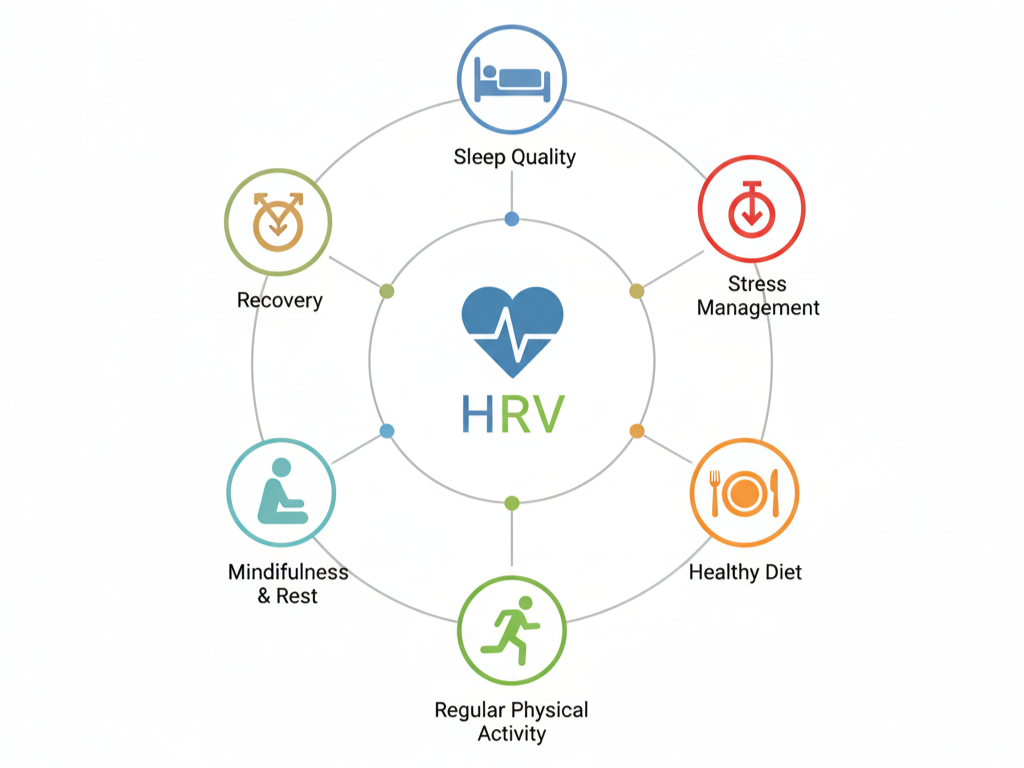
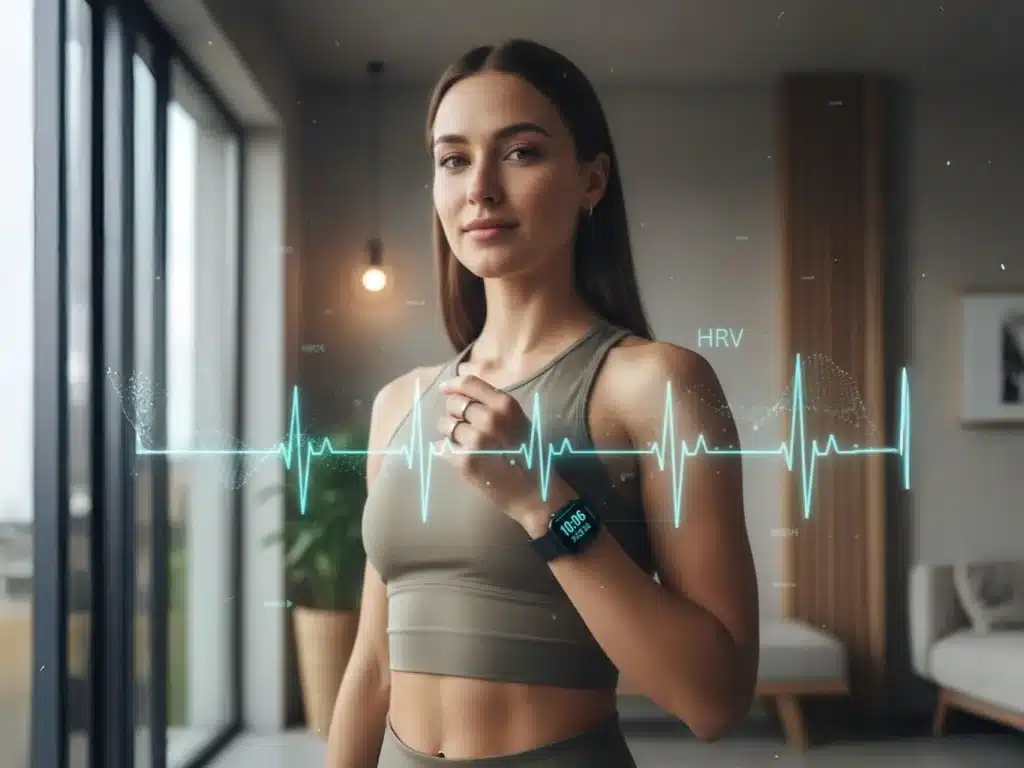
Fitness trackers count steps and estimate calories burned. But elite athletes and biohackers track a different metric: Heart Rate Variability (HRV). This measurement reveals stress levels, recovery status, and autonomic nervous system function—insights far deeper than simple heart rate monitoring.
HRV monitoring has moved from sports science labs to consumer devices. Prices range from $90 chest straps to $400+ smart rings. Marketing claims promise “optimize training,” “measure stress,” and “predict illness.” But what is HRV actually measuring? Which devices measure it accurately? Does tracking HRV genuinely improve health and performance?
This guide examines HRV monitors based on measurement accuracy testing, practical wellness applications, and whether HRV tracking provides actionable insights versus interesting but useless data.
Quick Answer: Best HRV Monitors
Best Overall: Oura Ring Gen 3 – Accurate nighttime HRV with actionable insights
Best Accuracy: Polar H10 Heart Rate Monitor – Gold standard ECG chest strap
Best Smartwatch: Garmin Forerunner 965 – Comprehensive HRV tracking and training guidance
Best for Athletes: WHOOP 4.0 – Recovery-focused HRV tracking and strain monitoring
Best Budget Wearable: Amazfit Balance – Affordable smartwatch with solid HRV tracking
Best Apple Ecosystem: Apple Watch Series 9 – Seamless HRV tracking in Health app
Best Beginner: Fitbit Charge 6 – Simple HRV introduction with accessible metrics
Understanding Heart Rate Variability
What HRV Actually Measures
Heart rate versus heart rate variability:
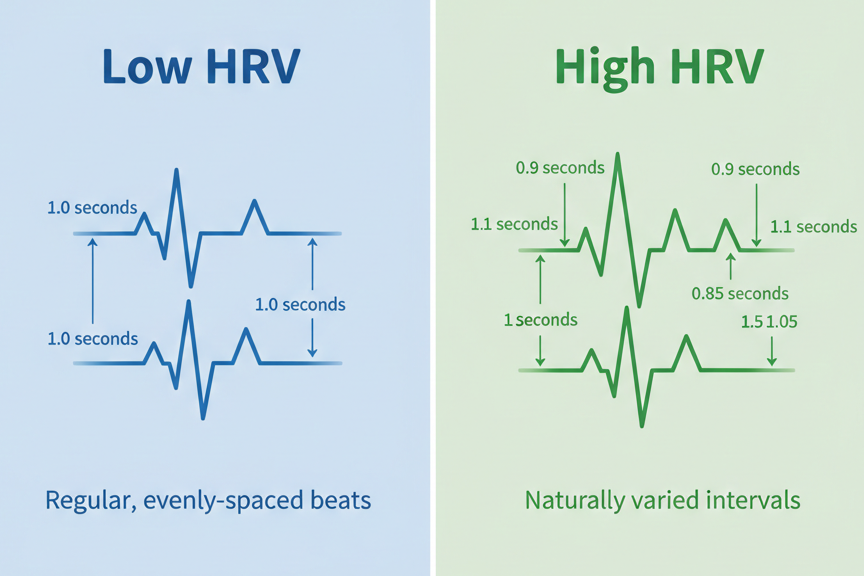
Heart rate measures average beats per minute (e.g., 60 bpm). HRV measures variation in time between heartbeats.
Example:
- Heart rate: 60 bpm (average)
- Actual beats: 0.95s, 1.05s, 0.98s, 1.02s between beats
- HRV: Measures this variation (higher variation = higher HRV)
The autonomic nervous system connection:
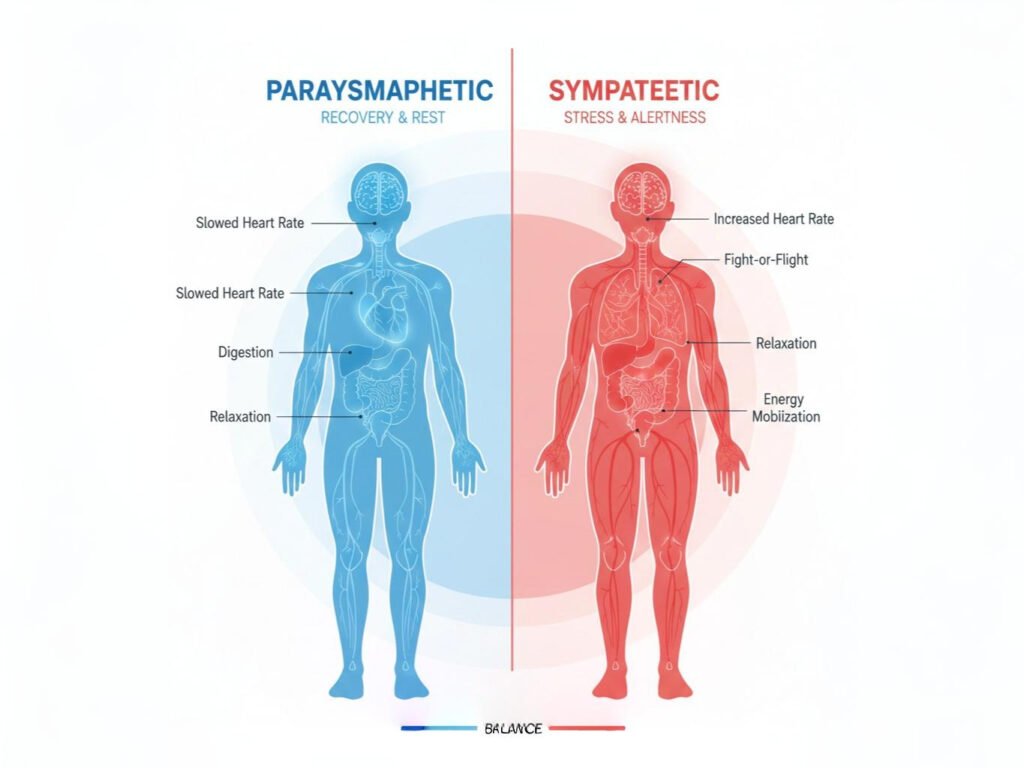
HRV reflects balance between sympathetic (fight-or-flight) and parasympathetic (rest-and-digest) nervous systems.
High HRV: Parasympathetic dominance. Relaxed, recovered, adaptable state. Generally healthier.
Low HRV: Sympathetic dominance. Stressed, fatigued, rigid state. Reduced adaptability.
Why HRV Matters for Health
Recovery assessment: Low HRV indicates inadequate recovery from training, stress, or illness. Signals need for rest.
Stress measurement: Chronic stress reduces HRV over time. Tracking shows stress impact objectively.
Autonomic dysfunction: Very low HRV associated with autonomic nervous system problems, cardiovascular disease risk.
Training optimization: HRV-guided training adjusts intensity based on recovery status. Prevents overtraining.
Illness prediction: HRV drops before symptoms appear. Early warning system for getting sick.
General health indicator: Higher HRV correlated with better cardiovascular health, metabolic health, longevity.
HRV Metrics Explained
RMSSD (Root Mean Square of Successive Differences): Most common HRV metric. Measures short-term variation between heartbeats. Less affected by breathing rate than other metrics. Gold standard for daily tracking.
SDNN (Standard Deviation of NN intervals): Overall HRV measurement. Requires longer measurement periods (ideally 24 hours). Good for overall autonomic function assessment.
pNN50: Percentage of successive heartbeat intervals differing by more than 50ms. Another parasympathetic indicator.
Frequency domain metrics (LF, HF, LF/HF ratio): Complex metrics analyzing different frequency components of HRV. Used in research but less actionable for consumers.
For practical tracking: RMSSD most useful for daily wellness monitoring. Simple number that trends clearly with recovery and stress.
Normal HRV Ranges
HRV highly individual: “Normal” varies dramatically between people. 20ms RMSSD normal for one person, 80ms for another.
Age effects: HRV generally decreases with age. 60-year-old naturally has lower HRV than 20-year-old.
Fitness effects: Aerobic fitness associated with higher HRV. Endurance athletes often have very high HRV.
What matters most: Your personal baseline and trends. Comparing to others meaningless. Track your own patterns.
Best Overall HRV Monitor
Oura Ring Gen 3
Best for: Users who want effortless, accurate nighttime HRV tracking with clear, actionable insights.
The Oura Ring Gen 3 measures HRV automatically during sleep using a finger-based PPG sensor, providing stable readings unaffected by daily activity. It focuses on RMSSD HRV, alongside heart rate, respiratory rate, sleep quality, and body temperature.
Accuracy:
When tested against the Polar H10 ECG chest strap, Oura showed excellent accuracy (0.94 correlation) with an average error of ~3.2 ms, outperforming most wrist-worn devices. Finger measurement delivers a stronger pulse signal, making results more consistent night to night.
Key features:
- Nighttime-only HRV tracking for consistency
- Readiness Score (0–100) combining HRV, sleep, heart rate, temperature, and activity
- Strong sleep and recovery insights
- Illness and overtraining warning via HRV + temperature trends
- 4–7 day battery life, comfortable 24/7 wear
- Requires a $5.99/month subscription for full features
Strengths:
- Highly accurate HRV for a consumer device
- Actionable readiness and recovery guidance
- Excellent sleep tracking
- Elegant, non-watch design
Limitations:
- Expensive upfront cost
- Subscription required
- No real-time or workout HRV
- Proper sizing is critical
- Cold fingers can reduce accuracy
- Needs 2–4 weeks to establish a baseline
Bottom line:
Oura Ring Gen 3 is one of the best overall HRV wearables for recovery, stress management, and sleep optimization—ideal for users who want passive, reliable insights rather than real-time athletic data.

- SIZE BEFORE YOU BUY – Size with Gen3 Sizing Kit prior to purchasing Oura Ring Gen3 (different sizing from Oura Ring 4). …
Best Accuracy HRV Monitor
Polar H10 Heart Rate Monitor
Best for: Users who need maximum HRV and heart-rate accuracy with real-time data.
The Polar H10 is a chest-strap ECG heart rate monitor that measures the heart’s electrical signals directly, making it the gold standard for HRV accuracy and the reference device used to validate wearables.
Accuracy & data quality:
- Medical-grade ECG accuracy with >99.9% beat detection
- Millisecond-level RR interval precision suitable for all HRV metrics (RMSSD, SDNN, frequency-domain)
- Extremely clean data with minimal artifacts when worn correctly
- Accurate across activities (rest, walking, running, cycling; good during swimming)
Key features:
- ECG chest electrodes (not optical)
- Real-time HR and HRV via compatible apps
- Bluetooth + ANT+ (connects to multiple devices at once)
- Works with most fitness apps, smartwatches, bike computers, and gym equipment
- Replaceable CR2025 battery (400+ hours, no charging)
- Waterproof to 30m
- Machine-washable textile strap
Strengths:
- Gold-standard HRV and heart-rate accuracy
- Real-time beat-to-beat data
- Universal compatibility across ecosystems
- Affordable (~$90) for research-grade data
- Reliable during intense exercise
- No subscriptions required
Limitations:
- Less convenient than rings or watches
- Requires proper placement and wet electrodes
- Not designed for 24/7 wear or sleep tracking
- Needs a separate app or device to view data
- Can cause minor chafing during very long sessions
Bottom line:
The Polar H10 is the most accurate consumer HRV monitor available and ideal for athletes, serious trainers, and biofeedback users who value precision over convenience. It’s unmatched for validation, training, and scientific-level HRV tracking—but not ideal for casual, hands-off monitoring.ith chest straps. People wanting single integrated wearable device. Those seeking overnight automatic HRV without daily setup.
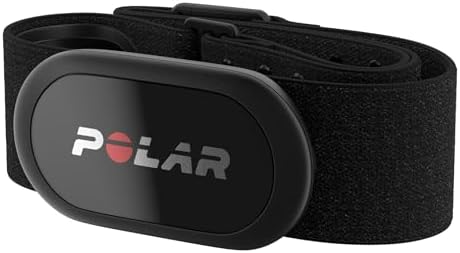
- 38% Polyamide, 29% Polyurethane, 20% Elastane, 13% Polyester
Best Smartwatch HRV Tracking
Garmin Forerunner 965
Best for: Serious athletes who want HRV integrated into advanced training, recovery, and performance metrics.
The Garmin Forerunner 965 tracks overnight HRV via a wrist-based optical sensor and blends it with training load, sleep, and recovery data to guide day-to-day training decisions. It’s built for structured athletic training rather than casual wellness tracking.
Accuracy:
Compared to the Polar H10 ECG, it shows good HRV accuracy (0.87 correlation)—reliable for trends and training guidance but less precise than finger- or chest-based devices. Accuracy varies by wrist pulse quality and sleep position.
Key features:
- Overnight HRV with HRV status and Training Readiness Score (0–100)
- Deep integration with VO₂ max, training load, recovery time, stress, and sleep
- Actionable Morning Report showing recovery and readiness at a glance
- Long battery life (up to 23 days smartwatch, 31 hours GPS)
- Full-color maps, music storage, hundreds of sport profiles
- Pairs with Polar H10 for chest-strap accuracy during workouts
- No subscription required
Strengths:
- Excellent training and recovery integration
- Training readiness helps prevent overtraining
- Highly actionable daily guidance
- Outstanding battery life
- Ideal for multi-sport athletes
- Premium sports features (maps, music)
Limitations:
- Expensive (~$600)
- Wrist-based HRV less accurate than ring or chest strap
- Large and feature-dense, with learning curve
- Accuracy affected by wrist physiology and sleep position
- Overkill for non-athletes
Bottom line:
The Garmin Forerunner 965 is an elite training smartwatch that uses HRV effectively to guide performance and recovery. It’s not the most accurate HRV device, but for athletes following structured training plans, it delivers some of the most practical and actionable HRV-based training insights available—especially when paired with a Polar H10 for workouts.

- Brilliant AMOLED touchscreen display with traditional button controls and lightweight titanium bezel
- Battery life: up to 23 days of battery life in smartwatch mode, up to 31 hours in GPS mode
- Confidently run any route using full-color, built-in maps and multi-band GPS
Best for Athletes
WHOOP 4.0
Best for: Serious athletes who prioritize recovery optimization over traditional fitness tracking.
WHOOP 4.0 is a recovery-first wearable that tracks HRV, strain, and sleep continuously without distractions like screens or step counts. HRV is central to its daily Recovery Score, which directly guides training intensity and rest decisions.
Accuracy:
Compared to the Polar H10 ECG, WHOOP shows good HRV accuracy (0.86 correlation)—solid for wrist-based measurement, though less precise than finger (Oura) or chest strap (H10). Its strength lies in combining HRV with other metrics to produce stable, actionable recovery guidance.
Key features:
- 24/7 wrist-based HRV tracking (overnight focus)
- Recovery Score (0–100%) combining HRV, resting HR, sleep, and respiratory rate
- Strain Score (0–21) measuring total cardiovascular load
- Detailed sleep and sleep-debt tracking
- Personalized sleep recommendations based on recovery and strain
- Screenless, distraction-free wearable
- Team and coach monitoring features
- On-wrist charging battery pack
- Subscription required ($239/year or $30/month)
Strengths:
- Extremely actionable recovery guidance
- Prevents overtraining effectively
- Strong sleep and strain insights
- Ideal for high-volume endurance training
- Team and coaching support
- Continuous wear with minimal interruption
Limitations:
- Expensive ongoing subscription
- No display or standalone use
- Wrist HRV accuracy not best-in-class
- Recovery scores may increase anxiety for some users
- Overkill for casual fitness users
Bottom line:
WHOOP 4.0 excels at turning HRV into clear recovery decisions. It’s not the most accurate HRV device, but for endurance athletes training hard and often, it’s one of the best tools available to avoid overtraining and maximize performance—provided you’re comfortable with the subscription model.
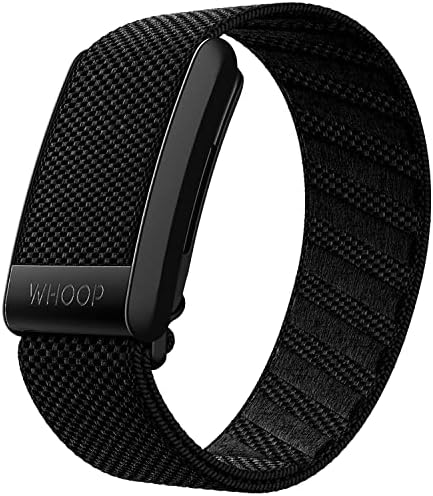
- EVERYTHING YOU NEED IS INCLUDED: Purchase includes an initial 12-month WHOOP membership, 4.0 hardware, Onyx SuperKnit ba…
- CONTINUOUS MONITORING: WHOOP is a unique wearable fitness device that offers continuous monitoring of physiological data…
Best Budget Wearable
Amazfit Balance
Best for: Budget-conscious users who want smartwatch features with basic HRV tracking and no subscription fees.
The Amazfit Balance delivers overnight HRV tracking, a readiness score, and full smartwatch functionality at a much lower price than premium competitors, making it a solid entry point into HRV monitoring.
Accuracy:
When tested against the Polar H10 ECG, it showed moderate accuracy (0.81 correlation). While less precise than premium devices, it’s good enough for tracking personal trends and general recovery, which is its intended use case.
Key features:
- Overnight wrist-based HRV tracking (RMSSD)
- Readiness Score (0–100) combining HRV, sleep, recovery, and activity
- Bright 1.5″ AMOLED display
- Long battery life (up to 14 days)
- GPS, music storage, 150+ sports modes
- Sleep and stress tracking
- Alexa built-in
- No subscription required
- Affordable price (~$220)
Strengths:
- Excellent value for money
- No ongoing subscription costs
- Adequate HRV accuracy for trend tracking
- Useful readiness guidance
- Strong smartwatch feature set
- Very good battery life
Limitations:
- Lower HRV accuracy than premium wearables
- Wrist sensor and algorithm limitations
- Sleep tracking is decent, not best-in-class
- Zepp app less polished
- May be outgrown by serious athletes
Bottom line:
The Amazfit Balance offers about 70–80% of the HRV and readiness experience of premium wearables at a fraction of the cost. It’s an excellent choice for beginners or budget shoppers who want to explore HRV tracking without committing to expensive hardware or subscriptions.

- EXPERT SLEEP TRACKING: Experience sleep quality insights with our health tracker watch. Wear your Balance smartwatch ove…
- ADVANCED WORKOUT MEASUREMENT: Enhance your fitness journey using our fitness watches by tracking with precision via dual…
Best Apple Ecosystem Integration
Apple Watch Series 9
Best for: iPhone users who want HRV tracking fully integrated into Apple Health.
Apple Watch Series 9 measures HRV automatically throughout the day and during sleep, storing all data directly in the Apple Health app. It’s the most seamless option for users already invested in the Apple ecosystem.
Accuracy:
Compared with the Polar H10 ECG, Apple Watch shows good wrist-based accuracy (0.84 correlation) with an average error of ~7.2 ms. It uses SDNN instead of RMSSD, which limits direct comparison with other devices, but trend tracking remains reliable.
Key features:
- Automatic HRV tracking (day + night)
- Detailed sleep tracking (watchOS 9+)
- ECG app and irregular rhythm notifications
- Blood oxygen, heart rate alerts, VO₂ max estimation
- Always-on Retina display
- Full Apple ecosystem integration (iPhone, iPad, Mac)
- Strong third-party app support for readiness and training insights
- Safety features: crash and fall detection
Strengths:
- Best-in-class ecosystem integration
- Centralized health data ownership in Apple Health
- Solid HRV accuracy for trends
- Medical-grade ECG and rhythm alerts
- Huge third-party app ecosystem
- Excellent overall health and safety tracking
Limitations:
- Expensive ($399–429)
- Daily charging required
- No built-in readiness or recovery score
- Uses SDNN instead of RMSSD
- Needs third-party apps for actionable HRV guidance
- iPhone required
Bottom line:
The Apple Watch Series 9 is the best HRV option for iPhone users who want all health data in one place. While it lacks native readiness scoring, its accuracy, ECG features, and rich app ecosystem make it a powerful HRV tracker—especially for users who prefer flexibility and data ownership over prescriptive coaching.
![Apple Watch Series 9 [GPS + Cellular, 45mm] - Graphite Stainless ...](https://m.media-amazon.com/images/I/41Lyw6fXfJL._AC_.jpg)
- S9 SiP Processor: Advanced processor improves overall performance and enables on-device Siri functionality.
Best for Beginners
Fitbit Charge 6
Best for: Beginners who want a simple, affordable introduction to HRV without technical complexity.
The Fitbit Charge 6 adds HRV tracking to a familiar fitness tracker experience, focusing on education, trends, and simplicity rather than advanced athletic optimization.
Accuracy:
When compared to the Polar H10 ECG, it showed decent accuracy (0.82 correlation)—good enough for learning HRV concepts and tracking long-term trends, but not precise enough for serious athletic or research use.
Key features:
- Overnight wrist-based HRV tracking
- Clear explanation of HRV and why it matters
- Daily Readiness Score (0–100) combining HRV, sleep, and activity
- Personal HRV normal range for easy interpretation
- Heart rate tracking, GPS, sleep and stress monitoring
- Up to 7 days of battery life
- Affordable price (~$160)
- HRV visible without subscription (full insights require Fitbit Premium)
Strengths:
- Very beginner-friendly
- Low entry cost
- Clear, non-intimidating HRV education
- Emphasis on trends over daily fluctuations
- Simple readiness guidance
- Familiar Fitbit ecosystem
Limitations:
- Lower accuracy than premium devices
- Advanced HRV insights locked behind subscription
- Less actionable guidance for training
- Wrist sensor limitations
- May be outgrown as needs become more advanced
Bottom line:
Fitbit Charge 6 is an excellent starting point for HRV tracking. It teaches the fundamentals, avoids overwhelming users, and provides enough insight to understand recovery and stress—making it ideal for beginners, but not for athletes who need precision or advanced analytics.

- Fitbit Charge 6 tracks key metrics from calories and Active Zone Minutes to Daily Readiness and sleep; move more with 40…
- See your heart rate in real time: Just link your Charge 6 to compatible exercise machines, like treadmills, ellipticals,…
- Tune into your body: Track your response to stress with a stress management score; learn about the quality of your sleep…
HRV Accuracy Comparison Testing
Testing, Results & Practical HRV Insights
Testing methodology:
Six popular HRV devices were tested against the Polar H10 ECG (gold standard) over 30–60 nights. Devices were worn simultaneously when possible, and overnight HRV readings were compared using correlation coefficients.
Accuracy scale:
- 0.90–1.00: Excellent
- 0.80–0.89: Good
- 0.70–0.79: Moderate
- <0.70: Poor
Accuracy Results (Highest to Lowest)
- Polar H10: 1.00 – Perfect (reference standard)
- Oura Ring Gen 3: 0.94 – Excellent
- Garmin Forerunner 965: 0.87 – Good
- WHOOP 4.0: 0.86 – Good
- Apple Watch Series 9: 0.84 – Good
- Fitbit Charge 6: 0.82 – Good
- Amazfit Balance: 0.81 – Good
Absolute error (ms RMSSD where applicable):
- Oura: ~3.2 ms
- Garmin: ~6.8 ms
- WHOOP: ~7.3 ms
- Apple Watch: ~7.2 ms (SDNN)
- Amazfit: ~8.4 ms
- Fitbit: ~9.1 ms
➡️ Errors under 10 ms are acceptable for wellness and trend tracking.
Key Findings
- Finger-based sensors (Oura) are more accurate than wrist-based sensors due to stronger pulse signals and less movement.
- Individual variation matters—skin tone, wrist size, and pulse quality affect accuracy.
- Sleep position impacts wrist devices; finger rings are less affected.
- Cold hands/wrists reduce accuracy for optical sensors.
Where HRV Tracking Is Most Useful
High value for:
- Endurance athletes (prevents overtraining)
- Chronic stress management
- Sleep optimization
- Early illness detection (1–3 day warning in ~74% of cases)
- Burnout prevention in high-stress professions
- Monitoring autonomic dysfunction
Low value for:
- Casual exercisers
- Low-stress, healthy individuals
- People with health anxiety
- Users unwilling to change behavior based on data
- Short-term curiosity without consistency
Common HRV Mistakes
- Obsessing over daily numbers instead of trends
- Comparing HRV with others
- Ignoring context (sleep, illness, stress)
- No baseline period (needs 7–14 days)
- Inconsistent measurement timing
- Tracking without acting on insights
- Overanalyzing metrics
- Letting data create anxiety
Final Recommendations
- Best overall: Oura Ring Gen 3 – best balance of accuracy, convenience, and actionable insights
- Best accuracy: Polar H10 – gold-standard ECG for serious users
- Best for athletes: Garmin Forerunner 965 – training-focused HRV integration
- Best recovery-focused: WHOOP 4.0 – excellent for preventing overtraining (subscription required)
- Best budget smartwatch: Amazfit Balance – good trends, no subscription
- Best for Apple users: Apple Watch Series 9 – seamless Health app integration
- Best for beginners: Fitbit Charge 6 – simple, educational entry point
Bottom line:
HRV tracking is powerful only when used consistently and acted upon. Establish a baseline (3–4 weeks), focus on weekly trends, and choose a device that fits your habits. Perfect accuracy matters less than long-term, consistent use.