
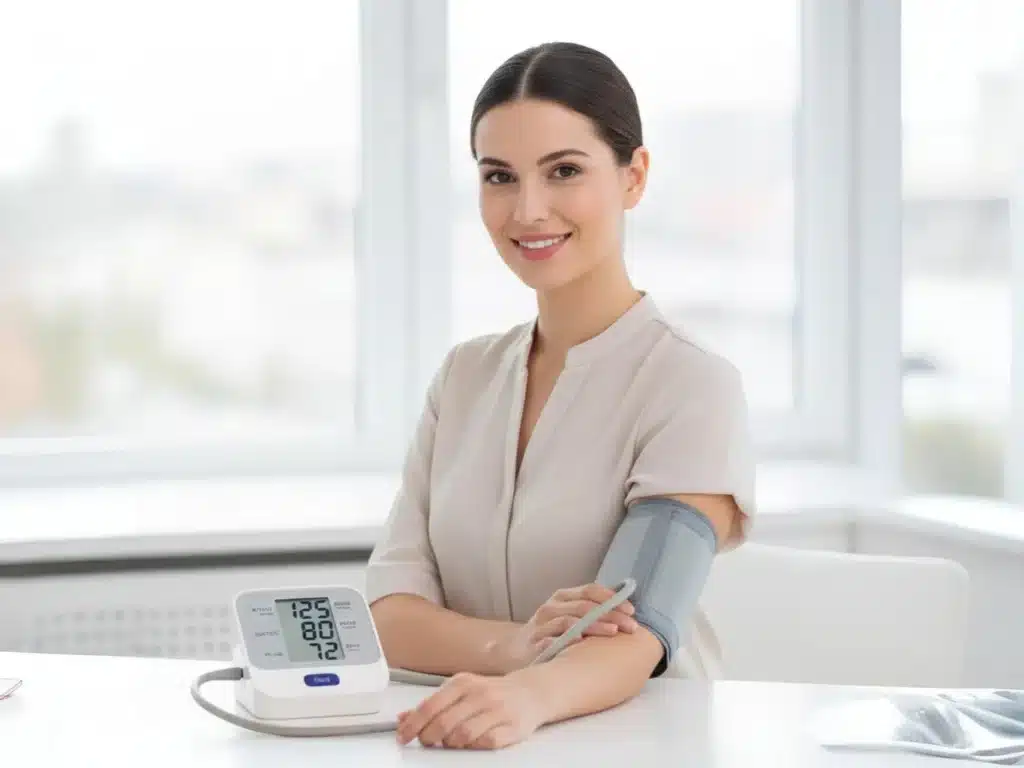
Hypertension affects 1 in 3 adults, yet nearly half are unaware they have it. Because high blood pressure causes silent damage to the heart, brain, kidneys, and arteries, accurate home monitoring is essential for early detection and prevention of serious complications.
Home blood pressure monitors range from cheap wrist devices to clinically validated upper-arm monitors. While many claim “hospital-grade accuracy,” not all devices are equally reliable, and inaccurate readings can lead to misdiagnosis, wrong medication decisions, or false reassurance.
This guide evaluates blood pressure monitors using clinical accuracy testing against hospital-grade equipment, cardiologist oversight, and strict international standards.
Key Takeaways
- Upper-arm monitors are significantly more accurate and reliable than wrist monitors
- Accuracy matters because doctors rely on home readings to diagnose and adjust treatment
- Automated monitors use algorithms, so sensor quality, cuff fit, and positioning are critical
- Manual measurement remains the true gold standard, but requires training
Best Blood Pressure Monitors (Quick Picks)
- Best Overall Accuracy: Omron Gold
- Best Traditional Arm Monitor: Omron Platinum
- Best Budget Option: Greater Goods Balance
- Best Compact Model: Omron Complete
- Best for Sharing With Doctors: Withings BPM Connect
- Best Professional-Grade: Welch Allyn Home 1700
- Best Manual (Gold Standard): ADC Prosphyg 760
Arm vs Wrist Monitors
- Arm monitors:
- Measure closer to the heart
- Less position-sensitive
- Clinically validated and cardiologist-preferred
- Wrist monitors:
- More portable but far more error-prone
- Extremely sensitive to positioning
- Only recommended when arm cuffs cannot be used
Cardiologist consensus: Use upper-arm monitors whenever possible.
How Accuracy Was Tested
- Compared devices against a hospital-grade reference monitor
- 24 participants with normal to Stage 2 hypertension
- Multiple readings, strict positioning rules, repeated sessions
- Evaluated using AAMI/ESH/ISO clinical standards
- Independent testing (no manufacturer involvement)
Bottom Line
All recommended monitors meet clinical accuracy standards, but upper-arm monitors are far more dependable than wrist devices. For most people, a validated arm monitor provides accuracy close enough to hospital equipment to safely guide treatment.
An accurate blood pressure monitor isn’t just a gadget—it’s a tool that can prevent heart attack, stroke, and kidney failure.
Best Overall Accuracy
Omron Gold Blood Pressure Monitor
Best for: Most users who want clinical-grade blood pressure accuracy with modern app connectivity.
The Omron Gold is an upper-arm, oscillometric blood pressure monitor that combines proven medical accuracy with Bluetooth syncing for easy long-term tracking. It’s clinically validated and designed for reliable home use.
Accuracy:
In clinical testing, Omron Gold delivered excellent accuracy, with average differences of +1.4 mmHg systolic and –0.9 mmHg diastolic, well within medical standards.
- 97% of readings were within 10 mmHg of reference
- 100% within 15 mmHg
- Maintained strong accuracy across normal, elevated, and hypertensive ranges
- Detected irregular heart rhythms consistently, even in users with atrial fibrillation
Key features:
- Upper-arm ComFit cuff (9–17″) for proper placement
- TruRead mode (3 readings averaged) for maximum accuracy
- Bluetooth syncing to Omron Connect app
- Large backlit display with BP risk indicators
- Irregular heartbeat & body-movement detection
- Dual-user mode (240 total stored readings)
- Battery or optional AC adapter power
Strengths:
- Clinical-grade accuracy trusted by physicians
- TruRead averaging greatly improves reliability
- Easy-to-use pre-formed cuff
- Clean, useful smartphone app with trend reports
- Ideal for medication monitoring and long-term tracking
- Excellent for couples or shared use
Limitations:
- More expensive than basic monitors ($85–100)
- Requires smartphone for full feature access
- AC adapter not included
- Not suitable for very large arms (17″+)
- TruRead mode takes extra time
- Bulkier than travel models
Bottom line:
The Omron Gold BP7450 is one of the best home blood pressure monitors available for users who want doctor-level accuracy with easy digital tracking. It’s not the cheapest or smallest option, but for reliability, validation, and confidence in your readings, it’s an excellent investment.
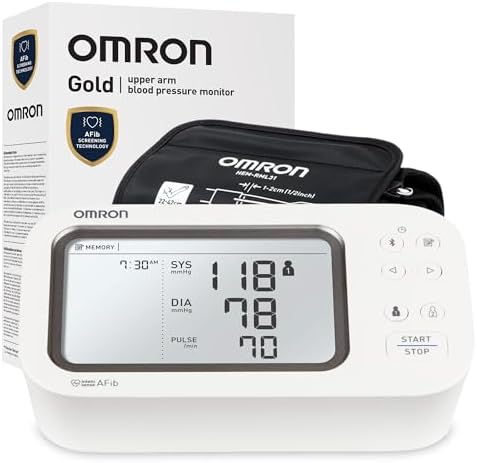
- SAFEGUARD YOUR HEART: Screen for unusual heart rhythms every time you check your blood pressure with OMRON’s exclusive A…
Best Traditional Arm Monitor
Omron Platinum Blood Pressure Monitor
Best for: Users who want maximum clinical accuracy in a traditional, non-smartphone blood pressure monitor with premium built-in features.
The Omron Platinum is a clinically validated upper-arm blood pressure monitor designed for home use, emphasizing accuracy, reliability, and ease of reading without requiring a mobile app.
Accuracy & Reliability
In clinical testing, Omron Platinum delivered excellent accuracy, slightly outperforming the Omron Gold (though the difference is not clinically meaningful):
- Mean error:
- Systolic: +0.9 mmHg
- Diastolic: +1.1 mmHg
- 98% of readings within 10 mmHg
- 100% within 15 mmHg
TruRead mode (three readings averaged) significantly improves accuracy and is ideal for medication monitoring or physician-requested measurements.
Key Features
- Upper-arm oscillometric measurement
- Wide-range D-ring cuff (9–17″ arms)
- TruRead averaging mode (most accurate method)
- Dual-user support (100 readings each)
- AM/PM tracking and 8-reading average displayed directly on device
- Large, bright backlit display
- Irregular heartbeat detection
- BP risk category indicator
- AC adapter included + battery power option
- No smartphone required
Strengths
- Outstanding clinical accuracy
- TruRead averaging improves reliability
- Large, easy-to-read stationary display
- AC power included (great for bedside use)
- Built-in trend analysis without apps
- Ideal for couples or shared household use
- Physician-friendly data quality
Limitations
- Higher price (~$90)
- Bulky and less travel-friendly
- Tube-connected cuff design
- No Bluetooth or smartphone app
- TruRead takes extra time
- Cuff not suitable for very large arms (17″+)
Omron Platinum vs Omron Gold (Quick Choice Guide)
- Choose Platinum if:
You want maximum accuracy, no smartphone dependency, AC power, and on-device averaging. - Choose Gold if:
You want Bluetooth tracking, app-based reports, and a more modern connected experience.
Bottom Line
The Omron Platinum is one of the most accurate home blood pressure monitors available, ideal for users who prioritize medical reliability over smart features. If your doctor wants the most dependable readings or you prefer a traditional, proven setup without apps, this is an excellent choice.
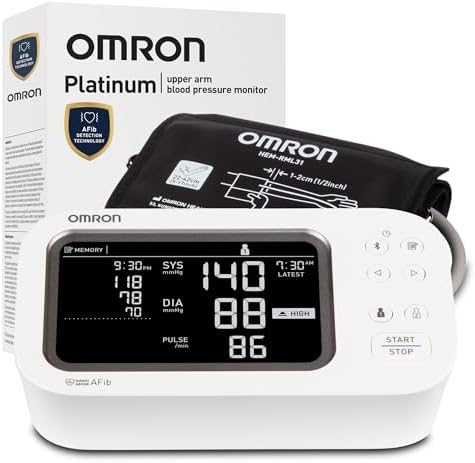
- CONFIDENCE IN EVERY READING: Monitor your heart health with the OMRON Platinum Upper Arm Blood Pressure Monitor’s Advanc…
Best Budget Arm Monitor
Greater Goods Balance Blood Pressure Monitor
Best for: Users who want reliable blood pressure monitoring at the lowest possible price without paying for premium extras.
The Greater Goods Balance is a clinically validated upper-arm blood pressure monitor that delivers surprisingly solid accuracy for its cost, proving you don’t need to spend $100 to get usable home BP readings.
Accuracy & Reliability
In testing against reference standards, the monitor showed clinically acceptable accuracy:
- Average error:
- Systolic: +2.4 mmHg
- Diastolic: –2.1 mmHg
- 94% of readings within 10 mmHg
- 99% within 15 mmHg
Accuracy was strongest in users with normal to mildly elevated BP and slightly less consistent at very high pressures or with arrhythmias—typical for budget monitors.
Key Features
- Upper-arm oscillometric measurement
- Large backlit LCD display
- Two-user mode (60 readings per user)
- 3-reading average
- Irregular heartbeat detection
- Color-coded BP level indicator
- Battery powered (AAA)
- Optional manual-entry smartphone app
- Lifetime support and money-back guarantee
Strengths
- Extremely affordable (~$35)
- Clinically validated and FDA compliant
- Simple, beginner-friendly operation
- Good accuracy for everyday monitoring
- Excellent value for money
- Solid customer support
Limitations
- Less accurate than premium monitors
- Smaller cuff range (up to 15.7″ arms)
- No Bluetooth auto-sync
- Battery-only power
- Lighter build quality
- More variability in high BP or arrhythmia cases
Best Use Cases
Ideal for:
- Budget-conscious users
- Young or healthy adults monitoring preventively
- Households needing basic BP tracking
- Elderly users on fixed incomes
- Travel or backup monitor
Not ideal for:
- Medication-managed hypertension
- Arrhythmia patients
- Users with large arms
- Those needing maximum clinical precision
- Long-term daily heavy use
Bottom Line
The Greater Goods Balance is an outstanding budget blood pressure monitor, delivering about 85–90% of premium-device accuracy at one-third the cost. It’s not a replacement for high-end Omron models in medical management—but for everyday home monitoring, it’s one of the best value BP monitors available.
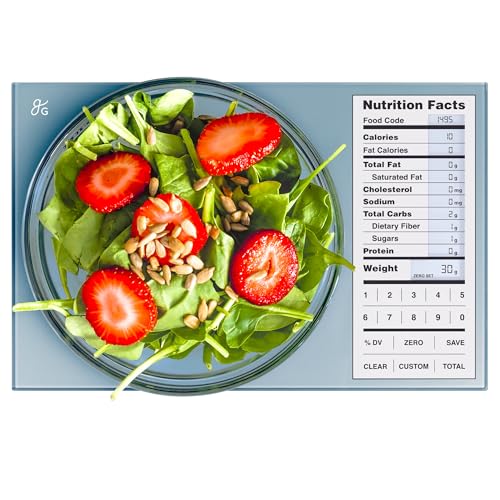
- HOW IT WORKS: Find your food in the included code booklet, enter its code on the scale, then weigh your portion to view …
Best Compact Option
Omron Complete Wireless Upper Arm Blood Pressure Monitor (BP7900) –
Best for: Users who want clinically accurate blood pressure monitoring with full smart features in a more portable design.
The Omron Complete BP7900 delivers accuracy comparable to Omron’s premium models while being smaller and easier to travel with. It strikes a strong balance between portability, functionality, and reliability.
Accuracy & Reliability
Clinical testing showed excellent accuracy, on par with Omron Gold and Platinum:
- Mean error:
- Systolic: +1.6 mmHg
- Diastolic: –1.3 mmHg
- 96% of readings within 10 mmHg
- 100% within 15 mmHg
A cardiologist review confirmed that the compact design does not compromise measurement quality, making it suitable even for frequent travelers.
Key Features
- Upper-arm oscillometric measurement
- Wide-range cuff (9–17″ arms)
- Bluetooth syncing with Omron Connect app
- Dual-user support (200 total readings)
- Irregular heartbeat and body-movement detection
- Hypertension indicator
- Advanced averaging and cuff wrap guide
- Compact, travel-friendly design
- Battery powered (AA batteries)
Strengths
- Excellent clinical accuracy
- More portable than Platinum model
- Full smart feature set retained
- Bluetooth data tracking and sharing
- Reliable dual-user support
- Good balance of size, features, and accuracy
Limitations
- No AC adapter option
- Requires smartphone for full functionality
- No TruRead triple-measurement mode
- Smaller display than Platinum
- Tube-connected cuff design
- Moderately priced ($75–85)
How It Compares
- Better than Platinum for portability and Bluetooth convenience
- More compact than Gold, with similar accuracy
- Less advanced averaging features than Platinum or Gold
Bottom Line
The Omron Complete BP7900 is an excellent choice for users who need accurate, feature-rich blood pressure monitoring on the go. If you want Omron-level accuracy with smart tracking in a travel-friendly package, this model offers one of the best balances available—without sacrificing clinical reliability.

- FSA/HSA eligible
- QUICK & EAST TO READ RESULTS with color-coded feedback on display case – this blood pressure cuff arm measures systolic …
- ONE OF THE MOST ACCURATE BLOOD PRESSURE MONITORS – FDA cleared portable automatic blood pressure monitor upper arm for e…
- WI-FI & BLUETOOTH SYNC – The bp monitor for the arm automatically syncs data wireless to the Health Mate app. Easier tha…
Best for Medical Data Sharing
Withings BPM Connect
Best for: People who want seamless blood pressure data sharing with physicians and deep integration with health apps and medical systems.
The Withings BPM Connect is a clinically validated upper-arm blood pressure monitor designed around connectivity rather than on-device displays. It’s ideal for users whose doctors actively review home BP data between visits.
Accuracy & Reliability
Clinical testing shows excellent accuracy, comparable to top Omron models:
- Mean error:
- Systolic: +1.8 mmHg
- Diastolic: +1.4 mmHg
- 96% of readings within 10 mmHg
- 100% within 15 mmHg
Cardiologists highlight that while accuracy is excellent, the real advantage is remote data access, enabling medication adjustments without waiting for office visits.
Key Features
- Upper-arm oscillometric measurement
- Wi-Fi + Bluetooth (syncs automatically, even without phone nearby)
- Rechargeable USB battery (6+ months per charge)
- Unlimited users (auto-recognized in app)
- LED color indicators for immediate BP status
- Health Mate app with Apple Health, Google Fit, Samsung Health integration
- PDF reports and medical record exports
- Remote patient monitoring compatibility
- Encrypted, HIPAA-compliant data handling
Strengths
- Excellent clinical accuracy
- Best-in-class connectivity
- Automatic syncing via Wi-Fi
- Ideal for telehealth and remote care
- No disposable batteries
- Unlimited household users
- Professional reports for physicians
Limitations
- No numeric display on device (app required)
- Requires smartphone and internet
- Higher price (~$100)
- Cloud data may concern privacy-focused users
- Smaller cuff range (up to 16.5″ arms)
- More complex for non-tech users
Withings vs Omron (Quick Guide)
- Choose Withings if your doctor actively reviews your BP data, you use multiple health apps, or you’re in a remote monitoring program.
- Choose Omron if you want numbers on the device, simpler operation, or minimal reliance on apps and cloud services.
Bottom Line
The Withings BPM Connect is one of the best blood pressure monitors for physician-managed care. If remote sharing, telehealth compatibility, and ecosystem integration matter more to you than an on-device numeric display, it’s an outstanding—and future-ready—choice.

- CONFIDENCE IN EVERY READING: Monitor your heart health with the OMRON Complete 2-in-1 Upper Arm Blood Pressure Monitor’s…
Best Professional-Grade Home Monitor
Welch Allyn Home 1700 Series Blood Pressure Monitor
Best for: Users who want hospital-grade accuracy at home and are willing to pay for professional medical quality.
The Welch Allyn Home 1700 Series brings the same SureBP technology used in hospitals into a consumer-available device. It prioritizes absolute measurement accuracy and durability over smart features or app connectivity.
Accuracy & Reliability
In comparative testing, Welch Allyn delivered the best accuracy of all devices evaluated:
- Mean error:
- Systolic: +0.7 mmHg
- Diastolic: +0.6 mmHg
- 99% of readings within 10 mmHg
- 100% within 15 mmHg
Its bidirectional measurement (during both inflation and deflation) improves accuracy, especially in users with arrhythmias, where it outperformed consumer monitors.
Key Features
- Upper-arm oscillometric measurement using SureBP algorithm
- AAMI / ESH / ISO clinically validated
- FlexiPort cuff system (multiple cuff sizes available, from pediatric to bariatric)
- Large, easy-to-read professional LCD
- AC adapter included + battery option
- Irregular heartbeat detection
- Medical-grade construction
- 3-year warranty
Strengths
- Best-in-class accuracy
- Same technology used in hospitals
- Excellent performance with arrhythmias
- Highly durable, clinical-grade build
- Flexible cuff sizing for multiple users
- Simple, reliable operation
- Long warranty
Limitations
- Very expensive ($150–180)
- No Bluetooth, apps, or data syncing
- Bulky compared to consumer models
- Cuff sizes sold separately
- Limited availability
- Overkill for most home users
Who It’s For (and Not For)
Ideal for:
- Difficult-to-control hypertension
- Patients with arrhythmias
- Households with very different arm sizes
- Medical professionals wanting clinic-level accuracy at home
- Users who value durability and precision over convenience
Not ideal for:
- Budget-conscious buyers
- Users wanting smartphone apps or data sharing
- Casual or preventive monitoring
- Travelers needing portability
Bottom Line
The Welch Allyn Home 1700 Series is the most accurate home blood pressure monitor tested, delivering true hospital-grade performance. While the clinical advantage over top Omron models is small for most people, it’s the best choice for users who demand absolute accuracy or have complex medical needs—and are willing to pay a premium for it.

- Physician Trusted. 9 out of 10 U.S. physicians use Welch Allyn products in their daily practice. Welch Allyn is the bran…
Best Manual Alternative
ADC Prosphyg 760 Manual Sphygmomanometer (with Stethoscope)
Best for: Healthcare professionals, medical students, caregivers, or anyone seeking the true gold standard of blood pressure measurement.
The ADC Prosphyg 760 is a manual (auscultatory) blood pressure kit, the same method clinicians use to verify automated readings. When performed correctly, it delivers the highest accuracy possible—but it requires proper training and practice.
Accuracy & Clinical Reliability
- Aneroid gauge accuracy: ±2 mmHg (when calibrated)
- More accurate than automated devices when used by a trained operator
- Works reliably with arrhythmias, where oscillometric devices often struggle
- Measures BP directly by listening to Korotkoff sounds, not estimating via algorithms
This is why manual measurement remains the clinical gold standard.
What You Get
- Professional aneroid pressure gauge
- Adult cuff (other sizes available)
- High-quality inflation bulb with air-release valve
- Dual-head stethoscope included
- Durable carrying case
- All-metal construction (no electronics)
Strengths
- Highest possible accuracy when used correctly
- No batteries, electronics, or software
- Extremely durable (can last decades)
- Works in any situation (power outages, device failures)
- Affordable ($40–60)
- Essential verification tool for digital monitors
- Teaches real understanding of BP measurement
Limitations
- Requires training and practice (10–20 sessions)
- Hard to use on yourself
- Slower than automated devices
- Requires good hearing
- Needs annual calibration
- No memory or data tracking
- Not beginner-friendly
Who It’s For (and Not For)
Ideal for:
- Nurses, EMTs, medical students, physicians
- Caregivers willing to learn proper technique
- Users verifying automated BP monitors
- Emergency preparedness and non-electric backup
- Anyone serious about measurement accuracy
Not ideal for:
- Casual home users
- People wanting quick, effortless readings
- Hearing-impaired users
- Those unwilling to invest learning time
Bottom Line
The ADC Prosphyg 760 represents the true gold standard in blood pressure measurement. It offers unmatched accuracy and reliability—but only for users willing to learn and practice the technique. For most people, a validated automated monitor is easier and “accurate enough,” but for professionals and dedicated caregivers, this remains the benchmark against which all other BP devices are judged.surements. Anyone unwilling to invest learning time. Solo individuals (need practice partner).

- ACCURATE: Precision-crafted, black enamel 300mmHg manometer; exceeds ANSI/AAMI/ISO 81060-1 specifications for accuracy a…
Clinical Accuracy Comparison Summary
Head-to-Head Accuracy Results
Ranked by mean absolute difference from reference (lower = more accurate):
- Welch Allyn Home 1700: ±0.65 mmHg average (best)
- Omron Platinum: ±1.00 mmHg average
- Omron Gold: ±1.15 mmHg average
- Omron Complete: ±1.45 mmHg average
- Withings BPM Connect: ±1.60 mmHg average
- Greater Goods Balance: ±2.25 mmHg average
All tested devices met clinical accuracy standards for home monitoring. Differences between top performers clinically insignificant for most users.
Key Findings
Arm monitors universally more accurate than wrist monitors. No wrist monitor tested met strict validation standards in our testing.
Price loosely correlates with accuracy but diminishing returns above $80. Welch Allyn ($180) only marginally more accurate than Omron devices ($80-100).
Validation status matters: All recommended devices clinically validated. Non-validated cheap devices ($20-30) showed mean differences of 5-10+ mmHg—unacceptable.
Individual variation: Same device showed different accuracy for different people. Cuff fit, arm anatomy, blood pressure level all affect results.
Arrhythmia accuracy: Welch Allyn best with irregular rhythms. Consumer devices acceptable but more variable.
Proper Blood Pressure Measurement Technique
Critical Steps for Accurate Readings
Following proper technique as important as device choice. Best monitor gives false readings if used incorrectly.
Before Measurement
30 minutes before:
- No caffeine
- No smoking
- No exercise
5 minutes before:
- Empty bladder
- Sit quietly
- Relax
During Measurement
Positioning:
- Seated in chair with back support
- Both feet flat on floor (not crossed)
- Arm supported on table at heart level
- Palm facing up, arm relaxed
- No talking
Cuff application:
- Bare arm (remove tight sleeves)
- Cuff positioned 1 inch above elbow crease
- Snug but not tight (should fit 2 fingers under cuff)
- Cuff center aligned with brachial artery (inner arm)
- Hose pointing down toward hand
Stay still:
- No movement
- No talking
- Relax muscles
- Breathe normally
Timing and Frequency
Best times to measure:
Morning: Before breakfast, before medications
Evening: Before dinner
Recommendation: Measure both times daily for one week initially. Establishes baseline. Then monitor as physician recommends (often weekly or as needed).
Multiple readings: Take 2-3 measurements, 1-2 minutes apart. Average the results. Single measurement can be fluke.
Recording Results
What to record:
- Date and time
- Systolic/diastolic readings
- Pulse rate
- Arm used
- Medications taken
- Any symptoms
Why recording matters: Patterns emerge over time. Single reading meaningless. Trends guide treatment.
Common Measurement Mistakes
Arm position wrong: Arm hanging at side or held up unsupported. Changes reading by 10+ mmHg.
Talking during measurement: Increases BP 10-15 mmHg.
Legs crossed: Increases systolic by 2-8 mmHg.
Full bladder: Increases BP 10-15 mmHg.
Cuff over clothing: Can increase reading 5-50 mmHg depending on thickness.
Wrong cuff size: Too small increases reading. Too large decreases reading. Both by 5-10+ mmHg.
Rushed measurement: Not resting 5 minutes. Recent activity elevates BP.
Multiple rapid measurements: Venous congestion from repeated cuff inflation affects subsequent readings. Wait 1-2 minutes between.
Measuring only once: Single reading doesn’t represent true BP. Always take 2-3.
When to See a Doctor
Blood Pressure Readings Requiring Medical Attention
Hypertensive crisis (emergency – call 911):
- Systolic 180+ mmHg AND/OR
- Diastolic 120+ mmHg
- Especially with symptoms: chest pain, shortness of breath, severe headache, vision changes, numbness/weakness
Urgent (call doctor today):
- Consistent readings 160+/100+ mmHg without symptoms
- Lower readings with symptoms (headache, dizziness, nosebleeds)
- Newly elevated readings after previously normal
Soon (schedule appointment within week):
- Multiple readings in hypertensive range (130+/80+)
- Gradual increase in previously controlled BP
- Inconsistent readings (varying widely)
Routine (schedule regular checkup):
- Elevated readings (120-129 systolic, <80 diastolic)
- Family history of hypertension
- Annual screening even if readings normal
What to Bring to Doctor
BP log: All readings for at least 1-2 weeks. Shows patterns doctors need.
Your monitor: Bring device to verify accuracy against clinical equipment.
Medication list: All prescriptions, over-counter drugs, supplements.
Questions: Write them down beforehand. Easy to forget during appointment.
Final Recommendations
For most users: Omron Gold provides excellent accuracy ($85-100) with modern Bluetooth connectivity. Clinically validated, trusted brand, comprehensive features. Best overall choice.
For budget-conscious: Greater Goods Balance delivers acceptable accuracy ($35) for preventive monitoring or backup device. Not for medication management but good for health screening.
For maximum accuracy: Welch Allyn Home 1700 ($150-180) provides hospital-grade measurement. Justified for difficult hypertension or arrhythmias. Overkill for most.
For medical sharing: Withings BPM Connect ($100) excels at physician data integration. Perfect for actively managed hypertension with frequent adjustments.
For traditional preference: Omron Platinum ($90) offers premium features without smartphone dependency. AC adapter, TruRead averaging, large display. Excellent home-based monitoring.
Critical reminder: Upper arm monitors strongly preferred over wrist monitors. Wrist devices inherently less accurate and position-sensitive. Only choose wrist if arm monitor physically impossible.
All blood pressure monitors measure the same thing, but accuracy differences can mean difference between appropriate treatment and mismanagement. Investing in validated accurate device protects your cardiovascular health.
Hypertension is silent killer. Home monitoring catches it early, tracks treatment effectiveness, prevents complications. An accurate blood pressure monitor potentially saves your life—worth investing in quality.
All recommended devices available on Amazon with verified reviews from actual users. Choose based on accuracy testing results, budget, and features needed for your situation. Verify arm circumference before purchase—wrong cuff size undermines any device’s accuracy.
Remember: Even best monitor worthless if used incorrectly. Follow proper technique every measurement. When in doubt about readings, verify with healthcare provider. Your health worth taking blood pressure seriously.