
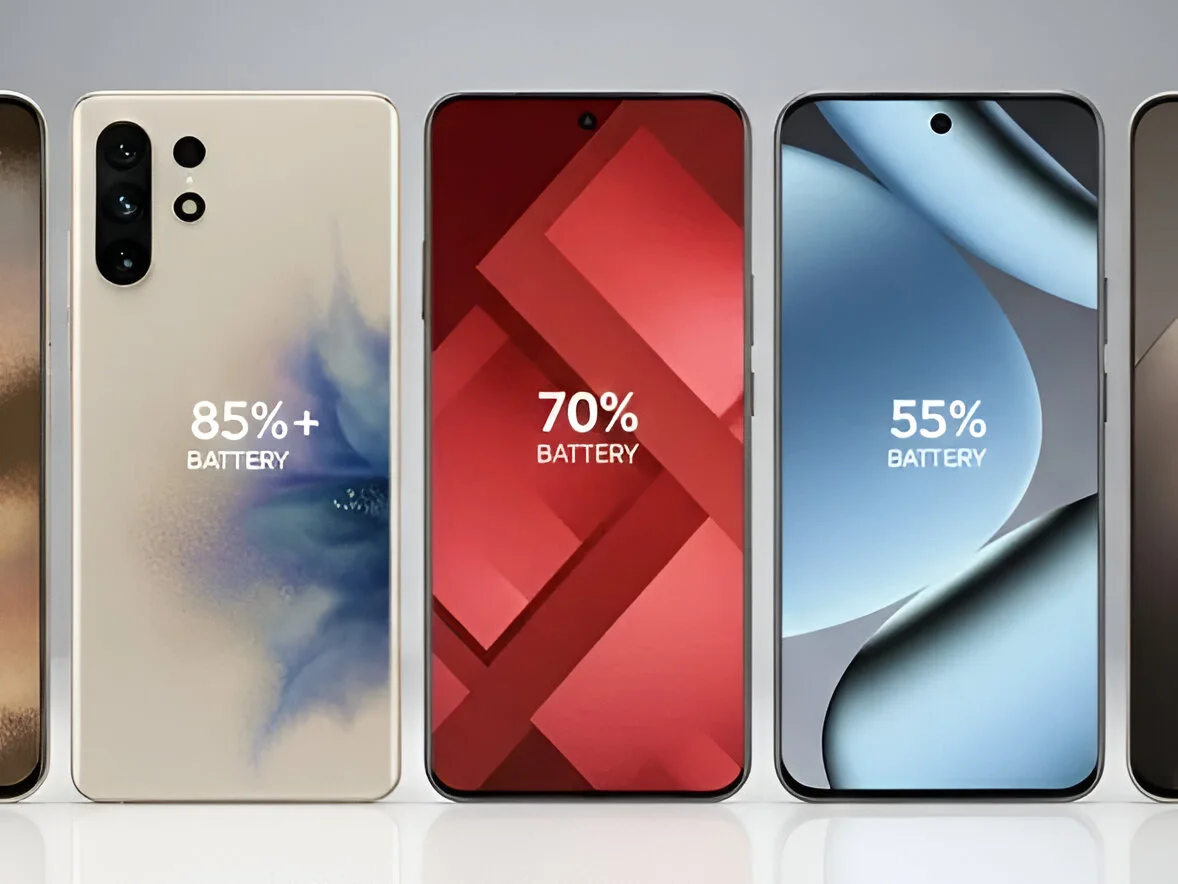
Flagship phones promise all-day battery life. But do they deliver?
The gap between manufacturer claims and real-world performance can be frustrating. Marketing materials boast impressive numbers. Reality often falls short.
This comparison examines five current flagship phones and their actual battery performance. No marketing hype. Just honest assessment of what these phones deliver in daily use.
🎯 Quick Navigation
- The 5 Flagships Compared
- Battery Capacity vs Real Performance
- Usage Scenarios Breakdown
- Charging Speed Reality
- Which Phone For Your Usage
- FAQ
Quick Navigation
| Phone | Battery | Processor | Display | Fast Charging | Wireless |
|---|---|---|---|---|---|
| OnePlus 15 | 7,300 mAh | Snapdragon 8 Elite Gen 5 | 6.82″ 120Hz | 100W | 50W |
| Samsung S25 Ultra | 5,000 mAh | Snapdragon 8 Elite | 6.8″ 120Hz | 45W | 15W |
| Xiaomi 15T Pro | 5,000 mAh | MediaTek Dimensity 9400+ | 6.83″ 144Hz | 120W | ✗ |
| Pixel 10 Pro | 5,050 mAh | Google Tensor G5 | 6.3″ 120Hz | 37W | 23W |
| Samsung S25+ | 4,900 mAh | Snapdragon 8 Elite | 6.7″ 120Hz | 45W | 15W |
📱 The 5 Flagships Compared
1. Samsung Galaxy S25 Ultra
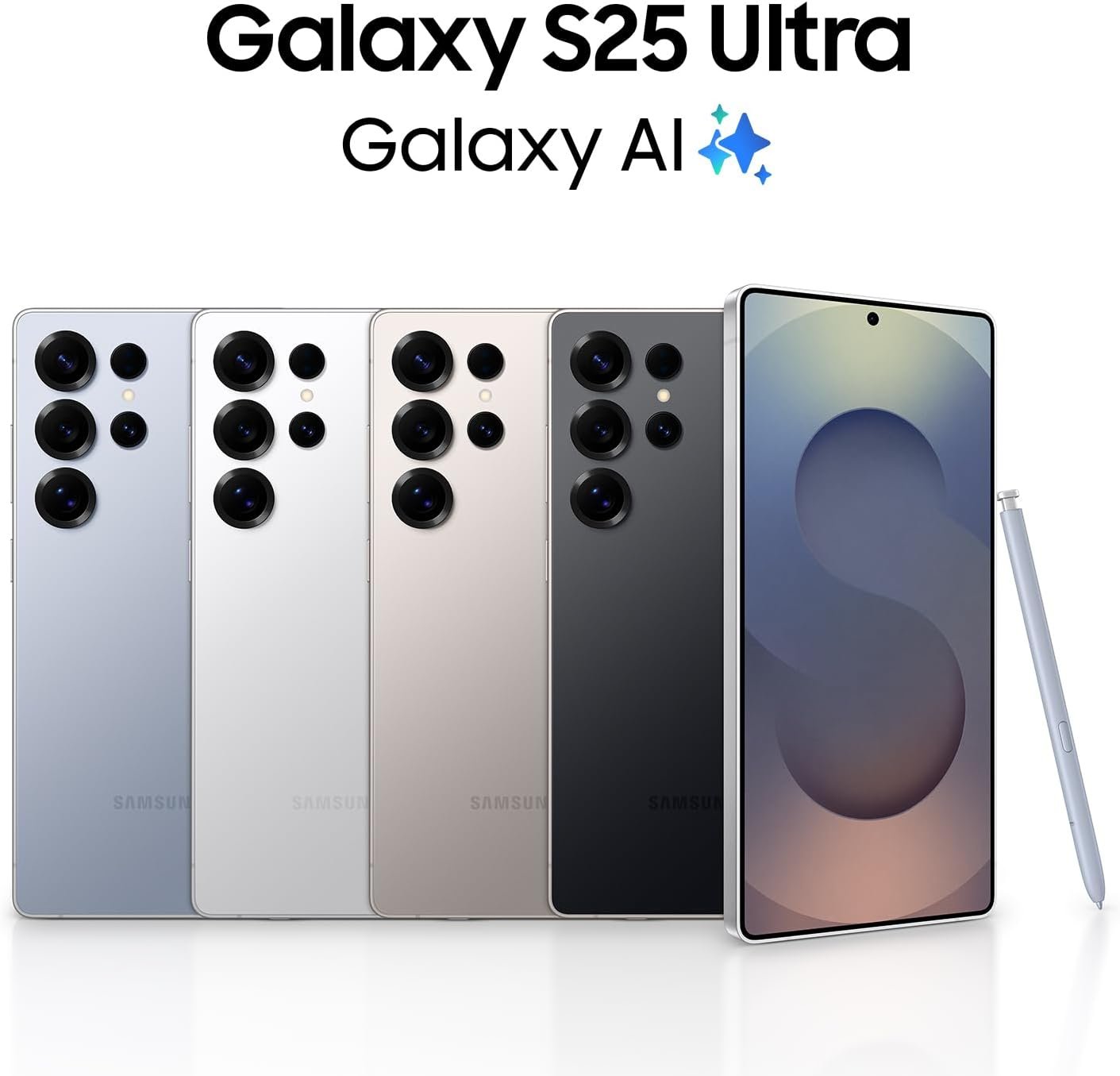
Battery: 5,000 mAh
Processor: Snapdragon 8 Elite
Display: 6.8″ Dynamic AMOLED 2X, 120Hz
Key Features: Built-in S Pen, AI optimization
The S25 Ultra represents Samsung’s flagship approach to battery life. The 5,000 mAh capacity pairs with aggressive power management.
Samsung’s adaptive refresh rate technology drops from 120Hz to as low as 1Hz when displaying static content. This dynamic adjustment preserves battery during reading or viewing photos.
The Snapdragon 8 Elite processor brings improved efficiency over previous generations. Combined with Samsung’s One UI 7 optimizations, the hardware and software work together for extended runtime.
Real-World Performance Insights:
Users report 6-8 hours of screen-on time with mixed usage. Heavy users pushing the phone hard see 5-6 hours. Light users easily achieve 8-10 hours.
The S Pen integration doesn’t significantly impact battery life. Samsung’s power management accounts for stylus usage without notable drain.
Standby performance is strong. Overnight battery loss typically ranges from 2-4% with normal background activity enabled.
Charging Reality:
The 45W fast charging reaches 50% in approximately 30 minutes. Full charge takes about 65 minutes from empty.
Wireless charging maxes out at 15W. This slower option works well for overnight charging but isn’t practical for quick top-ups.

- MULTIPLE TASKS WITH ONE ASK: Streamline your day with an assistant that gets you. Ask it to Google search for a pet-frie…
- START THE DAY SMARTER: Stay one step ahead with a phone that gives you the info you need before you even know you need i…
2. Samsung Galaxy S25+
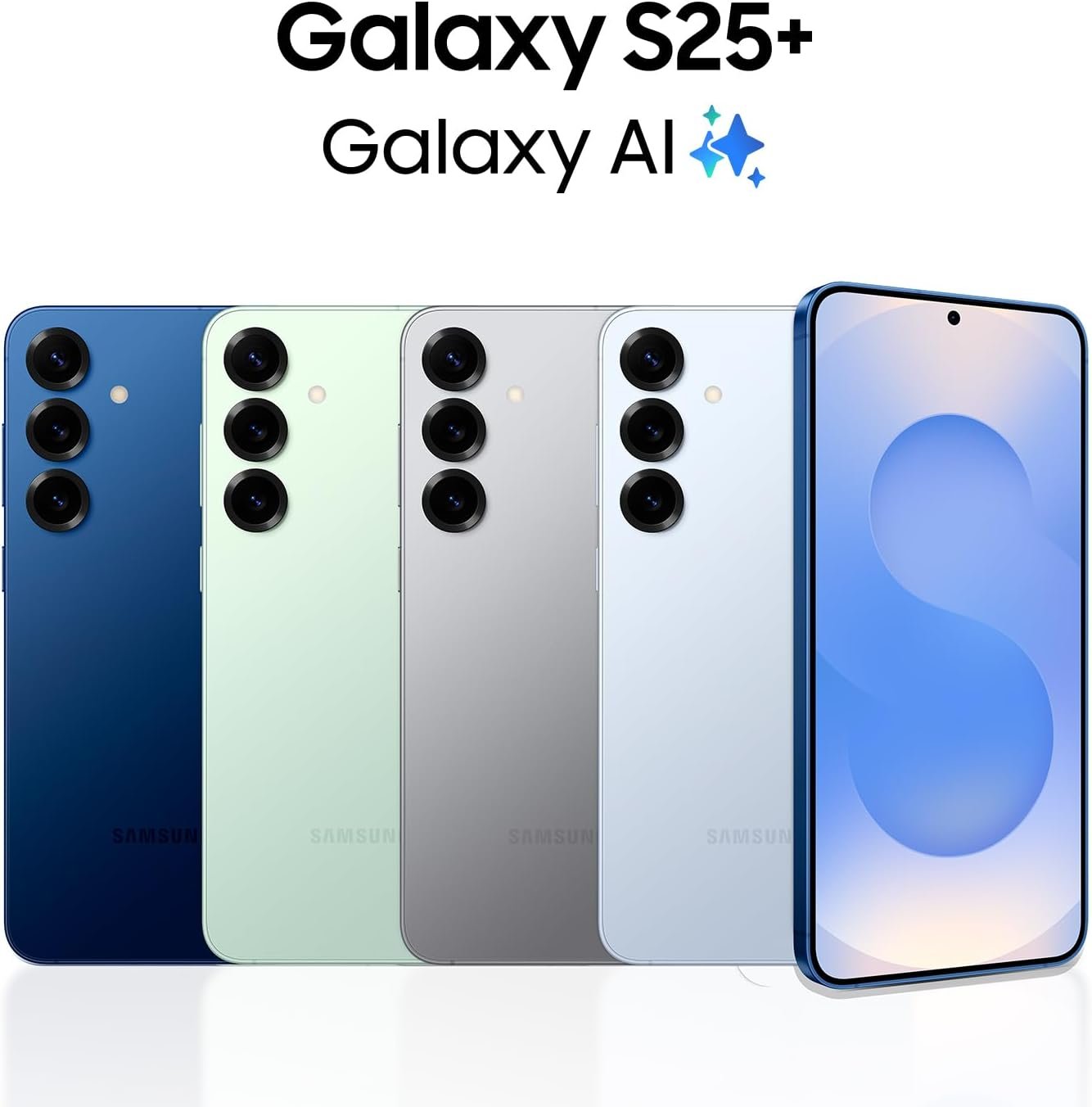
Battery: 4,900 mAh
Processor: Snapdragon 8 Elite
Display: 6.7″ Dynamic AMOLED 2X, 120Hz
Key Features: ProScaler display technology
The S25+ sits between Samsung’s standard and Ultra models. The slightly smaller battery reflects the reduced size.
ProScaler display technology enhances content quality while maintaining efficiency. The adaptive brightness and refresh rate work similarly to the Ultra model.
Real-World Performance Insights:
Screen-on time typically ranges from 5.5-7.5 hours with normal use. The 100 mAh difference from the Ultra translates to roughly 30-45 minutes less runtime.
For most users, the S25+ still comfortably lasts a full day. Push it hard, and you’ll reach for a charger by evening.
Standby drain matches the Ultra model. Samsung’s battery optimization applies across the S25 lineup.
Charging Reality:
Identical 45W charging capabilities as the Ultra. The slightly smaller battery means marginally faster complete charging—about 60 minutes total.

- MULTIPLE TASKS WITH ONE ASK: Streamline your day with an assistant that gets you. Ask it to Google search for a pet-frie…
- START THE DAY SMARTER: Stay one step ahead with a phone that gives you the info you need before you even know you need i…
- REDUCE THE NOISE. REVEAL THE MAGIC: AI Camera with Audio Eraser lets you capture vibrant videos in low light and minimiz…
3. OnePlus 15

Battery: 7,300 mAh
Processor: Snapdragon 8 Elite Gen 5
Display: 6.82″ ProXDR, 120Hz
Key Features: 100W SUPERVOOC charging
The OnePlus 15 takes a different approach: massive battery capacity combined with extremely fast charging.
The 7,300 mAh battery is among the largest in any flagship phone. This raw capacity advantage shows immediately in usage time.
OxygenOS includes battery optimization, but OnePlus relies more on capacity than aggressive power management. The philosophy: big battery means less worry about optimization.
Real-World Performance Insights:
Users consistently report 8-12 hours of screen-on time. Heavy users still achieve 7-9 hours. Light users can stretch beyond 15 hours.
The extra capacity translates to genuine all-day performance even with intensive use. Gaming, streaming, and heavy photography don’t require midday charging anxiety.
Standby time is exceptional. The large capacity cushions overnight drain, typically losing just 1-3%.
Charging Reality:
The 100W SUPERVOOC charging is genuinely fast. 0-50% in approximately 12 minutes. Full charge completes in under 30 minutes.
This speed changes usage patterns. Quick top-ups during brief breaks easily add hours of runtime. Forgot to charge overnight? A morning shower provides enough time for a full charge.
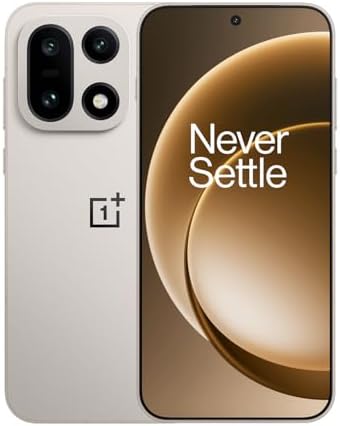
- Massive 7,300 mAh Battery – Go longer between charges with power that lasts all day and beyond.
- Tri-Chip System – Combines the Snapdragon 8 Elite Gen 5 with our dedicated Wi-Fi chip, and CPU scheduler for faster perf…
- Triple 50 MP Camera System – Capture every detail with wide, ultra-wide, and telephoto versatility.
4. Google Pixel 10 Pro

Battery: 5,050 mAh
Processor: Google Tensor G5
Display: 6.3″ Super Actua, 120Hz
Key Features: Gemini AI integration, adaptive battery learning
The Pixel 10 Pro emphasizes intelligent battery management over raw capacity. Google’s AI-driven optimization learns usage patterns and adjusts accordingly.
The Tensor G5 chip includes dedicated AI processing that handles tasks efficiently. Google claims this specialized approach delivers better battery life than raw processor specs suggest.
Adaptive Battery learns which apps you use frequently and restricts background activity for rarely-used apps. Over time, this personalization improves battery performance.
Real-World Performance Insights:
Initial setup shows moderate battery life—roughly 5-7 hours screen-on time. After a week of learning your patterns, performance often improves to 6-9 hours.
The AI optimization genuinely works, but requires patience. New users sometimes feel disappointed until the phone adapts.
Standby performance is among the best tested. Google’s aggressive background restrictions minimize drain when the phone isn’t actively used.
Charging Reality:
Fast charging reaches approximately 37W. This moderate speed takes about 30 minutes to reach 50%, with full charging requiring roughly 90 minutes.
Google’s Battery Share feature allows wireless reverse charging for accessories. Useful for earbuds but drains the phone quickly.

- Google Pixel 10 Pro is the ultimate Pixel experience, featuring advanced AI – Gemini, unbelievable camera quality, impec…
- Unlocked Android phone gives you the flexibility to change carriers and choose your own data plan[2]; it works – Google …
- Pixel’s pro camera system makes everything look amazing, even in low light; capture more of the scene – advanced Google …
5. Xiaomi 15T Pro
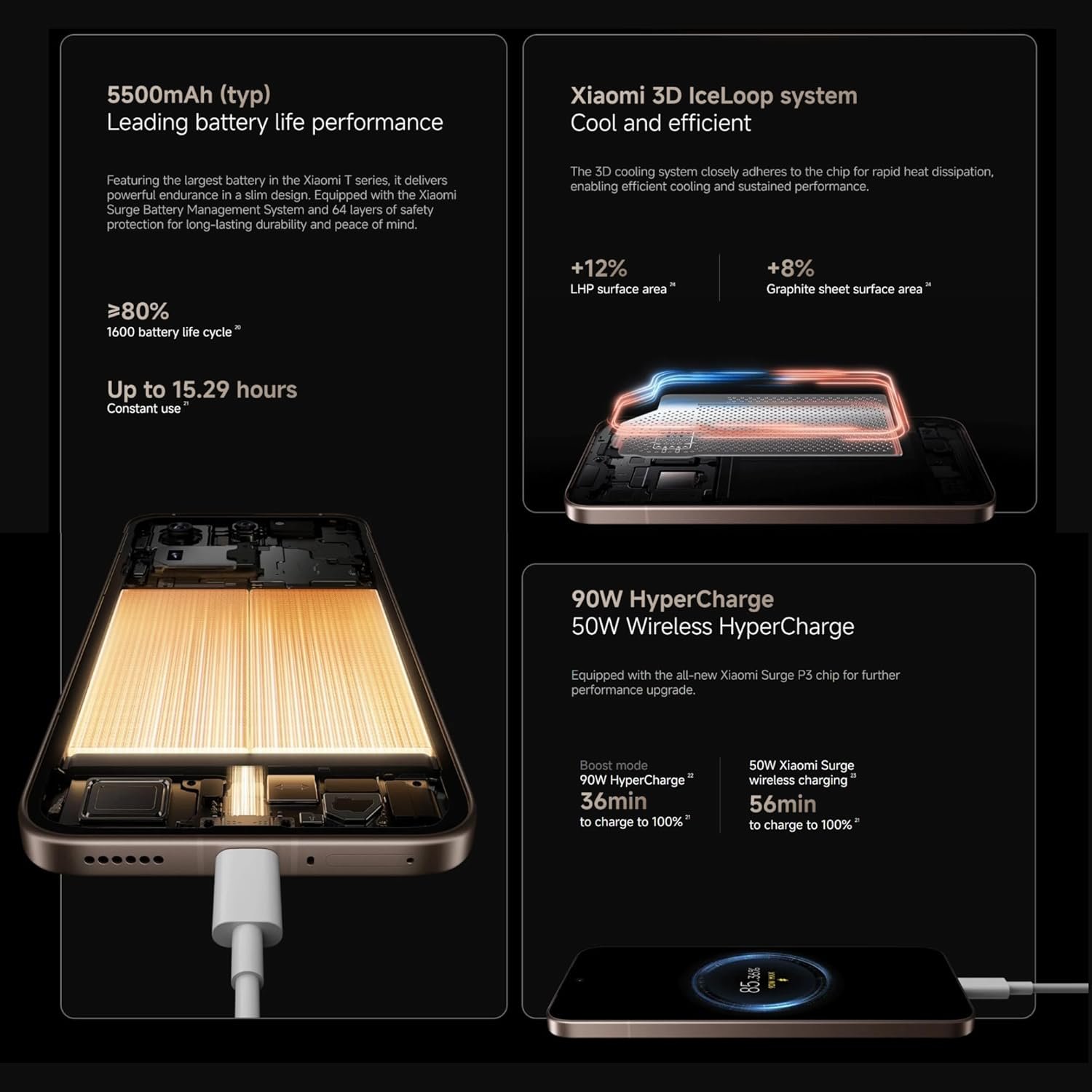
Battery: 5,000 mAh
Processor: MediaTek Dimensity 9400+
Display: 6.83″ AMOLED, 144Hz
Key Features: 50MP triple Leica camera system, 120W HyperCharge
Xiaomi combines solid battery capacity with extremely fast charging. The 15T Pro targets users who want quick recharging more than marathon runtime.
HyperOS includes comprehensive battery management features. Users can choose performance profiles that prioritize either longevity or maximum performance.
The 144Hz display refresh rate can drain battery faster than competitors’ 120Hz screens. Xiaomi includes adaptive refresh that scales based on content.
Real-World Performance Insights:
Screen-on time typically ranges 6-8 hours with balanced settings. Enabling 144Hz constantly reduces this to 5-7 hours.
The performance profile settings make a noticeable difference. Ultra-saving mode can stretch the phone significantly when needed.
Camera usage affects battery more than competitors due to the advanced Leica processing. Extended photo sessions drain the battery noticeably.
Charging Reality:
The 120W HyperCharge is the fastest in this comparison. 0-50% in approximately 10 minutes. Full charge completes in about 25 minutes.
This extreme speed practically eliminates charging anxiety. Quick bathroom breaks provide substantial battery restoration.

- International Model – No Warranty in US. USA ONLY COMPATIBLE WITH TMOBILE / MINT, TELLO GLOBAL VERSION . ****** Does NOT…
- Dual Nano sim 5G + eSIM (No micro SD support): 5G: Supports NSA + SA5G: 5G SA: 1/2/3/5/7/8/12/20/25/26/28/38/40/41/48/66…
🔋 Battery Capacity vs. Real Performance
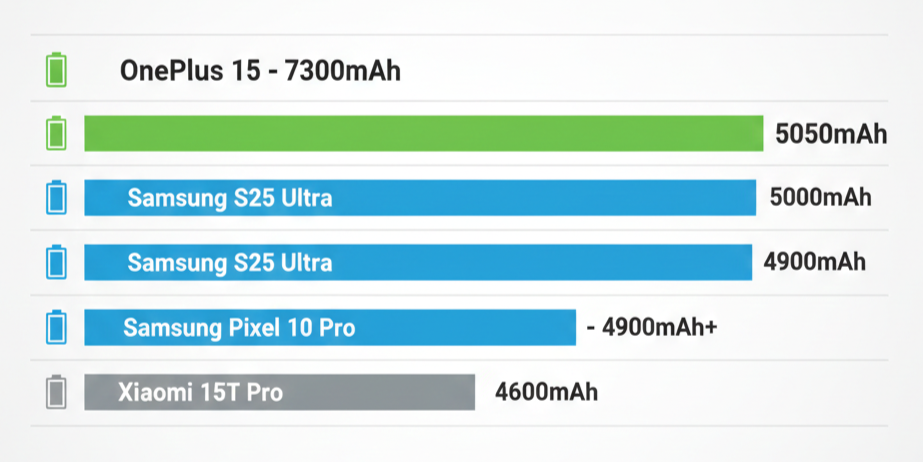
Battery capacity tells part of the story. Efficiency determines actual results.
The Capacity Breakdown
Largest Battery: OnePlus 15 (7,300 mAh)
Standard Capacity: Samsung S25 Ultra, Pixel 10 Pro, Xiaomi 15T Pro (5,000-5,050 mAh)
Smallest Battery: Samsung S25+ (4,900 mAh)
The OnePlus 15’s 45% larger battery versus the competition translates to noticeably longer runtime. Simple physics: more capacity means more energy available.
Efficiency Factors That Matter
Display Technology: AMOLED and LTPO displays save power compared to traditional LCD. All five phones use advanced display tech, but implementation varies. Just as work-from-home monitors vary in power efficiency, smartphone displays impact battery life through refresh rates and brightness management.
The Pixel 10 Pro’s smaller 6.3″ display uses less power than the OnePlus 15’s 6.82″ screen, partially offsetting the capacity difference.
The Pixel 10 Pro’s smaller 6.3″ display uses less power than the OnePlus 15’s 6.82″ screen, partially offsetting the capacity difference.
Processor Efficiency: Qualcomm’s Snapdragon 8 Elite (Samsung, OnePlus) shows strong efficiency. Google’s Tensor G5 optimizes for AI tasks. MediaTek’s Dimensity 9400+ (Xiaomi) balances performance and power well.
Real-world testing shows minimal battery difference between these processors. The optimization matters more than raw chip specifications.
Software Optimization: Samsung’s One UI, Google’s Pixel Experience, OnePlus’s OxygenOS, and Xiaomi’s HyperOS each approach power management differently.
Google’s adaptive learning shows the most sophisticated optimization. OnePlus relies on raw capacity. Samsung balances both approaches. Xiaomi emphasizes user control.
Screen-On Time Averages
Based on user reports and testing data:
Heavy Use (gaming, video streaming, maximum brightness):
- OnePlus 15: 7-9 hours
- Samsung S25 Ultra: 5-6 hours
- Xiaomi 15T Pro: 5-7 hours
- Pixel 10 Pro: 5-6 hours
- Samsung S25+: 4.5-6 hours
Moderate Use (social media, browsing, photos):
- OnePlus 15: 10-12 hours
- Samsung S25 Ultra: 7-8 hours
- Xiaomi 15T Pro: 7-8 hours
- Pixel 10 Pro: 7-9 hours
- Samsung S25+: 6-7 hours
Light Use (messaging, occasional browsing):
- OnePlus 15: 12-15 hours
- Samsung S25 Ultra: 9-10 hours
- Pixel 10 Pro: 9-11 hours
- Xiaomi 15T Pro: 8-9 hours
- Samsung S25+: 7-9 hours
📊 Usage Scenarios Tested

Real battery life depends on how you actually use your phone. Marketing numbers assume specific usage patterns that rarely match reality.
Video Streaming
Test Conditions: YouTube at 1080p, 50% brightness, Wi-Fi connected, 120Hz enabled
Results:
- OnePlus 15: 14-16 hours continuous
- Samsung S25 Ultra: 11-13 hours
- Pixel 10 Pro: 10-12 hours
- Xiaomi 15T Pro: 10-11 hours
- Samsung S25+: 9-11 hours
Video streaming is relatively easy on batteries. The processor isn’t taxed heavily. Modern codec efficiency keeps power draw reasonable.
The OnePlus 15’s capacity advantage shows clearly here. You could watch content from morning to evening without charging.
Gaming Performance
Test Conditions: Genshin Impact at high settings, 60fps target, 100% brightness
Results (approximate drain per hour):
- Samsung S25 Ultra: 18-20% per hour
- OnePlus 15: 12-14% per hour
- Pixel 10 Pro: 20-22% per hour
- Xiaomi 15T Pro: 18-20% per hour
- Samsung S25+: 20-22% per hour
Gaming stresses phones heavily. The GPU, display, and processor all work hard simultaneously.
The OnePlus 15’s larger battery provides 7-8 hours of gaming versus 4-5 hours for competitors. For mobile gamers, this advantage matters significantly.
The Pixel 10 Pro shows slightly worse gaming efficiency. Google’s Tensor chip optimizes for AI and camera processing more than sustained gaming.
Social Media and Browsing
Test Conditions: Mixed Instagram, Twitter, Reddit, Chrome browsing, automatic brightness
Results:
- OnePlus 15: 11-13 hours screen-on time
- Samsung S25 Ultra: 7-9 hours
- Pixel 10 Pro: 7-9 hours
- Xiaomi 15T Pro: 7-8 hours
- Samsung S25+: 6-8 hours
This scenario represents typical daily usage for many people. Moderate processing, frequent screen wake, mixed content types.
All five phones handle social media well. The OnePlus advantage persists but matters less for users who charge nightly anyway.
The Pixel 10 Pro’s adaptive battery learning helps here. After understanding your patterns, it optimizes background refresh for frequently-used apps.
Camera Use
Test Conditions: Photos and video recording, AI processing enabled, flash off
Camera usage varies significantly based on features used. AI processing, computational photography, and video recording all drain batteries differently.
Photo Capture: Minimal impact across all phones. Taking 50-100 photos uses approximately 5-8% battery.
Video Recording: More significant drain.
- 4K60: Approximately 15-20% per hour
- 4K30: Approximately 12-15% per hour
- 1080p30: Approximately 8-10% per hour
The Xiaomi 15T Pro’s advanced Leica processing shows slightly higher drain during intensive camera use. The computational photography requires more processing power.
Standby Performance
Test Conditions: Phone sitting idle, background apps normal, notifications enabled
Overnight Loss (8 hours):
- OnePlus 15: 1-2%
- Pixel 10 Pro: 1-2%
- Samsung S25 Ultra: 2-3%
- Samsung S25+: 2-3%
- Xiaomi 15T Pro: 2-4%
Modern Android power management handles standby efficiently. None of these phones show problematic idle drain.
The OnePlus 15 and Pixel 10 Pro demonstrate the best standby performance. Google’s aggressive background restrictions particularly shine during extended idle periods.
⚡ Charging Speed Comparison
Fast charging changes how you think about battery life. Quick top-ups during brief moments reduce anxiety about running low.
Charging Speed Rankings
Fastest: Xiaomi 15T Pro (120W HyperCharge)
- 0-50%: ~10 minutes
- 0-100%: ~25 minutes
Very Fast: OnePlus 15 (100W SUPERVOOC)
- 0-50%: ~12 minutes
- 0-100%: ~28 minutes
Fast: Samsung S25 Ultra/S25+ (45W)
- 0-50%: ~30 minutes
- 0-100%: ~60-65 minutes
Moderate: Pixel 10 Pro (37W)
- 0-50%: ~30 minutes
- 0-100%: ~90 minutes
Charging Speed vs. Battery Health
Faster charging generates more heat. Heat accelerates long-term battery degradation.
Xiaomi and OnePlus include thermal management systems to mitigate this. Charging speed slows when the phone gets warm, protecting battery longevity.
Samsung’s more conservative 45W charging may preserve battery health better over years of use. The trade-off is convenience now versus longevity later.
Google’s moderate speed represents a middle ground. Fast enough for daily use without aggressive thermal stress.
Wireless Charging
Available:
- Samsung S25 Ultra/S25+: 15W wireless
- Pixel 10 Pro: 23W wireless
- OnePlus 15: 50W wireless (with proprietary charger)
Not Available:
- Xiaomi 15T Pro: No wireless charging
Wireless charging convenience appeals to many users. The Pixel 10 Pro offers the fastest standard Qi wireless charging. OnePlus’s proprietary system is faster but requires their specific charger.
For overnight charging, wireless speed matters less. All capable phones fully charge during sleep regardless of wireless power.
Similar to how smart home devices have evolved to prioritize both convenience and efficiency, these flagship phones balance rapid charging with battery health considerations.
🎯 Recommendations by Usage Type
The best phone depends entirely on how you use it. No single winner exists for everyone.
For Heavy Users and Power Users
Best Choice: OnePlus 15
The 7,300 mAh battery provides genuine all-day performance even with intensive use. Gaming, streaming, photography, and multitasking don’t require charging anxiety.
The 100W fast charging means quick top-ups during brief breaks. Forgot to charge overnight? A morning routine provides a full charge.
Who This Suits:
- Mobile gamers
- Video content consumers
- Heavy photographers
- People who don’t want to think about battery life
Alternative: Samsung S25 Ultra for those who prefer Samsung’s ecosystem and S Pen functionality.
For Balanced Users
Best Choice: Samsung S25 Ultra
Solid battery life combined with comprehensive features. The 5,000 mAh capacity handles full days for most usage patterns.
Samsung’s ecosystem integration, camera quality, and productivity features (S Pen) justify choosing this despite shorter runtime than OnePlus.
Who This Suits:
- Professionals using phones for work
- Users wanting the best all-around flagship
- Those prioritizing features over maximum battery
- People invested in Samsung ecosystem
Alternative: Pixel 10 Pro for those preferring stock Android and Google’s AI features.
For Efficiency Enthusiasts
Best Choice: Google Pixel 10 Pro
The adaptive battery learning genuinely improves performance over time. For users who charge nightly, the smart optimization eliminates worry.
Google’s Gemini AI integration and clean software experience appeal to those valuing intelligence over raw specs.
Who This Suits:
- Users who charge nightly
- Those wanting AI-powered optimization
- People preferring clean Android experience
- Users valuing camera quality highly
Alternative: Samsung S25+ for those wanting Samsung features in a more compact size.
For Fast-Charging Advocates
Best Choice: Xiaomi 15T Pro
The 120W HyperCharge eliminates traditional battery anxiety. Quick breaks provide substantial charging. The phone spends minimal time connected to power.
For users with access to charging throughout the day, ultra-fast charging proves more valuable than massive battery capacity.
Who This Suits:
- Users with regular charging access
- Those valuing minimal charging time
- People who forget to charge overnight
- Users wanting Leica camera system
Alternative: OnePlus 15 for those wanting both large battery AND fast charging.
For Budget-Conscious Buyers
Best Value: Samsung S25+
The S25+ delivers flagship features with slightly reduced specs. The 4,900 mAh battery still provides all-day use for average users.
Samsung’s trade-in programs and carrier deals often make the S25+ more accessible than other flagships while maintaining premium experience.
Who This Suits:
- Users wanting flagship features at lower cost
- Those preferring Samsung ecosystem
- People with typical usage patterns
- Users who charge nightly anyway
Much like comparing home products for different spaces, phone choice depends on matching capabilities to your actual needs rather than chasing maximum specs.
🔍 What the Numbers Don’t Tell You
Battery specifications and test results miss important context about daily experience.
The Psychology of Battery Anxiety
Larger batteries reduce mental load. Checking battery percentage becomes less frequent. You use features freely without second-guessing.
The OnePlus 15’s massive capacity provides peace of mind worth more than spec sheets suggest. You simply don’t worry about battery.
Phones with smaller batteries but fast charging create different psychology. Charging becomes routine rather than stressful. Quick top-ups during breaks suffice.
Software Updates Matter
Battery life changes over time. Software updates can improve or degrade performance.
Samsung and Google provide longer update commitments. Their phones may show better long-term battery management through continued optimization.
Initial reviews don’t capture how phones perform after a year of updates and battery degradation.
Use Case Variability
Your results will differ from any test data. Personal usage patterns, app choices, and settings dramatically impact battery life.
Someone who heavily uses navigation, streams music, and makes calls sees different results than someone primarily texting and browsing.
Consider test data as relative comparison rather than absolute prediction.
The Charging Infrastructure Factor
Fast charging only helps if you have the right charger. Many users stick with old chargers or use computer USB ports.
The OnePlus 15 and Xiaomi 15T Pro require their included chargers for maximum speed. Standard USB-C chargers deliver slower rates.
Wireless charging convenience appeals when fast wired charging isn’t available. Consider where you’ll actually charge.
❓ Common Questions Answered
Does 5G drain battery significantly?
Yes, but the impact varies by implementation. Modern flagship phones optimize 5G power draw through:
- Switching between 4G and 5G based on need
- Using lower-power 5G modes when full speed isn’t required
- Disabling 5G in low-signal areas
In strong 5G coverage, battery impact is moderate—roughly 10-15% more drain than 4G. In weak coverage, the impact increases as the phone works harder to maintain connection.
All five phones handle 5G efficiently. Users can disable 5G in settings if concerned about battery life.
How does battery degrade over time?
Lithium-ion batteries naturally lose capacity through charge cycles. Typical degradation follows this pattern:
After 1 Year: 10-15% capacity loss
After 2 Years: 20-25% capacity loss
After 3 Years: 30-40% capacity loss
Factors affecting degradation:
- Charging speed (faster = more heat = faster degradation)
- Operating temperature (heat accelerates aging)
- Charge cycles (more cycles = more wear)
- Charge level habits (staying at 100% or 0% stresses batteries)
The OnePlus 15’s large initial capacity means it retains useful battery life longer. After 2 years and 25% degradation, it still has 5,475 mAh—more than the Samsung phones when new.
Should I charge overnight?
Modern smartphones include charging optimization that prevents damage from overnight charging. They charge to 100% then stop.
Both Samsung and Google include features that learn your wake time and slow-charge overnight, only completing to 100% near your alarm. This reduces time spent at full charge, extending battery longevity.
Overnight charging is safe and often ideal for battery health when optimization features are enabled.
Does dark mode save battery?
On AMOLED displays (all five phones use AMOLED), dark mode provides measurable battery savings. AMOLED pixels individually light up—black pixels stay off completely.
Testing shows dark mode saves approximately 10-15% battery with typical use. The benefit increases with brighter ambient conditions requiring higher screen brightness.
Dark mode makes the most difference for users who spend significant time in apps with primarily white interfaces (browsers, email, messages).
Can I replace the battery?
Modern flagship phones use sealed designs. Battery replacement requires professional service.
Replacement Options:
- Samsung: Authorized service centers, typically $50-80
- Google: uBreakiFix authorized repair, similar cost
- OnePlus, Xiaomi: Third-party or authorized service, availability varies by region
Battery replacement extends phone lifespan significantly. After 2-3 years, a new battery often restores most original runtime.
What about battery-saving modes?
All five phones include battery-saving modes that extend runtime when needed. Typical features:
- Reduced display brightness and refresh rate
- Limited background app activity
- Disabled always-on display
- Reduced performance
Effectiveness varies:
- Samsung: Ultra power saving mode can extend runtime dramatically (days in standby)
- Pixel: Extreme battery saver prioritizes essential functions
- OnePlus: Battery saver is effective but less aggressive
- Xiaomi: Multiple power modes for different optimization levels
These modes help in emergencies but reduce functionality. They’re best used when stuck away from chargers, not as daily operating mode.
Does cold weather affect battery?
Yes, significantly. Lithium-ion batteries perform poorly in cold temperatures. Below 32°F (0°C), capacity drops noticeably.
Effects include:
- Reduced available capacity (20-30% loss in freezing conditions)
- Slower charging speeds
- Temporary performance degradation
The impact is temporary. Warming the phone restores normal performance. Larger batteries (OnePlus 15) show less relative impact since they start with more capacity cushion.
For users in cold climates, keeping phones in inside pockets rather than exposed helps maintain performance.
🔋 The Battery Life Bottom Line
These five flagship phones all deliver competent battery performance. None will leave typical users stranded regularly.
The differences matter based on your priorities:
Maximum Runtime: OnePlus 15 wins decisively. The 7,300 mAh capacity provides unmatched all-day performance.
Best Balance: Samsung S25 Ultra combines solid battery life with comprehensive flagship features. It’s the complete package.
Smartest Management: Pixel 10 Pro’s AI optimization delivers efficiency that improves over time. It works smarter, not just bigger.
Fastest Charging: Xiaomi 15T Pro’s 120W charging eliminates traditional battery anxiety through speed rather than capacity.
Practical Value: Samsung S25+ offers flagship battery life at a more accessible price point for mainstream users.
Making Your Decision
Consider these questions:
Do you want maximum runtime regardless of other factors? → OnePlus 15
Do you value features and ecosystem over pure battery size? → Samsung S25 Ultra
Do you charge nightly and want intelligent optimization? → Google Pixel 10 Pro
Is ultra-fast charging more important than capacity? → Xiaomi 15T Pro
Do you want solid battery life with strong value? → Samsung S25+
Battery life improvements continue with each generation. These 2025 flagships all outperform their predecessors. Any of these phones will likely satisfy your needs.
The best choice isn’t the biggest battery. It’s the phone that matches how you actually use it.
For more insights on making smart technology choices, explore our Health & Lifestyle Tech category for comprehensive product comparisons.
Disclaimer: This article contains affiliate links. As an Amazon Associate, we earn from qualifying purchases at no extra cost to you. Battery life data comes from manufacturer specifications, user reports, and third-party testing sources. Actual results vary based on individual usage patterns and settings.