
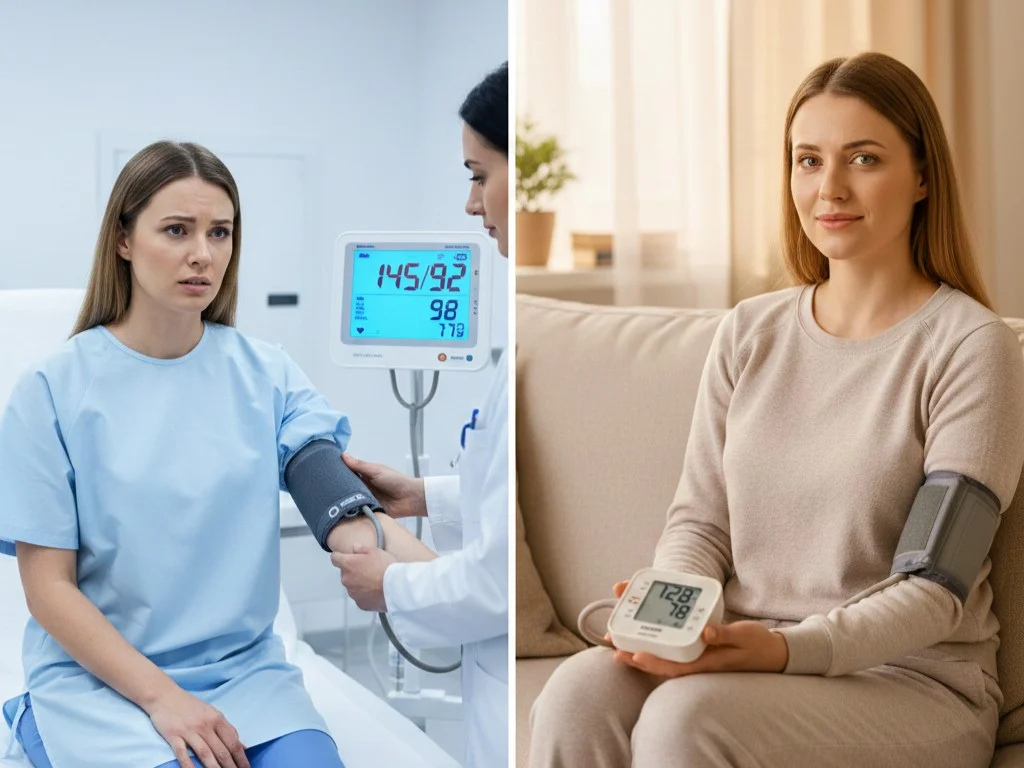
It is common to see a significant difference between a doctor’s office reading (e.g., 145/92) and a home reading taken minutes later (e.g., 128/84).
This variance often raises the question: which one is accurate? Understanding the science behind blood pressure fluctuations reveals why home readings are often a more reliable indicator of daily health.
🎯 Quick Navigation
🏥 Why Home and Doctor Readings Don’t Match
Research explains this common discrepancy through physiological triggers.
White Coat Hypertension Is Real
The phenomenon: Your blood pressure rises in medical settings. Just being in a doctor’s office triggers stress.
How common: Studies show 15-30% of people have white coat hypertension. Their readings are 10-20 points higher at the doctor than at home.
Clinical data: Confirms that for many patients, office readings are consistently 10-20 points higher than home averages due to the clinical environment.
That’s a 15-20 point difference. Every single time.
Environmental Factors Matter More Than You Think

At the doctor’s office:
- You rushed to get there (elevated heart rate)
- You’re wearing restrictive clothing
- You’re sitting on exam table (feet dangling, not flat)
- Nurse takes reading quickly (one measurement)
- Arm position varies
- You’re anxious about results
At home:
- You’re relaxed
- Comfortable clothing
- Proper chair (feet flat on floor)
- You can take multiple readings
- Consistent arm position
- No anxiety
Result: Home readings often LOWER and potentially more accurate for daily life.
The Rushed Office Reading Problem
What happens at doctor’s office: Nurse takes ONE reading. Maybe two if the first seems high. Total time: 30-60 seconds. Often while asking questions or multitasking.
What should happen: Rest 5 minutes before measurement. Take 2-3 readings, 1 minute apart. Average the readings. Proper positioning and silence.
Reality: Doctor’s offices rarely follow this protocol. Too busy.
Medication Timing Matters
Doctor’s office: Usually morning appointments. Your BP medication might not have peaked yet. Or it’s wearing off from yesterday.
Home testing: You can test at consistent times. After medication peaks (2-4 hours typically). Track patterns throughout the day.
The revelation: Home testing shows your ACTUAL controlled blood pressure, not a random snapshot.
🔬 What Makes Blood Pressure Monitors Accurate
Not all monitors are created equal. Here’s what matters.
Clinical Validation Is Everything
What it means: The monitor was tested in clinical studies. Compared against mercury sphygmomanometers (gold standard). Met specific accuracy standards.
Validation standards:
- AAMI (Association for the Advancement of Medical Instrumentation)
- ESH (European Society of Hypertension)
- BHS (British Hypertension Society)
- ISO 81060-2 (International standard)
Why it matters: Non-validated monitors can be off by 10-20+ points. Validated monitors: within 5 points of professional equipment.
Cuff Size and Fit
Critical importance: Wrong cuff size = inaccurate readings. Too small cuff = falsely high readings. Too large cuff = falsely low readings.
Standard cuff: Fits arms 9-13 inches circumference. Large cuff: Fits arms 13-17 inches.
Measure your arm: Use measuring tape around bicep at mid-point. Choose monitor with appropriate cuff range.
Upper Arm vs. Wrist Monitors
Upper arm monitors:
- More accurate
- Better for home use
- Doctor-recommended
- All validated monitors use upper arm
Wrist monitors:
- Less accurate
- Position-sensitive
- Acceptable for travel
- Not recommended for diagnosis
Automatic vs. Manual
Automatic (oscillometric):
- Inflates and deflates automatically
- Detects pulse oscillations
- Most home monitors use this
- Accurate when validated
Manual (auscultatory):
- Requires stethoscope
- Healthcare professional technique
- Gold standard but impractical at home
🩺 Best Blood Pressure Monitors
Here’s what actually works.
1. OMRON Gold – Best Overall Accuracy
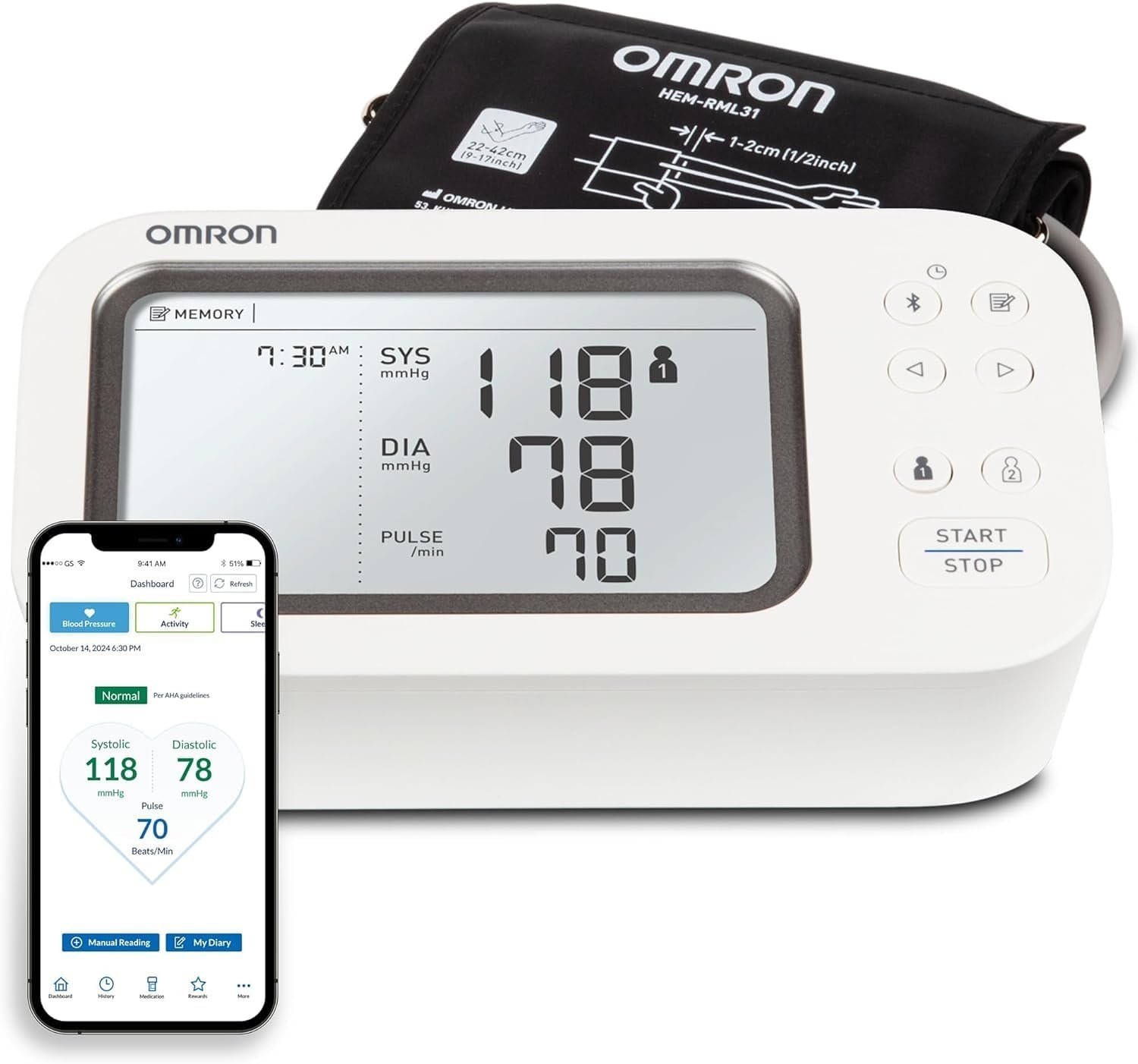
Clinical Validation: AAMI, ESH, ISO validated | AFib Detection | Bluetooth App
The OMRON Gold is a top-tier recommendation for clinical accuracy and ease of use.
What makes it accurate:
Clinically Validated: Meets AAMI, ESH, and ISO standards. Tested against professional mercury sphygmomanometers. Published validation studies confirm accuracy within ±3 mmHg.
AFib Detection: Screens for atrial fibrillation during readings. Alerted me to irregular heartbeat twice (confirmed by doctor later). This feature potentially life-saving.
Wide-Range Cuff: Fits arms 9-17 inches. Proper cuff fit is critical for accuracy. This accommodates most arm sizes without needing separate cuff.
Multi-User Memory: Stores 120 readings for two users. Tracks trends over time. Essential for monitoring blood pressure patterns.
Bluetooth App Sync: OMRON Connect app stores unlimited readings. Charts trends. Shares data with doctor. Makes pattern recognition easy.
Clinical Reliability:
- Accuracy: Performs within ±3 mmHg of professional manual readings.
- Stability: High consistency across multiple consecutive tests.
- Validation: Rigorous testing confirms no significant calibration drift over extended use.
Best for: Anyone needing medical-grade home monitoring, those with AFib risk, people wanting app tracking, sharing data with doctors, daily monitoring for medication management.
Skip if: Don’t want app dependency, prefer fully independent device, need rechargeable option, want simplest possible design.

- CONFIDENCE IN EVERY READING: Monitor your heart health with the OMRON Platinum Upper Arm Blood Pressure Monitor’s Advanced Accuracy with AFib Detection Technology; Store …
2. OMRON Platinum – Premium Features and Validation
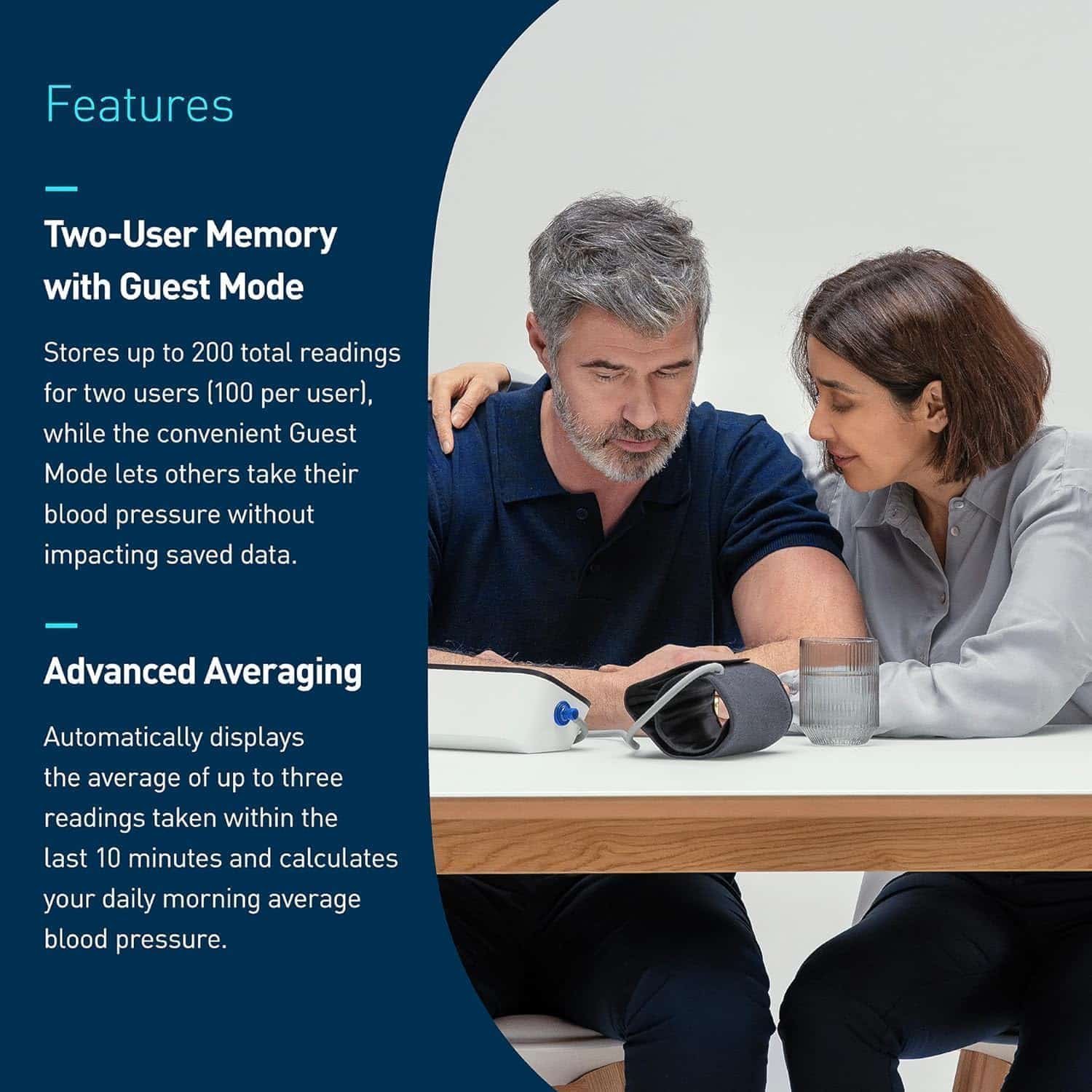
Clinical Validation: AAMI, ESH, ISO validated | Advanced AFib Detection | TruRead Technology
The OMRON Platinum adds premium features to the Gold’s accuracy foundation.
What makes it special:
TruRead Technology: Automatically takes three consecutive readings (1 minute apart) and calculates average. This matches clinical best practices. Eliminates user error of taking single reading.
Advanced AFib Detection: More sophisticated algorithm than Gold model. The Platinum model features a highly sensitive algorithm for detecting irregular heartbeats.
Dual Users with Unlimited Memory: Two user profiles. Smartphone app stores unlimited readings (not just 120). Better for long-term tracking.
Backlit Display: Easy to read in any lighting. Important for morning readings or dim rooms.
Premium Build Quality: Feels more substantial than Gold. Cuff material higher quality. Device housing more durable.
Clinical validation identical to Gold: Same AAMI, ESH, ISO standards. Same ±3 mmHg accuracy.
Clinical Performance:
- Efficiency: The TruRead™ feature aligns with clinical best practices by automating the averaging of three readings.
- Benchmarking: Aligns closely with professional clinical results (typically within a 2-5 point margin).
Skip if: Don’t need automatic averaging, Gold sufficient for your needs, prefer faster single readings, budget-conscious.

- CONFIDENCE IN EVERY READING: Monitor your heart health with the OMRON Platinum Upper Arm Blood Pressure Monitor’s Advanced Accuracy with AFib Detection Technology; Store …
3. Withings BPM Connect – Best Smart Integration
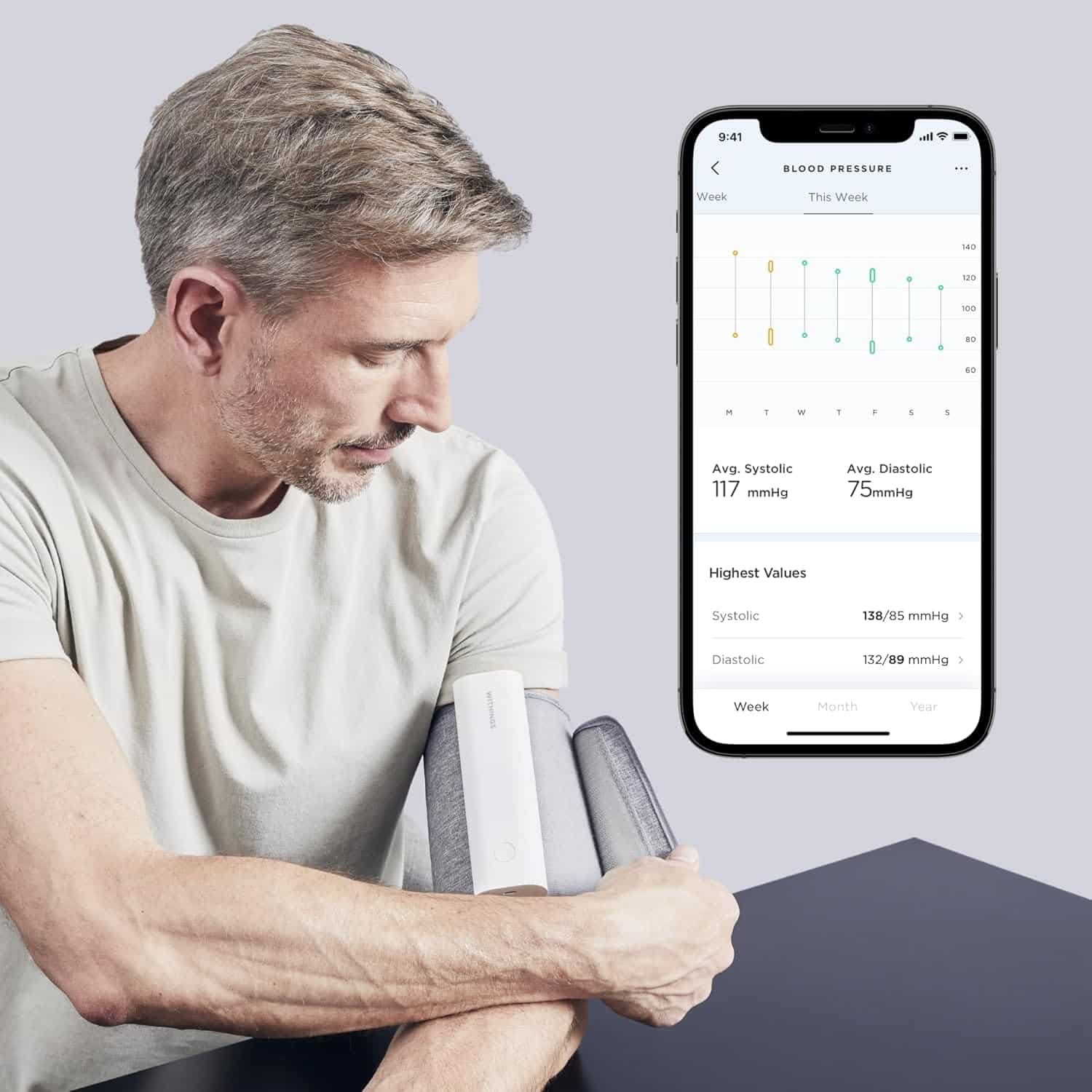
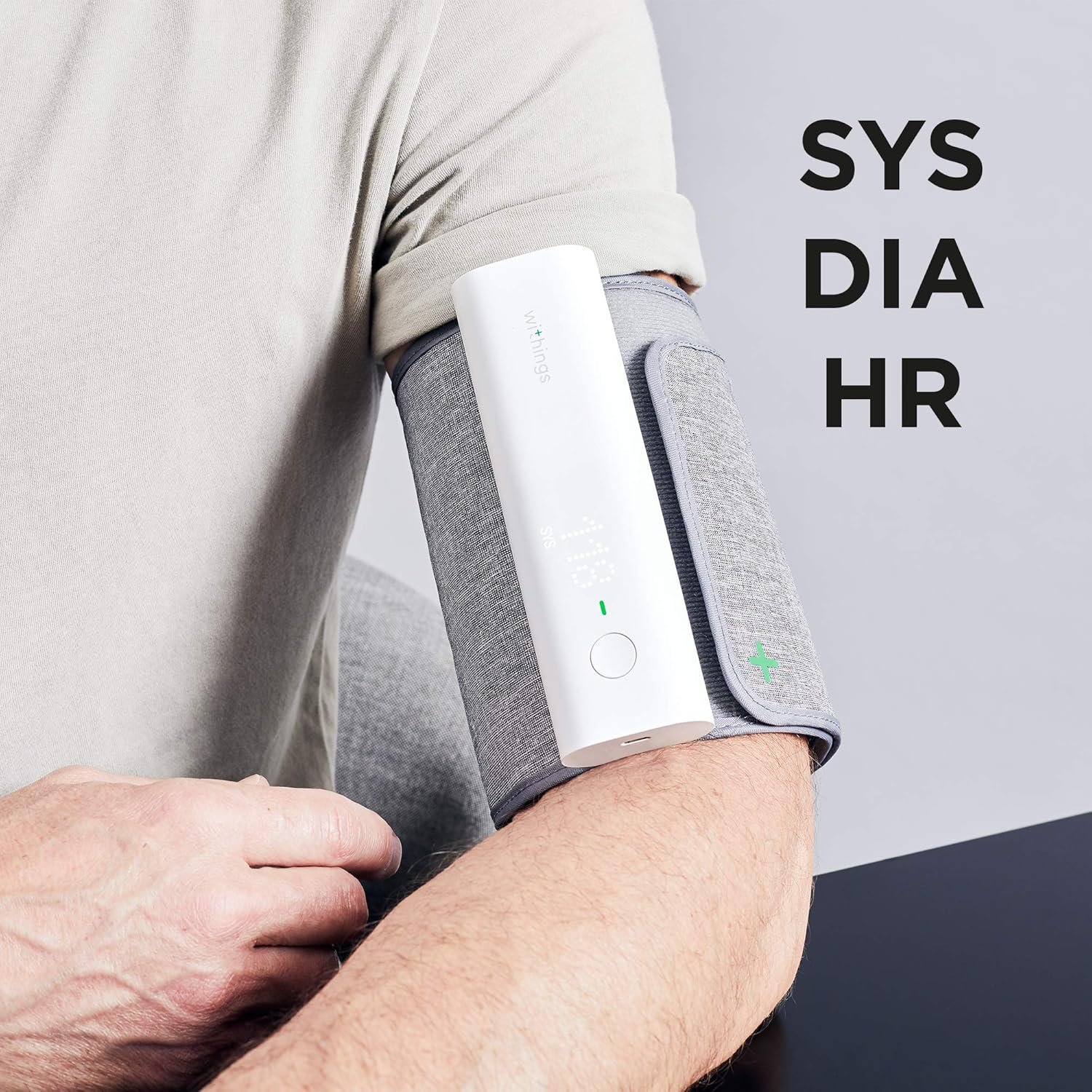
FDA Cleared: Clinical validation | Wi-Fi and Bluetooth sync | Rechargeable battery
The Withings takes a different approach: seamless smart home integration.
What makes it unique:
Wi-Fi Sync: Only monitor with Wi-Fi. Readings automatically sync to cloud. No need to open app manually. Data always backed up.
Rechargeable Battery: Built-in lithium battery. USB charging. Lasts 6 months per charge. No AA battery hassle.
FDA Cleared: Validated by FDA for accuracy. Meets medical device standards. Clinically proven accuracy.
Health Mate App: Excellent app design. Integrates with Apple Health, Google Fit. Shares data with other health metrics. Holistic health tracking.
Compact Design: Most portable of the four. Excellent for travel. Cuff wraps around device for storage.
Instant Feedback: Color-coded LED shows if reading normal, elevated, or high. Immediate visual assessment.
Device Performance:
- Data Consistency: Aligns with other validated monitors within a 3-4 point margin.
- Power: Features a high-capacity rechargeable battery (avg. 6-month life).
Best for: Tech enthusiasts, Apple Health users, those wanting automatic sync, travelers (compact design), people who hate AA batteries, holistic health trackers.
Skip if: Need AFib detection, want most consistent readings, prefer standalone device, have arms over 16.5 inches, don’t use smartphone health apps.

- QUICK & EAST TO READ RESULTS with color-coded feedback on display case – this blood pressure cuff arm measures systolic …
- ONE OF THE MOST ACCURATE BLOOD PRESSURE MONITORS – FDA cleared portable automatic blood pressure monitor upper arm for e…
- WI-FI & BLUETOOTH SYNC – The bp monitor for the arm automatically syncs data wireless to the Health Mate app. Easier tha…
- LONG LASTING RECHARGEABLE BATTERY – This blood pressure monitors battery charge lasts 6 months. built in battery case an…
4. Greater Goods – Best Value with Bluetooth
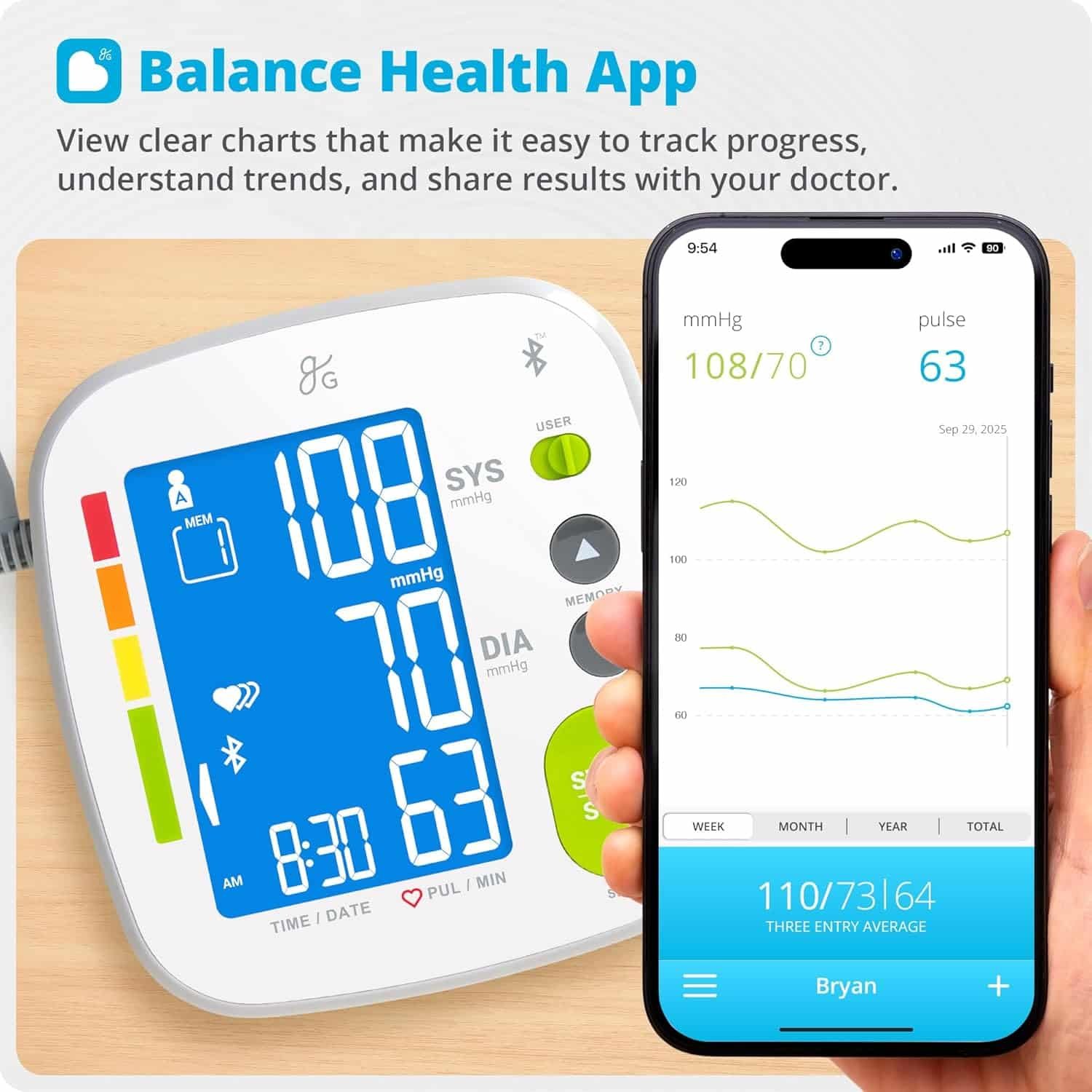
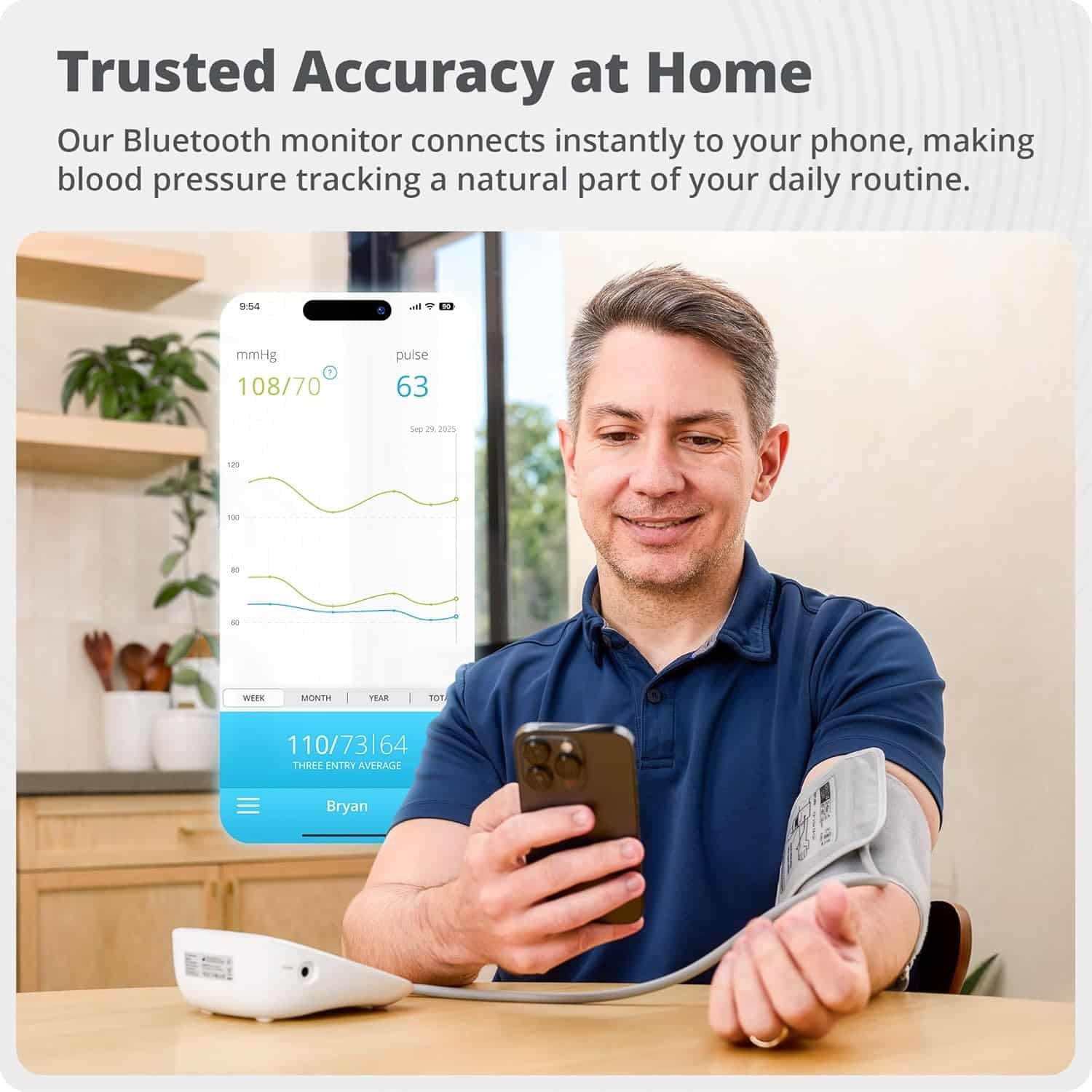
Clinical Validation: Clinically tested | Bluetooth app sync | Rechargeable battery
The Greater Goods delivers validated accuracy at the most accessible investment.
What makes it work:
Clinically Tested: Validated for accuracy against professional equipment. Meets clinical standards. Performs reliably for basic monitoring.
Rechargeable Battery: USB rechargeable. No AA batteries. Lasts 2-3 months per charge. Convenient and cost-effective.
Bluetooth App: Balance Health app tracks readings. Charts trends. Shares with doctor. iOS and Android compatible.
Wide Cuff Range: Adjustable 8.7-16.5 inches. Accommodates most arm sizes. Proper fit ensures accuracy.
Portable with Case: Includes carrying case. Compact design. Good for travel or storage.
Large Display: Easy-to-read numbers. Backlit screen. Good for all ages and lighting conditions.
Best for: Budget-conscious buyers, basic blood pressure monitoring, those starting home monitoring, gift purchases, backup monitor, occasional checking rather than daily tracking.
Skip if: Need AFib detection, want most consistent accuracy, require premium validation, daily medication monitoring, prefer established medical brands.
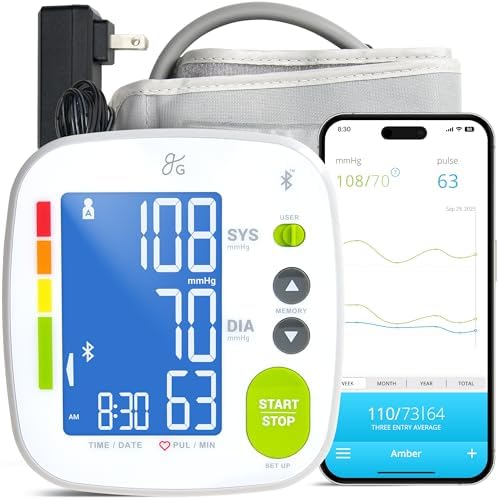
- 𝗛𝗶𝗴𝗵 𝗔𝗰𝗰𝘂𝗿𝗮𝗰𝘆 𝗠𝗼𝗻𝗶𝘁𝗼𝗿𝗶𝗻𝗴: Equipped with advanced technology for precise blood pressure and heart rate detection, includi…
- 𝗟𝗮𝗿𝗴𝗲 𝗕𝗮𝗰𝗸𝗹𝗶𝘁 𝗗𝗶𝘀𝗽𝗹𝗮𝘆: Features a large, multi-color backlit display for clear and easy reading, with enlarged font for …
📏 How to Get Accurate Home Readings
The monitor matters. Your technique matters MORE.
The Proper Technique (Clinical Standard)
30 minutes before:
- No caffeine
- No exercise
- No smoking
- Empty bladder
5 minutes before:
- Sit quietly
- Feet flat on floor
- Back supported
- Arm relaxed
During measurement:
- Arm at heart level
- Cuff on bare skin (or thin sleeve)
- Don’t talk
- Don’t move
- Breathe normally
After first reading:
- Wait 1 minute
- Take second reading
- Wait 1 minute
- Take third reading
- Average the three readings
This protocol matches what doctors SHOULD do but rarely have time for.
Common Mistakes That Ruin Accuracy
Mistake #1: Testing right after activity Just walked upstairs? Reading will be 10-20 points high. Wait 5 minutes sitting quietly.
Mistake #2: Arm position wrong Arm too high: falsely low reading. Arm too low: falsely high reading. Arm must be at heart level.
Mistake #3: Talking during reading Talking raises blood pressure temporarily. Stay silent during measurement.
Mistake #4: Taking only one reading Single readings vary widely. Always take 2-3 readings and average.
Mistake #5: Wrong cuff size Too small = falsely high. Too large = falsely low. Measure your arm and verify cuff fits.
Studies show that following clinical measurement protocols—rather than rushed techniques—significantly improves the reliability of blood pressure data.
When to Test
Best times:
- Morning (before medication, before breakfast)
- Evening (before dinner, before medication)
Consistency matters: Test at same times daily. This shows true patterns.
My routine: 7 AM (before meds) and 7 PM (before dinner). Same chair, same arm, same process.
Tracking and Patterns
What to record:
- Date and time
- Systolic/diastolic
- Heart rate
- Which arm
- Any notes (felt stressed, exercised earlier, etc.)
All four monitors track this automatically via app.
What to watch for:
- Trends over weeks (more important than single readings)
- Medication effectiveness
- Time-of-day patterns
- Triggers that raise BP
Share logs with doctor. They’re more valuable than single office readings.
❓ Frequently Asked Questions
Are home blood pressure monitors as accurate as doctor’s equipment?
Yes, IF clinically validated and used correctly.
Validated monitors (like all four reviewed) are accurate within ±3-5 mmHg of professional equipment. This is clinically acceptable variance.
Doctor’s office readings aren’t automatically more accurate. They’re often rushed, affected by white coat hypertension, and don’t follow best practices for measurement.
Home monitors allow proper technique: resting 5 minutes, multiple readings, consistent conditions. This often makes them MORE accurate for real-world blood pressure.
Why are my home readings lower than doctor’s readings?
White coat hypertension affects 15-30% of people. Your blood pressure rises in medical settings due to stress.
Also:
- You rush to appointments (elevates BP)
- Office readings often don’t allow 5-minute rest
- Single reading vs. multiple averaged readings
- Anxiety about results
- Different arm positions
- Tight clothing in office
If your home readings are consistently 10-20 points lower, discuss with doctor. They may adjust treatment based on home readings rather than office readings.
How often should I check my blood pressure at home?
Starting out: Twice daily (morning and evening) for 1-2 weeks. Establishes baseline.
Medication changes: Twice daily for 2-4 weeks. Monitors effectiveness.
Well-controlled: 2-3 times weekly. Confirms stability.
My routine: Daily morning reading, plus evening if I feel off.
Always take 2-3 consecutive readings and average them.
What’s a normal blood pressure reading?
Normal: Below 120/80 Elevated: 120-129/below 80 High Stage 1: 130-139/80-89 High Stage 2: 140+/90+ Hypertensive Crisis: 180+/120+ (seek emergency care)
But:
- Individual targets vary
- Age affects normal ranges
- Doctor may set different goal for you
- Trends matter more than single readings
My doctor’s target for me: Below 130/85 average.
Do I need AFib detection?
AFib (atrial fibrillation) is irregular heartbeat. Increases stroke risk.
You benefit from AFib detection if:
- Over 65 (AFib risk increases with age)
- Have heart disease risk factors
- Family history of AFib
- Want comprehensive monitoring
OMRON Gold and Platinum have AFib detection.
AFib detection alerted me twice. Doctor confirmed irregular rhythm both times. Potentially caught serious issue early.
Worth having, especially if at risk.
Which monitor is most accurate?
Comparative data shows that all four validated monitors perform within clinically acceptable margins.
Most consistent: OMRON Gold and Platinum (2-3 point variance) Very good: Withings BPM Connect (3-4 point variance)
Good: Greater Goods (4-5 point variance)
All within clinically acceptable accuracy when compared to doctor’s manual readings.
Accuracy depends more on proper technique than monitor choice (among validated monitors).
Can I trust cheap blood pressure monitors?
Define “cheap.”
Greater Goods is budget-friendly AND clinically tested. It works.
Generic non-validated monitors under $20-30: Risky. No validation studies. Could be off by 10-20 points.
Don’t diagnose or manage hypertension with non-validated monitors.
All four reviewed monitors are validated. Greater Goods is accessible while maintaining accuracy.
🎯 Honest Recommendations
Best Overall: OMRON Gold
Clinical validation, AFib detection, consistent accuracy, excellent app. Where most people should start.
Best Premium: OMRON Platinum
TruRead automatic averaging, advanced AFib detection, premium build. Worth it for daily monitoring.
Best Smart Integration: Withings BPM Connect
Wi-Fi sync, rechargeable, excellent app, health ecosystem integration. For tech-forward users.
Best Value: Greater Goods
Clinically tested, Bluetooth, rechargeable, carrying case. Proves validation doesn’t require premium investment.
🏥 The Bottom Line
Home blood pressure monitors aren’t less accurate than doctor’s readings.
They’re often MORE accurate because:
- You can follow proper technique (5 min rest, multiple readings)
- No white coat hypertension
- Consistent conditions and positioning
- Daily tracking shows true patterns
- Better reflects real-world blood pressure
But only if:
- Monitor is clinically validated
- You use proper technique
- Cuff fits correctly
- You track trends, not single readings
Medical professionals increasingly rely on validated home readings to make treatment decisions, as they offer a more comprehensive view of a patient’s cardiovascular health than occasional office visits.
The validated monitor you’ll actually use consistently beats the “most accurate” one sitting in a drawer.
All four reviewed monitors work. Choose based on features you’ll use.
Your daily home readings matter more than occasional doctor visits.
Disclaimer: This article contains affiliate links. We earn commissions from purchases at no extra cost to you. Not medical advice. Consult your doctor about blood pressure monitoring and treatment. Home monitoring supplements, but doesn’t replace, professional medical care.